A forming machine is a core equipment in modern manufacturing, designed to shape raw materials (such as metal, plastic, rubber, and composite materials) into desired geometries through mechanical force, heat, pressure, or a combination of these factors. Unlike cutting or machining processes that remove excess material, forming machines achieve shaping by deforming materials without altering their total volume—making them efficient, material-saving, and suitable for mass production. This article systematically elaborates on the definition, core significance, main types, working principles, typical application scenarios, process optimization, and maintenance guidelines of forming machines, integrating practical technical parameters and industry experience to provide comprehensive guidance for engineers, production managers, quality control personnel, and maintenance technicians.
I. Overview and Core Definition of Forming Machines
In manufacturing, forming is a key material processing method that transforms raw materials (sheets, bars, powders, or melts) into finished or semi-finished products with specific shapes, sizes, and mechanical properties. A forming machine is a specialized device that realizes this transformation by applying external forces (mechanical force, pressure, heat, etc.) to materials, leveraging the plastic deformation or flow characteristics of materials. The core feature of forming machines is that they do not remove material (or only remove a small amount of material) during the processing process, which maximizes material utilization and reduces production waste.
Forming machines can be classified into different categories based on material type, forming method, and application scenario, but their core functions are consistent: to convert raw materials into usable workpieces through controlled deformation. From simple manual forming tools to advanced automated forming equipment integrated with CNC technology, forming machines have evolved with the development of manufacturing technology, becoming an indispensable part of modern industrial production—especially in fields such as automotive, aerospace, construction, and electronics.
The performance of forming machines directly affects the quality, efficiency, and cost of products. A high-performance forming machine can ensure stable material deformation, precise dimensional accuracy, and consistent product quality, while reducing energy consumption and labor costs. In contrast, improper selection or operation of forming machines may lead to material waste, product defects, and even equipment failure.
II. Core Significance of Forming Machines in Manufacturing
Forming machines play a pivotal role in modern manufacturing, and their significance is reflected in multiple aspects of production efficiency, product quality, material utilization, and industrial development. The core significance can be summarized into five key points:
1. Improving Production Efficiency and Realizing Mass Production
Forming machines, especially automated and continuous forming equipment, can achieve high-speed, continuous processing of materials, significantly improving production efficiency compared to manual forming or small-scale processing. For example, a fully automated stamping forming machine can complete hundreds or even thousands of forming operations per hour, meeting the demand for mass production of products such as automotive parts and electronic components. This high-efficiency processing method reduces production cycles and helps enterprises expand production scale.
2. Ensuring Product Quality and Dimensional Accuracy
Modern forming machines are equipped with advanced control systems (such as CNC control, servo control) and precision positioning mechanisms, which can accurately control the deformation process of materials, ensuring that the shape, size, and mechanical properties of finished products meet design requirements. Unlike manual forming, which is prone to errors and inconsistencies, forming machines can achieve stable and consistent processing quality, reducing product scrap rates and improving the reliability of finished products. This is particularly important for high-precision fields such as aerospace and medical equipment.
3. Saving Materials and Reducing Production Costs
Since forming machines achieve shaping through material deformation rather than material removal, they can maximize the utilization of raw materials, reducing material waste. For example, in metal forming, the material utilization rate of forming processes (such as forging, stamping) can reach 80%–95%, while the material utilization rate of cutting processes is often only 60%–70%. This material-saving feature significantly reduces raw material costs, which is an important way for enterprises to control production costs. In addition, the high efficiency of forming machines also reduces labor costs and energy consumption.
4. Expanding the Scope of Material Processing
Forming machines can process a variety of materials, including metals (steel, aluminum, copper, alloy), plastics, rubber, composites, and powders. Different types of forming machines are designed for different materials and forming requirements, enabling the processing of materials that are difficult to process by other methods. For example, plastic injection molding machines can process complex plastic parts with intricate structures, while forging machines can process high-hardness metal parts with excellent mechanical properties. This expands the scope of product design and manufacturing, supporting the development of new products and new industries.
5. Promoting the Development of Intelligent Manufacturing
With the integration of intelligent technologies such as CNC, robotics, and IoT, modern forming machines have become an important part of intelligent production lines. They can realize automatic feeding, automatic forming, automatic detection, and automatic maintenance, reducing manual intervention and improving production intelligence. For example, robotic arms can be integrated with forming machines to complete automatic loading and unloading of workpieces, while IoT technology can monitor the operating status of equipment in real time, realizing predictive maintenance. This integration promotes the transformation and upgrading of manufacturing from traditional manual production to intelligent, automated production.
III. Main Types of Forming Machines and Their Working Principles
Forming machines are classified into various types based on forming method, material type, and product application. Each type has its unique working principle, structural characteristics, and applicable scenarios. The following is a systematic classification and detailed introduction of mainstream forming machines:
1. Metal Forming Machines
Metal forming machines are the most widely used type of forming equipment, mainly used for processing metal materials (sheet metal, bar, pipe, etc.) through plastic deformation. Common types include stamping machines, forging machines, bending machines, rolling machines, and extrusion machines.
1.1 Stamping Machine
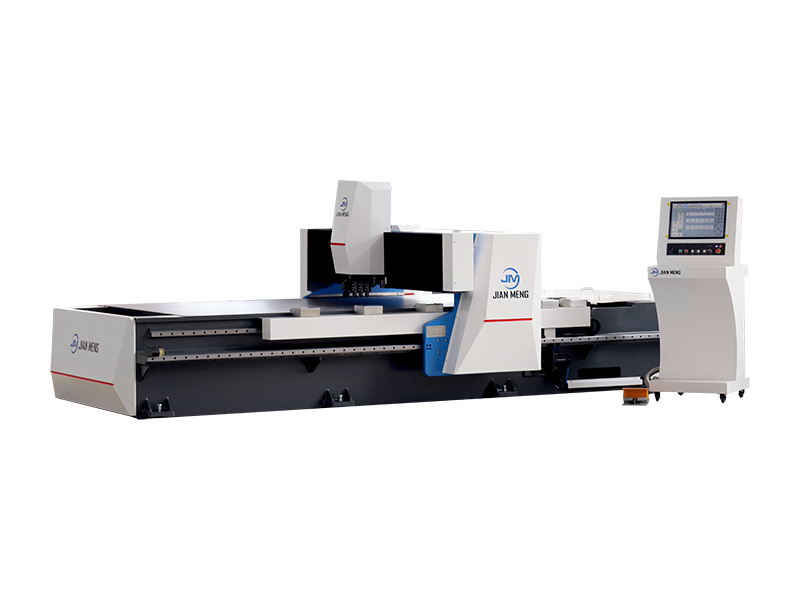
Stamping machines use a punch and die to apply pressure to sheet metal, causing it to undergo plastic deformation or separation, thereby obtaining workpieces of the desired shape and size. They are divided into blanking machines, punching machines, bending machines, drawing machines, and forming machines according to the processing method.
Working Principle: The motor drives the flywheel to rotate, and the crankshaft converts the rotational motion into linear motion of the slider. The punch installed on the slider moves up and down, and the sheet metal placed between the punch and die is stamped and formed under pressure. The die determines the shape and size of the workpiece, and the pressure and stroke of the slider can be adjusted according to processing requirements.
Key Advantages: High production efficiency, high material utilization, consistent product quality, suitable for mass production of sheet metal parts. Limitations: High die cost, not suitable for small-batch production, limited to sheet metal materials with certain plasticity. Best For: Automotive body parts, electronic component shells, hardware accessories, and sheet metal structural parts.
1.2 Forging Machine
Forging machines apply strong pressure to metal blanks (heated or cold) to cause plastic deformation, thereby obtaining workpieces with high strength, good toughness, and precise dimensions. Common types include hydraulic forging presses, mechanical forging presses, and hammer forging machines.
Working Principle: For hot forging, the metal blank is heated to the plastic deformation temperature (usually 800–1200°C for steel), then placed in the forging die, and the forging machine applies pressure to make the blank fill the die cavity, forming the desired shape. For cold forging, the blank is processed at room temperature, which can improve the surface finish and dimensional accuracy of the workpiece.
Key Advantages: High workpiece strength and toughness, good mechanical properties, suitable for processing high-load components. Limitations: High energy consumption, complex die design, high equipment cost. Best For: Automotive engine crankshafts, connecting rods, gears, aerospace components, and heavy machinery parts.
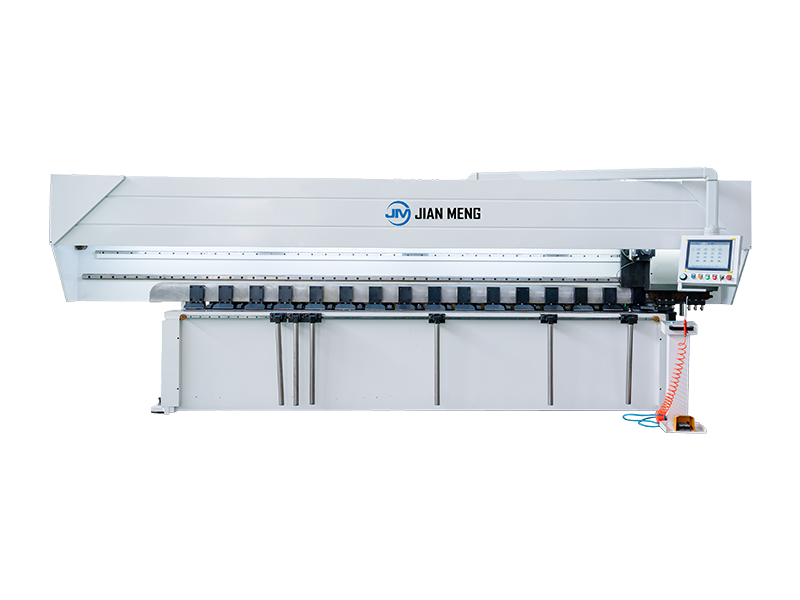
1.3 Bending Machine
Bending machines are used to bend sheet metal or profiles into various angles and shapes (such as V-shape, U-shape, and arc shape). They are divided into hydraulic bending machines, servo bending machines, and mechanical bending machines according to the drive mode.
Working Principle: The workpiece is placed on the workbench, and the upper die (punch) moves down under the action of hydraulic pressure or servo drive, pressing the workpiece against the lower die (die), causing the workpiece to undergo elastic-plastic deformation and bend to the desired angle. The bending angle can be adjusted by changing the stroke of the upper die and the shape of the die.
Key Advantages: High bending precision, flexible operation, suitable for processing various sheet metal and profile parts. Limitations: Not suitable for thick plates with high hardness, requires precise adjustment of bending parameters. Best For: Sheet metal cabinets, door and window frames, automotive sheet metal parts, and structural profiles.
2. Plastic Forming Machines
Plastic forming machines are used to process plastic materials (thermoplastics, thermosetting plastics) into various plastic products through heating, melting, and molding. Common types include injection molding machines, extrusion molding machines, blow molding machines, and compression molding machines.
2.1 Injection Molding Machine
Injection molding machines are the most widely used plastic forming equipment, suitable for processing complex plastic parts with precise dimensions and intricate structures. They can process almost all thermoplastic materials and some thermosetting materials.
Working Principle: The plastic particles are fed into the barrel, heated and melted by the heater outside the barrel, and pushed forward by the screw. The molten plastic is injected into the closed die cavity at high pressure and high speed, and after cooling and solidification, the die is opened to take out the plastic product.
Key Advantages: High production efficiency, high product precision, complex product shape, suitable for mass production. Limitations: High equipment cost, complex die design, high energy consumption. Best For: Electronic product casings, automotive plastic parts, medical devices, daily necessities, and plastic toys.
2.2 Extrusion Molding Machine
Extrusion molding machines (extruders) are used to process plastic into continuous profiles, such as pipes, rods, sheets, films, and wires. They are widely used in the plastic processing industry due to their simple structure, high efficiency, and wide application range.
Working Principle: The plastic particles are fed into the barrel, heated and melted, and pushed forward by the screw to form a continuous molten material. The molten material is extruded through a die with a specific shape, and after cooling and shaping, it is cut into the desired length or rolled into coils.
Key Advantages: Continuous production, high efficiency, simple structure, low cost. Limitations: Limited to processing continuous profiles, not suitable for complex-shaped products. Best For: Plastic pipes, plastic sheets, plastic films, wires and cables, and plastic profiles.
3. Other Types of Forming Machines
- Rubber Forming Machines: Used to process rubber materials into rubber products such as tires, seals, and hoses. Common types include rubber vulcanizing machines, rubber injection molding machines, and rubber extruders. The working principle is to heat and vulcanize the rubber material under pressure to make it form and solidify.
- Powder Forming Machines: Used to process metal powder, ceramic powder, and other powder materials into solid workpieces through pressure forming and sintering. Common types include powder presses, isostatic pressing machines, and sintering furnaces. Suitable for processing high-precision, high-density powder metallurgy parts.
- Composite Material Forming Machines: Used to process composite materials (such as carbon fiber composites, glass fiber composites) into structural parts with high strength and light weight. Common types include autoclave forming machines, pultrusion machines, and winding machines. Widely used in aerospace, automotive, and new energy fields.
IV. Typical Application Scenarios of Forming Machines
Forming machines are widely used in various industrial fields, covering metal processing, plastic processing, rubber processing, and composite material processing. Their application scenarios are closely related to the type of forming machine and the characteristics of processed materials. The following are typical application scenarios and corresponding forming machines:
1. Automotive Manufacturing Industry
The automotive industry is the largest application field of forming machines, requiring a large number of metal and plastic parts with high precision and high strength. Common forming machines used include stamping machines (for body parts, door panels, fenders), forging machines (for crankshafts, connecting rods, gears), injection molding machines (for plastic dashboards, door trims, air intake manifolds), and bending machines (for structural brackets).
For example, automotive body parts are mainly processed by stamping machines, which can achieve mass production of sheet metal parts with consistent quality; engine crankshafts and connecting rods are processed by forging machines to ensure high strength and toughness; plastic interior parts are processed by injection molding machines to meet the requirements of complex shapes and precise dimensions.
2. Aerospace Industry
The aerospace industry requires high-precision, high-strength, and lightweight components, which puts strict requirements on forming machines. Common forming machines used include forging machines (for aircraft engine blades, landing gear components), composite material forming machines (for carbon fiber fuselage parts, wing components), and precision stamping machines (for electronic components in aircraft).
For example, aircraft engine blades are processed by precision forging machines, which can ensure the high strength and dimensional accuracy of the blades; carbon fiber fuselage parts are processed by autoclave forming machines, which can achieve uniform curing of composite materials and improve the structural strength of the parts.
3. Construction Industry
The construction industry uses a large number of metal and plastic profiles, pipes, and structural parts, which are mainly processed by forming machines. Common forming machines used include rolling machines (for steel pipes, steel profiles), extrusion machines (for plastic pipes, aluminum profiles), and stamping machines (for building hardware accessories).
For example, steel pipes used in building water supply and drainage systems are processed by rolling machines; aluminum profiles used in door and window frames are processed by extrusion machines; building hardware such as hinges and bolts are processed by stamping machines and forging machines.
4. Electronics and Semiconductor Industry
With the miniaturization and precision of electronic products, the demand for high-precision forming machines is increasing. Common forming machines used include precision stamping machines (for electronic component shells, connectors), injection molding machines (for plastic casings of mobile phones, computers), and powder forming machines (for semiconductor packaging parts).
For example, mobile phone casings are processed by precision injection molding machines, which can achieve complex shapes and high surface finish; electronic connectors are processed by precision stamping machines to ensure the accuracy of contact points and the reliability of electrical connections.
5. Medical Equipment Industry
The medical equipment industry requires high-precision, biocompatible components, which are mainly processed by forming machines. Common forming machines used include precision forging machines (for surgical instruments), injection molding machines (for plastic medical devices), and powder forming machines (for medical implants).
For example, surgical scissors, forceps, and other instruments are processed by precision forging machines to ensure high strength and sharpness; plastic syringes and medical catheters are processed by injection molding machines to meet the requirements of biocompatibility and precision; medical implants (such as artificial joints) are processed by powder forming machines to ensure high density and biocompatibility.
6. Other Fields
- Daily Necessities Industry: Plastic bowls, cups, toys, and other daily necessities are processed by injection molding machines and blow molding machines; metal tableware and hardware accessories are processed by stamping machines and forging machines.
- New Energy Industry: Solar panel brackets are processed by bending machines and stamping machines; wind power blade components are processed by composite material forming machines; battery pack shells are processed by stamping machines and injection molding machines.
- Tool and Die Manufacturing: Dies and molds used in forming processes are processed by precision forging machines, stamping machines, and bending machines to ensure the precision and service life of the dies.
V. Forming Machine Process Optimization and Selection Guidelines
Selecting the optimal forming machine and optimizing the forming process are crucial to ensuring product quality, improving production efficiency, and reducing costs. The following are key selection factors and process optimization guidelines:
1. Key Factors for Selecting Forming Machines
- Workpiece Material: Select the forming machine according to the type and properties of the processed material. For example, metal materials are suitable for stamping machines, forging machines, and bending machines; plastic materials are suitable for injection molding machines and extrusion machines; composite materials are suitable for autoclave forming machines and pultrusion machines.
- Workpiece Geometry and Size: For complex-shaped workpieces, select injection molding machines (plastic) or precision stamping machines (metal); for large-sized workpieces, select large-scale forging machines or rolling machines; for small-sized, high-precision workpieces, select precision forming machines with CNC control.
- Production Batch: For mass production, select automated forming machines (such as fully automated stamping machines, injection molding machines with robotic arms) to improve efficiency; for small-batch or prototype production, select general-purpose forming machines or manual forming equipment to reduce costs.
- Quality Requirements: For high-precision, high-quality workpieces (such as aerospace components, medical devices), select forming machines with high precision and advanced control systems (such as servo control, CNC control); for general industrial parts, select ordinary forming machines to reduce investment.
- Cost Budget: Consider the equipment cost, die cost, energy consumption, and labor cost. Automated and high-precision forming machines have high initial investment but low long-term operating costs; general-purpose forming machines have low initial investment but high labor costs.
2. Process Optimization Best Practices
Metal Forming Process Optimization
- Stamping Process: Optimize the die design to reduce the number of stamping steps; adjust the stamping pressure, stroke, and speed to avoid secondary deformation or material damage; select the appropriate lubricant to reduce friction between the die and the workpiece, improving surface finish.
- Forging Process: Optimize the heating temperature and holding time of the blank to ensure uniform plastic deformation; adjust the forging pressure and speed to avoid defects such as cracks and uneven deformation; use precision dies to improve the dimensional accuracy of the workpiece.
- Bending Process: Optimize the bending angle, die shape, and bending speed to avoid springback of the workpiece; select the appropriate bending sequence for complex workpieces to ensure forming accuracy; use protective films to prevent surface scratches.
Plastic Forming Process Optimization
- Injection Molding Process: Optimize the injection temperature, pressure, speed, and holding time to avoid defects such as shrinkage, warpage, and air bubbles; adjust the screw speed and feeding amount to ensure uniform melting of plastic; design the die gate and runner reasonably to improve the filling efficiency of molten plastic.
- Extrusion Process: Optimize the barrel temperature, screw speed, and die shape to ensure uniform extrusion of the material; adjust the cooling speed to avoid deformation of the extruded product; select the appropriate plastic particle size and moisture content to improve processing stability.
3. Common Defect Prevention
- Material Defects: Select high-quality raw materials and conduct pre-inspection to avoid defects such as impurities, cracks, and uneven thickness; dry plastic materials before processing to remove moisture, preventing air bubbles in the product.
- Forming Defects: Optimize forming parameters (pressure, temperature, speed) to avoid defects such as cracks, deformation, shrinkage, and warpage; maintain the die regularly to ensure its surface finish and dimensional accuracy, preventing product scratches and size deviations.
- Equipment Defects: Regularly inspect and maintain the forming machine to ensure the normal operation of components such as the slider, screw, and die; calibrate the positioning accuracy and pressure control system regularly to avoid equipment failure affecting product quality.
VI. Maintenance Guidelines for Forming Machines
Proper maintenance of forming machines is essential to ensure stable performance, extend service life, and maintain processing quality. The following are maintenance guidelines for common forming machines:
1. Metal Forming Machines (Stamping, Forging, Bending Machines)
- Regular Cleaning: Clean the machine surface, workbench, and die regularly to remove metal chips, dust, and lubricant residues; focus on cleaning the slider, guide rail, and crankshaft to avoid debris affecting the movement of components.
- Lubrication Maintenance: Apply lubricating oil to the moving components (slider, guide rail, crankshaft, screw) regularly to reduce friction and wear; use lubricating oil that matches the machine’s requirements, and replenish or replace the lubricating oil according to the maintenance schedule.
- Die Maintenance: Inspect the die regularly for wear, damage, or deformation; replace worn or damaged dies in time; polish the die surface regularly to maintain its smoothness; store the die in a dry, clean environment to avoid rust.
- Electrical and Control System Maintenance: Check the electrical components (motor, sensor, controller) regularly for loose connections or faults; clean the control panel and wiring to avoid dust affecting the system operation; calibrate the pressure sensor and position sensor regularly to ensure control accuracy.
2. Plastic Forming Machines (Injection Molding, Extrusion Machines)
- Barrel and Screw Maintenance: Clean the barrel and screw regularly after use to remove residual plastic; inspect the screw for wear or damage; apply high-temperature lubricating oil to the screw to prevent rust and wear; replace the screw and barrel when they are severely worn.
- Heating and Cooling System Maintenance: Inspect the heater, thermocouple, and cooling water pipe regularly; clean the cooling water pipe to avoid scaling, ensuring cooling efficiency; calibrate the temperature control system regularly to ensure accurate temperature control.
- Hydraulic and Pneumatic System Maintenance: Check the hydraulic oil level and quality regularly; replace the hydraulic oil and filter element according to the maintenance schedule; inspect the pneumatic components (cylinder, valve) for air leakage; clean the air filter regularly.
3. General Maintenance Principles
- Establish a regular maintenance schedule based on the machine’s operating hours and usage frequency; conduct daily inspections, weekly inspections, and monthly inspections to identify potential issues in advance.
- Train maintenance personnel to master the machine’s structure, working principle, and maintenance skills; ensure that maintenance operations are standardized to avoid equipment damage caused by improper operation.
- Store the
forming machine in a dry, clean, and well-ventilated environment; avoid direct sunlight, moisture, and corrosive substances; for long-term storage, disconnect the power supply, clean the machine thoroughly, and apply anti-rust oil to metal components.
- Keep maintenance records, including maintenance time, maintenance content, replaced parts, and machine operating status, to track the machine’s performance and facilitate subsequent maintenance and troubleshooting.
VII. Limitations and Future Development Trends of Forming Machines
1. Current Limitations
Despite the continuous development of forming machine technology, there are still some limitations that need to be addressed: First, high-precision and automated forming machines have high equipment and die costs, which are not affordable for small and medium-sized enterprises. Second, for complex-shaped workpieces and ultra-hard materials, the forming process is still challenging, and it is difficult to ensure both forming accuracy and production efficiency. Third, the energy consumption of some forming machines (such as forging machines, injection molding machines) is relatively high, which does not meet the requirements of green manufacturing. Fourth, the operation and maintenance of automated forming machines require professional technicians, and the training cost is relatively high.
2. Future Development Trends
With the development of intelligent manufacturing, precision machining, and green manufacturing, forming machines are moving toward intelligence, high precision, high efficiency, and sustainability. The main development trends are as follows:
- Intelligent Forming Machines: Integrate AI, machine vision, and IoT technology to realize automatic parameter adjustment, fault diagnosis, and predictive maintenance. For example, AI algorithms can optimize forming parameters in real time based on workpiece quality feedback; machine vision can detect workpiece defects automatically, improving quality control efficiency.
- High-Precision Forming Technology: Develop high-precision forming machines with servo control and CNC control to meet the ultra-precision requirements of high-tech fields such as aerospace and medical equipment. For example, precision forging machines with multi-axis control can achieve complex-shaped workpieces with micron-level accuracy.
- Green and Energy-Saving Forming Machines: Develop energy-saving forming machines by optimizing the drive system, reducing energy consumption; use eco-friendly materials and lubricants to reduce environmental impact; realize material recycling and reuse to improve material utilization.
- Hybrid Forming Processes: Combine multiple forming methods to complement each other’s advantages. For example, combining stamping and forging to improve the mechanical properties of workpieces; combining injection molding and extrusion to process complex plastic products.
- Integration with Intelligent Production Lines: Integrate forming machines with robotic arms, conveyor belts, and quality inspection equipment to form a fully automated production line, realizing automatic feeding, forming, inspection, and packaging, improving production efficiency and reducing manual intervention.
VIII. Conclusion
Forming machines are core equipment in modern manufacturing, playing an indispensable role in material processing and product manufacturing. By applying external forces to materials, forming machines realize the transformation of raw materials into finished products with specific shapes and properties, which is efficient, material-saving, and suitable for mass production. From metal forming to plastic forming, from manual operation to intelligent automation, forming machines have continuously evolved to meet the increasingly diverse and strict requirements of various industries.
Selecting the appropriate forming machine based on workpiece material, geometry, production batch, and quality requirements, and optimizing the forming process, is crucial to improving product quality, reducing production costs, and enhancing market competitiveness. Meanwhile, proper maintenance of forming machines can ensure stable performance, extend service life, and avoid equipment failure affecting production progress.
With the integration of intelligent technology, green manufacturing, and precision machining, forming machines will continue to develop toward intelligence, high precision, high efficiency, and sustainability. They will not only promote the transformation and upgrading of traditional manufacturing industries but also support the development of new industries such as new energy, aerospace, and medical equipment. For engineers, production managers, and maintenance personnel, mastering the knowledge of forming machines is essential to adapting to the development trend of the manufacturing industry and improving work efficiency and product quality.





 English
  中文
中文  Arabic
  Russian
  Spanish
  Portuguese
  French
  German
  Hindi
Hindi  Thai
Thai  Vietnamese
  Khmer
Khmer  Italian
  Turkish
  Korean
  Belarusian