Electric Bending Machine: What It Is And Whether It Suits Your Shop
Why "electric" is not just a marketing word
Twenty years ago almost every bending machine in the world was hydraulic. The press brake pushed a ram with oil pressure, and that was that. Then servo-electric technology crept in from the electronics industry, where clean rooms and precision mattered more than brute force. Today an electric bending machine is a serious alternative, and for a lot of work it is the better one.
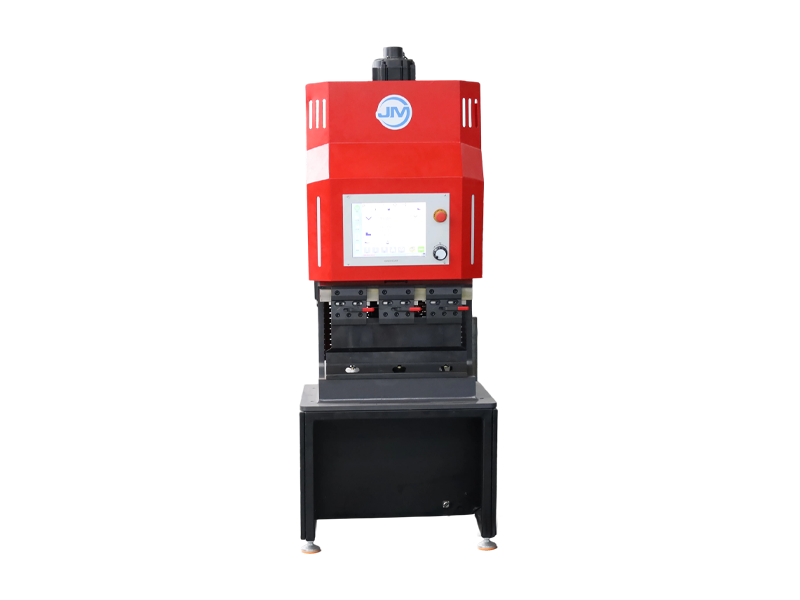
An electric bending machine drives the ram with servo motors and ballscrews. There is no oil, no pump running continuously, no hydraulic valves to tune. The servo turns only when the ram actually moves. That single difference changes the running costs, the accuracy and the maintenance picture of the machine.
How an electric bending machine works
The principle is straightforward. A servo motor spins a ballscrew, and the ballscrew pushes the ram down. Two motors, one on each side, are controlled electronically so both ends of the ram stay level.
Because the drive is mechanical and direct, there is no fluid to compress and no valve lag. The response is immediate. When the program calls for a bend, the ram moves, slows near the bottom dead centre, holds at the required depth, and returns. Position comes from the motor encoder...
2026-09-18





 English
  中文
中文  Arabic
  Russian
  Spanish
  Portuguese
  French
  German
  Hindi
Hindi  Thai
Thai  Vietnamese
  Khmer
Khmer  Italian
  Turkish
  Korean
  Belarusian