We use Cookie To improve your experience. Please read our privacy policy to understand how we use it Cookie

+86 19805122954
jeanie@jianmeng.com
info@jianmeng.com
Jianmeng Intelligent Equipment (Taizhou) Co., Ltd. Jianmeng Intelligent Equipment (Taizhou) Co., Ltd.
  • HOME
  • ABOUT
    • Our company
      • Company Profile
      • Development History
      • Factory Strength
      • Group photo with clients
      • Application
    • Certification
    • Quality
    • Customization
    • Service
  • PRODUCTS
    • Forming machine
      • Power forming machine PF665
      • Power forming machine PF350
      • Pneumatic forming machine PMF400
    • Deburring machine
      • XDP-RP Series deburring machine
      • XDP-RR Series deburring and brushing machine
      • XDP-MRP Series carbon steel deburring machine
      • XDP-RPR Series deburring and surface finishing machine
      • XDP-MRPR Series carbon steel deburring and surface finishing machine
      • XDP-RPRT Series surface finishing and polishing machine
      • XDP-MRPRT Series carbon steel surface finishing and polishing machine
      • XDP-RRT Series deburring and polishing machine
      • XDP-WRR Series flat surface wet brushing machine
      • XDP-WDC Series wet dust collector
      • XDP-SD Manual deburring machine
    • Press brake
      • Electro-hydraulic CNC press brake
      • Torsion-Bar NC press brake
      • Mini electric servo press brake
      • Tandem press brake
    • Shearing machine
      • Hydraulic guillotine CNC shearing machine
      • Swing beam CNC shearing machine
    • V grooving machine
      • Horizontal V grooving machine
      • Automatic four-side V grooving machine
      • Vertical V grooving machine
      • Vertical reciprocating V grooving machine
      • Vertical laser&V-grooving combo machine
    • Notching machine
      • Notching Machine
  • NEWS
    • Client Case
    • Industry News
  • CONTACT
English
  • EnglishEnglish
  • 中文中文
  • ArabicArabic
  • RussianRussian
  • SpanishSpanish
  • PortuguesePortuguese
  • FrenchFrench
  • GermanGerman
  • HindiHindi
  • ThaiThai
  • VietnameseVietnamese
  • KhmerKhmer
  • ItalianItalian
  • TurkishTurkish
  • KoreanKorean
  • BelarusianBelarusian
NEWS
NEWS

HOME > NEWS

  • Client Case
  • Industry News
  • How To Choose The Right Deburring Machine

    How To Choose The Right Deburring Machine

    In sheet metal fabrication—where component quality is governed by standards like ISO 13715 (burr classification) and DIN 4063 (edge rounding tolerances)—selecting the right deburring machine is a critical decision that directly impacts product safety, performance, and production efficiency. Burrs (formed during laser cutting, stamping, or milling) and uneven edges can compromise assembly fit, cause premature wear in moving parts, or pose laceration risks to operators. This guide outlines a technical, application-driven framework for choosing a deburring machine, emphasizing alignment with material properties, production demands, and part geometry. 1. First: Understand the Industrial Context of Deburring Before selecting a machine, clarify the non-negotiable requirements of your application: - Burr type & size: ISO 13715 categorizes burrs by height (≤0.1mm = Class 1; 0.1–0.5mm = Class 2; >0.5mm = Class 3). For example, aerospace components (AS9100 compliant) require Class 1 burr removal, while general sheet metal brackets may accept Class 2. - Edge rounding needs: Critical for fatigue resistance—e.g., automotive chassis parts need 0.2–0.5mm radii, while medical device components (ISO 13485) demand 0.1–0.2mm radii. - Surfac...

    2026-01-12
    Industrial Deburring Machines For Deburring & Edge Rounding

    Industrial Deburring Machines For Deburring & Edge Rounding

    In precision manufacturing—where metal components must adhere to strict dimensional standards (e.g., ISO 13715 for burr classification, DIN 4063 for edge rounding tolerances)—industrial deburring machines are indispensable for post-processing. These systems address two critical challenges: deburring (removing unwanted protrusions formed during machining) and edge rounding (creating controlled, uniform radii on part edges). Both processes are non-negotiable for ensuring component safety, performance, and compliance with aerospace, automotive, and medical device industry requirements. Below is a technically precise breakdown of their role, classification, benefits, and selection criteria. 1. Technical Definition & Industrial Significance 1.1 What Are Burrs & Edge Rounding? Burrs are micro-protrusions (typically 0.01–0.5mm in height) formed when metal undergoes plastic deformation during machining (milling, stamping, laser cutting, or grinding). They compromise part functionality by: - Causing friction-induced wear in moving assemblies (e.g., automotive gears, hydraulic valves). - Creating misalignment in precision fits (e.g., aerospace fastener holes). - Posing laceration risks to operators during handling. Edge rounding—oft...

    2026-01-09
    What Are The Benefits Of Using A Groove Machine

    What Are The Benefits Of Using A Groove Machine

    In metal furniture and cabinet manufacturing—where dimensional consistency (per ISO 8062 Tolerance Class IT8–IT9), production throughput, and structural integrity (per EN 14411 for metal furniture) directly determine market competitiveness—groove machines (encompassing CNC grooving systems, horizontal groovers, and gantry slotting machines) have evolved into mission-critical production assets. Unlike manual routing or generic cutting tools, these specialized systems are engineered to address the unique demands of furniture/cabinet fabrication (e.g., tight joint tolerances, high-volume repeatability, and material diversity), delivering technical and operational advantages that directly translate to measurable business value. Below is a technically precise, industry-aligned breakdown of their core benefits: 1. Unmatched Dimensional Precision for Critical Joints & Fit Metal furniture and cabinetry depend on grooves for load-bearing structural connections (e.g., dovetail joints for drawer boxes, rectangular slots for panel-to-frame assembly) and aesthetic alignment (e.g., edge grooves for trim integration). Groove machines deliver sub-millimeter precision that manual processes (reliant on hand marking and routing) cannot replicate, anchored by advanced mechanic...

    2026-01-05
    What Is A Grooving Machine Used For?

    What Is A Grooving Machine Used For?

    In manufacturing, metalworking, and precision fabrication, a grooving machine is a specialized material-processing tool designed for controlled, repeatable creation of grooves—narrow channels with defined depth, width, and cross-sectional geometry—in workpieces. Unlike general-purpose cutting tools, grooving machines are engineered to deliver targeted material removal, ensuring grooves meet strict dimensional tolerances (often ±0.01mm for CNC models) and surface finish requirements (Ra 0.8–3.2 μm). These grooves serve critical functional or aesthetic purposes, from enabling mechanical assembly and fluid flow to enhancing structural performance or decorative appeal. Below is a detailed breakdown of its core functions, classifications, industry applications, technical benefits, and selection criteria. 1. Definition & Core Functionalities At its core, a grooving machine performs precision material removal to form grooves with consistent cross-sections (e.g., V-shape, U-shape, rectangular, or custom profiles). Key functionalities include: - Controlling groove geometry: Adjusting depth (0.1mm to 50mm+), width (0.5mm to 20mm+), and angle (e.g., 30°, 45°, 60° for V-grooves) to match design specifications. - Ensuring surface integrity:...

    2026-01-02
    What Level Of Shaping Accuracy Is Achievable When Using A Shrinker Stretcher?

    What Level Of Shaping Accuracy Is Achievable When Using A Shrinker Stretcher?

    In precision metalworking—particularly automotive restoration, aerospace component fabrication, and custom metal art—shaping accuracy is quantified by dimensional tolerance (deviation from a target dimension) and surface consistency (uniformity of curves). For tasks like replicating a vintage car’s fender contour or forming an aircraft’s internal panel, the shrinker stretcher is a linchpin tool, capable of achieving professional-grade accuracy when paired with proper technique and material knowledge. Its precision capabilities are not arbitrary; they stem from the tool’s ability to induce localized, incremental plastic deformation, allowing fabricators to control metal shape within tolerances as tight as ±0.1mm—well within the standards of high-integrity industries. A shrinker stretcher is defined by its dual-jaw design: concave “shrinker” jaws compress metal fibers to create convex curves, while convex “stretcher” jaws elongate fibers to form concave profiles. Unlike power tools that rely on brute force (e.g., hydraulic presses), it operates on micro-adjustment principles—each lever actuation modifies the metal by 0.5–1mm, enabling fabricators to “sculpt” curves rather than force them. This granul...

    2025-12-29
    The Function Of A Stretcher In Forming Concave Curves In Sheet Metal

    The Function Of A Stretcher In Forming Concave Curves In Sheet Metal

    In metalworking, shaping sheet metal into precise concave curves is not merely a craft—it is the precise application of controlled plastic deformation, a principle that underpins high-integrity manufacturing across aerospace, automotive restoration, and marine engineering. For fabricating aerodynamic aircraft nacelles, restoring vintage car fenders, or forming hydrodynamically efficient ship hulls, the stretcher emerges as a cornerstone tool. Its ability to manipulate metal fibers through targeted tension directly enables the creation of smooth, dimensionally accurate concave profiles, addressing the core challenge of reshaping metal without compromising its structural or surface properties. A stretcher is a specialized metalforming tool engineered to induce localized tension in sheet metal—distinct from the compressive force exerted by its complementary tool, the shrinker. While shrinkers compact metal fibers to form convex curves, stretchers operate by gripping and elongating specific regions of the workpiece; this targeted elongation is the mechanical foundation for generating concave shapes. Unlike conventional bending (which risks creasing, cracking, or work hardening), stretching leverages the material’s inherent ductility to reshape it gradually, ensuring uniform...

    2025-12-26
    How To Use A Shrinker Stretcher On Sheet Metals

    How To Use A Shrinker Stretcher On Sheet Metals

    A shrinker stretcher is an indispensable precision tool in sheet metal fabrication, enabling the creation of accurate curves, compound angles, and complex contours with controlled metal deformation. It is a cornerstone tool for both hobbyists (e.g., custom metal artisans) and professionals in fields requiring precise metal shaping, such as automotive restoration, aerospace component manufacturing, and industrial metalwork. Whether restoring a vintage car’s body panels, fabricating custom HVAC ductwork, or shaping aircraft interior components, a shrinker stretcher eliminates the need for cumbersome welding or multi-piece assembly by directly manipulating metal’s form. Its ability to induce localized plastic deformation (compression for shrinking, tension for stretching) makes it ideal for intricate designs that demand consistency— a trait valued across automotive, aerospace, and heavy machinery industries. Mastering a shrinker stretcher requires an understanding of metal properties, tool mechanics, and safe operating protocols. Below is a comprehensive guide to its functionality, applications, and step-by-step operation, designed to enhance precision and efficiency in sheet metal projects. What Is a Shrinker Stretcher? A shrinker stretcher is a...

    2025-12-22
    Bending Solution For Cabinet And Enclosure Fabrication

    Bending Solution For Cabinet And Enclosure Fabrication

    In the dynamic landscape of modern fabrication, achieving precision bending in materials is paramount to manufacturing high-performance cabinets and enclosures. Whether for kitchen cabinetry, electrical enclosures, or custom sheet metal components, bending directly dictates structural integrity, functional fit, and aesthetic consistency. This article explores specialized bending solutions tailored to cabinet and enclosure fabrication, highlighting advanced techniques, tooling innovations, and process optimizations that underpin efficient, high-quality production. Core Principles of Bending in Fabrication Bending is a foundational manufacturing process involving the controlled plastic deformation of a material to achieve a predefined angle, radius, or profile. In cabinet and enclosure fabrication—where component interoperability and dimensional accuracy are critical—bending ensures seamless assembly, load-bearing capability, and adherence to tight tolerances (typically ±0.1mm for precision sheet metal applications). The process must balance material properties (e.g., yield strength, ductility) with geometric requirements to avoid defects such as cracking, springback, or surface deformation. Material-Specific Bending Methodologies Cabinet ...

    2025-12-19

    Latest case

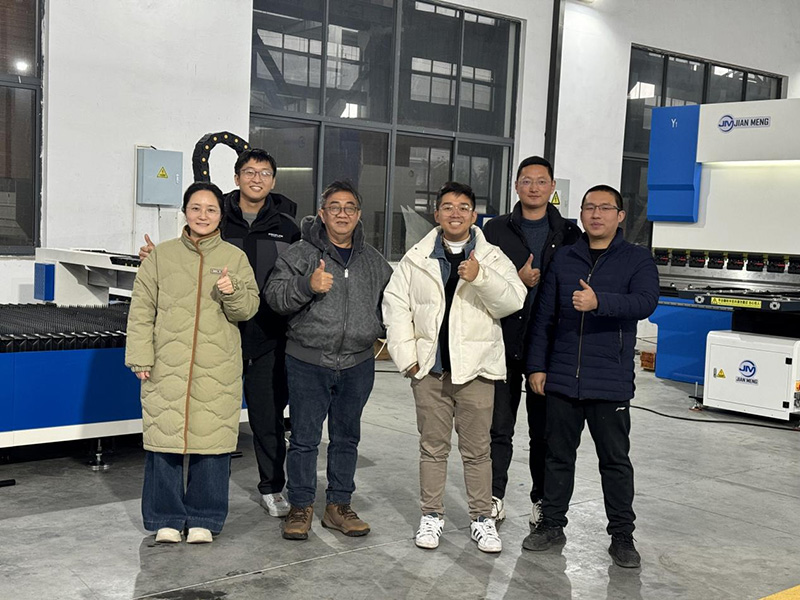
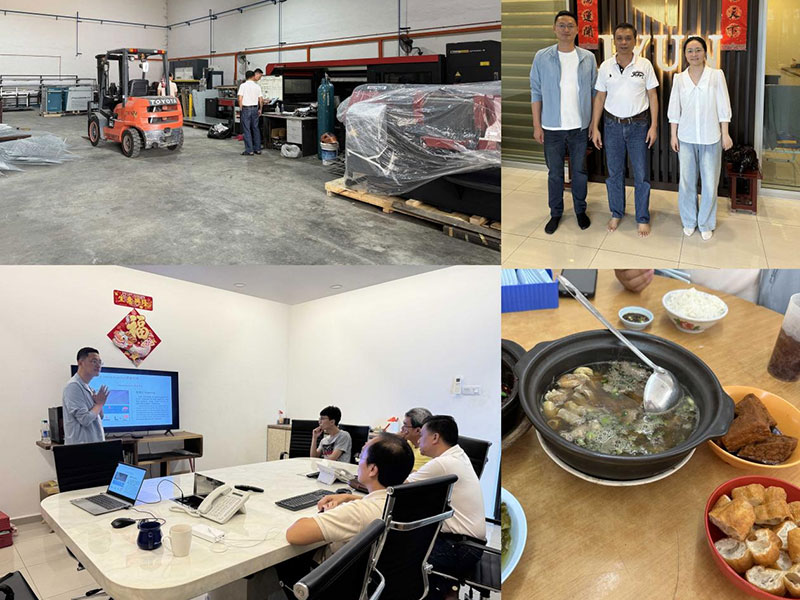
    Deepening Customer Needs · Earning Trust Through Professional Service

    Deepening Customer Needs · Earning Trust Through Professional Service

    2025-12-26
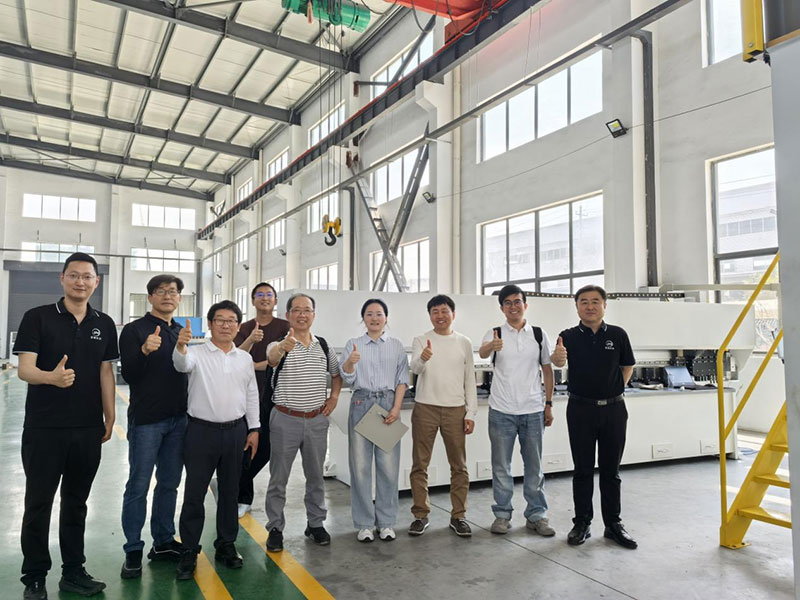
    Expanding New Markets·Strengthening Long-Term Partnerships —Korean Partner Visits Our Factory And Deepens Cooperation

    Expanding New Markets·Strengthening Long-Term Partnerships —Korean Partner Visits Our Factory And Deepens Cooperation

    2025-12-26
    • <
    • 1
    • 2
    • 3
    • 4
    • ...
    • 10
    • >

    More Info? Get In Touch

    CONTACT
    Email:

    jeanie@jianmeng.com

    Phone:

    +86 19805122954


    CONTACT


    We will reply to your inquiry within 24 hours

    Jianmeng Intelligent Equipment (Taizhou) Co., Ltd.
    PRODUCTS

    Forming machine

    Deburring machine

    Press brake

    Shearing machine

    V grooving machine

    Notching machine

    CONTACT

    Contact: Jeanie Jiang

    Mobile phone: +86 19805122954

    WhatsApp: +86 19805122954

    Email: jeanie@jianmeng.com

    Address: 299 Tongchuang Road, Zhangqiao Industrial Park, Taixing, Taizhou City, Jiangsu Province

    en_US English
    EnglishEnglish 中文中文 ArabicArabic RussianRussian SpanishSpanish PortuguesePortuguese FrenchFrench GermanGerman HindiHindi ThaiThai VietnameseVietnamese KhmerKhmer ItalianItalian TurkishTurkish KoreanKorean BelarusianBelarusian

    © 2025 Jianmeng Intelligent Equipment (Taizhou) Co., Ltd. All Rights Reserved.Powered by Wangke

    Sitemap RSS XML Privacy Policy

    • +86 19805122954