We use Cookie To improve your experience. Please read our privacy policy to understand how we use it Cookie

Privacy Policy

+86 19805122954
jeanie@jianmeng.com
info@jianmeng.com
Jianmeng Intelligent Equipment (Taizhou) Co., Ltd. Jianmeng Intelligent Equipment (Taizhou) Co., Ltd.
  • HOME
  • ABOUT
    • Our company
      • Company Profile
      • Development History
      • Factory Strength
      • Group photo with clients
      • Application
    • Certification
    • Quality
    • Customization
    • Service
  • PRODUCTS
    • Forming machine
      • Power forming machine PF665
      • Power forming machine PF350
      • Pneumatic forming machine PMF400
    • Deburring machine
      • XDP-RP Series deburring machine
      • XDP-RR Series deburring and brushing machine
      • XDP-MRP Series carbon steel deburring machine
      • XDP-RPR Series deburring and surface finishing machine
      • XDP-MRPR Series carbon steel deburring and surface finishing machine
      • XDP-RPRT Series surface finishing and polishing machine
      • XDP-MRPRT Series carbon steel surface finishing and polishing machine
      • XDP-RRT Series deburring and polishing machine
      • XDP-WRR Series flat surface wet brushing machine
      • XDP-WDC Series wet dust collector
      • XDP-SD Manual deburring machine
    • Press brake
      • Electro-hydraulic CNC press brake
      • Torsion-Bar NC press brake
      • Mini electric servo press brake
      • Tandem press brake
    • Shearing machine
      • Hydraulic guillotine CNC shearing machine
      • Swing beam CNC shearing machine
    • V grooving machine
      • Horizontal V grooving machine
      • Automatic four-side V grooving machine
      • Vertical V grooving machine
      • Vertical reciprocating V grooving machine
      • Vertical laser&V-grooving combo machine
    • Notching machine
      • Notching Machine
  • NEWS
    • Client Case
    • Industry News
  • CONTACT
English
  • EnglishEnglish
  • 中文中文
  • ArabicArabic
  • RussianRussian
  • SpanishSpanish
  • PortuguesePortuguese
  • FrenchFrench
  • GermanGerman
  • HindiHindi
  • ThaiThai
  • VietnameseVietnamese
  • KhmerKhmer
  • ItalianItalian
  • TurkishTurkish
  • KoreanKorean
  • BelarusianBelarusian
NEWS
NEWS

HOME > NEWS

  • Client Case
  • Industry News
  • Choosing The Right Automatic Deburring Machine

    Choosing The Right Automatic Deburring Machine

    Selecting the right automatic deburring machine is a technically nuanced decision—one that hinges on aligning machine capabilities with your manufacturing’s specific demands for precision, throughput, and material compatibility. In industries ranging from aerospace (AS9100 compliant) to automotive (IATF 16949) and medical device (ISO 13485) production, automatic deburring is no longer a “value-add” but a mandatory step: it eliminates burrs (per ISO 13715 Class 1–3 standards), creates controlled edge radii (DIN 4063), and ensures parts meet safety, fit, and aesthetic requirements. This guide distills the technical essentials—machine classifications, performance metrics, and selection criteria—to streamline your decision-making. 1. The Strategic Role of Automatic Deburring in Modern Manufacturing Manual deburring (e.g., hand filing, sanding) suffers from inherent limitations: inconsistent edge quality (±0.1–0.3mm tolerance), high labor costs ($25–$40/hour per operator), and productivity bottlenecks (≤50 parts/hour). Automatic deburring machines address these pain points by leveraging mechanized, repeatable processes that: - Maintain edge rounding tolerances of ±0.02–0.05mm (critical for fatigue-resist...

    2026-01-16
    Metal Sander: Core Equipment For Metal Surface Treatment And Purchase Guide

    Metal Sander: Core Equipment For Metal Surface Treatment And Purchase Guide

    As a core device in the field of metal processing, the metal sander focuses on solving defects such as rust, oxide layers, burrs, and welding residues on metal surfaces, and can significantly improve the flatness and smoothness of workpieces. Its wide range of application scenarios covers industries such as machinery manufacturing, automobile maintenance, and medical device production, making it an indispensable tool for industrial - grade surface treatment processes. Deburring Machine Grinding & Polishing I. Core Advantages of Metal Sanders The design of metal sanders is fully adapted to the physical characteristics of metal materials. Compared with wood or plastic, metal materials have high hardness, and ordinary sanding equipment is often unable to handle them due to problems such as rapid wear of abrasives and low sanding efficiency. Metal sanders use high - hardness abrasives such as silicon carbide sanding belts and diamond grinding wheels, which can efficiently process metals of different hardnesses, such as stainless steel and aluminum alloy. In addition, the pressure adjustment system of the equipment can be flexibly adjusted according to the material differences. For example, the pressure on soft aluminum alloy is reduced to prevent deformation, while pressure can...

    2026-01-14
    How To Choose The Right Deburring Machine

    How To Choose The Right Deburring Machine

    In sheet metal fabrication—where component quality is governed by standards like ISO 13715 (burr classification) and DIN 4063 (edge rounding tolerances)—selecting the right deburring machine is a critical decision that directly impacts product safety, performance, and production efficiency. Burrs (formed during laser cutting, stamping, or milling) and uneven edges can compromise assembly fit, cause premature wear in moving parts, or pose laceration risks to operators. This guide outlines a technical, application-driven framework for choosing a deburring machine, emphasizing alignment with material properties, production demands, and part geometry. 1. First: Understand the Industrial Context of Deburring Before selecting a machine, clarify the non-negotiable requirements of your application: - Burr type & size: ISO 13715 categorizes burrs by height (≤0.1mm = Class 1; 0.1–0.5mm = Class 2; >0.5mm = Class 3). For example, aerospace components (AS9100 compliant) require Class 1 burr removal, while general sheet metal brackets may accept Class 2. - Edge rounding needs: Critical for fatigue resistance—e.g., automotive chassis parts need 0.2–0.5mm radii, while medical device components (ISO 13485) demand 0.1–0.2mm radii. - Surfac...

    2026-01-12
    Analysis Of Chamfering Machine Types And Application Selection Guide

    Analysis Of Chamfering Machine Types And Application Selection Guide

    As one of the core equipment in modern manufacturing, the core function of a chamfering machine is to precisely chamfer the edges of metal or non - metal workpieces, remove burrs and form bevels at specific angles. This process can not only effectively reduce stress concentration on the workpiece and improve mechanical performance, but also significantly reduce operational hazards caused by sharp edges and enhance the appearance texture of the product. The following will be analyzed from three aspects: equipment types, selection factors and industry applications. Deburring Machine for Edge Rounding I. Equipment Types and Working Principles 1. Manual Chamfering Machine The manual chamfering machine, with its simple structure and flexible mobility, is suitable for small - batch processing or on - site maintenance scenarios. During operation, manual force is required to push the workpiece or the machine head to complete the chamfering. It has low costs but requires a relatively high level of operator skills. 2. Electric Chamfering Machine It uses an electric motor to drive the cutting unit, supports batch continuous processing, and can adjust the chamfering angle and width. For example, a hand - held electric chamfering machine uses a motor to drive a rotary millin...

    2026-01-11
    Industrial Deburring Machines For Deburring & Edge Rounding

    Industrial Deburring Machines For Deburring & Edge Rounding

    In precision manufacturing—where metal components must adhere to strict dimensional standards (e.g., ISO 13715 for burr classification, DIN 4063 for edge rounding tolerances)—industrial deburring machines are indispensable for post-processing. These systems address two critical challenges: deburring (removing unwanted protrusions formed during machining) and edge rounding (creating controlled, uniform radii on part edges). Both processes are non-negotiable for ensuring component safety, performance, and compliance with aerospace, automotive, and medical device industry requirements. Below is a technically precise breakdown of their role, classification, benefits, and selection criteria. 1. Technical Definition & Industrial Significance 1.1 What Are Burrs & Edge Rounding? Burrs are micro-protrusions (typically 0.01–0.5mm in height) formed when metal undergoes plastic deformation during machining (milling, stamping, laser cutting, or grinding). They compromise part functionality by: - Causing friction-induced wear in moving assemblies (e.g., automotive gears, hydraulic valves). - Creating misalignment in precision fits (e.g., aerospace fastener holes). - Posing laceration risks to operators during handling. Edge rounding—oft...

    2026-01-09
    Analysis Of The Core Functions Of Metal Finishing Machines And Selection Guide: Key Equipment For Improving Processing Efficiency

    Analysis Of The Core Functions Of Metal Finishing Machines And Selection Guide: Key Equipment For Improving Processing Efficiency

    As an important piece of equipment in the field of metal processing, metal finishing machines are widely used in fields such as mechanical manufacturing, automotive parts repair, and aerospace precision processing. Their core functions are to repair, reshape, and perform fine - processing on metal workpieces, thereby improving the appearance quality and dimensional accuracy of products. This article will conduct an in - depth analysis of the core functions, mainstream types, and selection techniques of such equipment to help enterprises optimize their production processes. Deburring and rounding system Five Core Functions of Metal Finishing Machines 1. Deburring: For the burrs on the surface of workpieces after casting, cutting, or stamping, high - speed rotating cutters are used to quickly clean them up, avoiding assembly errors or safety hazards caused by burrs in subsequent processes. 2. Precision Chamfering: Professional chamfering cutters are used to process the edges of workpieces into a 0.1 - 1.5mm bevel. This not only enhances the aesthetic appeal of the products but also reduces the risk of scratches to operators caused by sharp edges. 3. Surface Polishing: Finishing machines equipped with polishing wheels of different meshes can achieve multi - level effects...

    2026-01-07
    What Are The Benefits Of Using A Groove Machine

    What Are The Benefits Of Using A Groove Machine

    In metal furniture and cabinet manufacturing—where dimensional consistency (per ISO 8062 Tolerance Class IT8–IT9), production throughput, and structural integrity (per EN 14411 for metal furniture) directly determine market competitiveness—groove machines (encompassing CNC grooving systems, horizontal groovers, and gantry slotting machines) have evolved into mission-critical production assets. Unlike manual routing or generic cutting tools, these specialized systems are engineered to address the unique demands of furniture/cabinet fabrication (e.g., tight joint tolerances, high-volume repeatability, and material diversity), delivering technical and operational advantages that directly translate to measurable business value. Below is a technically precise, industry-aligned breakdown of their core benefits: 1. Unmatched Dimensional Precision for Critical Joints & Fit Metal furniture and cabinetry depend on grooves for load-bearing structural connections (e.g., dovetail joints for drawer boxes, rectangular slots for panel-to-frame assembly) and aesthetic alignment (e.g., edge grooves for trim integration). Groove machines deliver sub-millimeter precision that manual processes (reliant on hand marking and routing) cannot replicate, anchored by advanced mechanic...

    2026-01-05
    Deburring Machines: A Comprehensive Analysis Of Working Principles, Type Selection, And Application Fields

    Deburring Machines: A Comprehensive Analysis Of Working Principles, Type Selection, And Application Fields

    A deburring machine is an industrial device specifically designed to remove burrs from the surfaces of workpieces made of materials such as metal and plastic. Burrs are typically generated during cutting, milling, stamping, or casting processes, which can directly affect the dimensional accuracy, assembly performance, and service life of parts. To meet the characteristics of different workpieces and production requirements, deburring machines employ various technologies to achieve efficient processing and are widely used in industries such as automobile manufacturing, aerospace, and precision electronics. I. Main Types and Characteristics of Deburring Machines 1. Mechanical Deburring Technology - Barrel Deburring Machine: Workpieces and abrasives are placed in a rotating barrel, and burrs are removed through friction. It is suitable for batch processing of small regular parts, but the processing accuracy is relatively low. - Vibratory Deburring Machine: High - frequency vibration is used to make the workpieces and abrasives rub against each other rapidly. It can process parts with complex shapes, but vibration parameters need to be adjusted according to the material to avoid surface damage. - Belt Deburring Machine: It uses a high - speed abrasive belt with ...

    2026-01-04

    Latest case

    Indonesian Customer Visits Our Factory For Equipment Acceptance And End-User Site Tour

    Indonesian Customer Visits Our Factory For Equipment Acceptance And End-User Site Tour

    2026-02-02
    Deepening Customer Needs · Earning Trust Through Professional Service

    Deepening Customer Needs · Earning Trust Through Professional Service

    2025-12-26
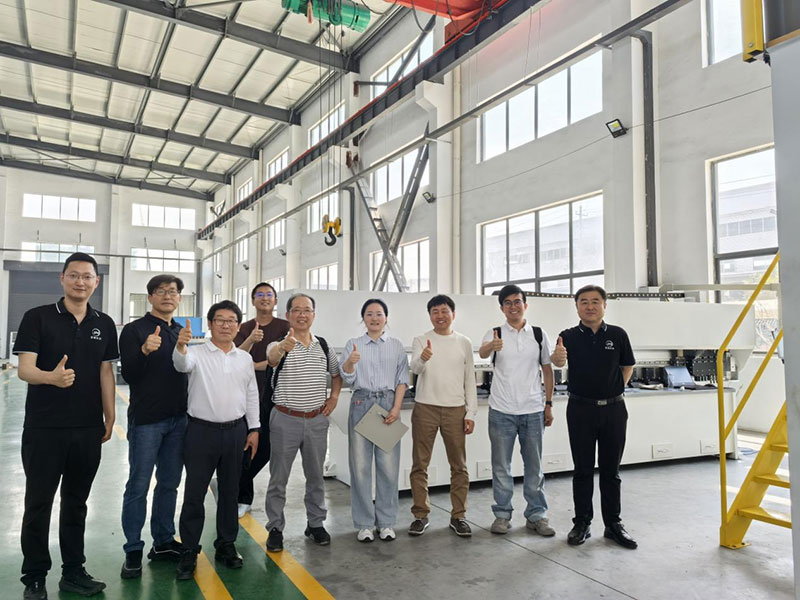
    Expanding New Markets·Strengthening Long-Term Partnerships —Korean Partner Visits Our Factory And Deepens Cooperation

    Expanding New Markets·Strengthening Long-Term Partnerships —Korean Partner Visits Our Factory And Deepens Cooperation

    2025-12-26
    • <
    • 1
    • 2
    • 3
    • 4
    • 5
    • 6
    • ...
    • 12
    • >

    More Info? Get In Touch

    CONTACT
    Email:

    jeanie@jianmeng.com

    Phone:

    +86 19805122954


    CONTACT


    We will reply to your inquiry within 24 hours

    Jianmeng Intelligent Equipment (Taizhou) Co., Ltd.
    PRODUCTS

    Forming machine

    Deburring machine

    Press brake

    Shearing machine

    V grooving machine

    Notching machine

    CONTACT

    Contact: Jeanie Jiang

    Mobile phone: +86 19805122954

    WhatsApp: +86 19805122954

    Email: jeanie@jianmeng.com

    Address: 299 Tongchuang Road, Zhangqiao Industrial Park, Taixing, Taizhou City, Jiangsu Province

    en_US English
    EnglishEnglish 中文中文 ArabicArabic RussianRussian SpanishSpanish PortuguesePortuguese FrenchFrench GermanGerman HindiHindi ThaiThai VietnameseVietnamese KhmerKhmer ItalianItalian TurkishTurkish KoreanKorean BelarusianBelarusian

    © 2025 Jianmeng Intelligent Equipment (Taizhou) Co., Ltd. All Rights Reserved.Powered by Wangke

    Sitemap RSS XML Privacy Policy

    • +86 19805122954