We use Cookie To improve your experience. Please read our privacy policy to understand how we use it Cookie

Privacy Policy

+86 19805122954
jeanie@jianmeng.com
info@jianmeng.com
Jianmeng Intelligent Equipment (Taizhou) Co., Ltd. Jianmeng Intelligent Equipment (Taizhou) Co., Ltd.
  • HOME
  • ABOUT
    • Our company
      • Company Profile
      • Development History
      • Factory Strength
      • Group photo with clients
      • Application
    • Certification
    • Quality
    • Customization
    • Service
  • PRODUCTS
    • Forming machine
      • Power forming machine PF665
      • Power forming machine PF350
      • Pneumatic forming machine PMF400
    • Deburring machine
      • XDP-RP Series deburring machine
      • XDP-RR Series deburring and brushing machine
      • XDP-MRP Series carbon steel deburring machine
      • XDP-RPR Series deburring and surface finishing machine
      • XDP-MRPR Series carbon steel deburring and surface finishing machine
      • XDP-RPRT Series surface finishing and polishing machine
      • XDP-MRPRT Series carbon steel surface finishing and polishing machine
      • XDP-RRT Series deburring and polishing machine
      • XDP-WRR Series flat surface wet brushing machine
      • XDP-WDC Series wet dust collector
      • XDP-SD Manual deburring machine
      • XDP-1308D Series Deburring Machine
    • Press brake
      • Electro-hydraulic CNC press brake
      • ECO Dual servo hybrid press brake
      • Torsion-Bar NC press brake
      • Mini electric servo press brake
      • Tandem press brake
      • Robotic press brake bending cell
    • Shearing machine
      • Hydraulic guillotine CNC shearing machine
      • Swing beam CNC shearing machine
    • V grooving machine
      • Horizontal V grooving machine
      • Automatic four-side V grooving machine
      • Vertical V grooving machine
      • Vertical reciprocating V grooving machine
      • Vertical laser&V-grooving combo machine
    • Notching machine
      • Notching Machine
  • NEWS
    • Client Case
    • Industry News
  • CONTACT
English
  • EnglishEnglish
  • 中文中文
  • ArabicArabic
  • RussianRussian
  • SpanishSpanish
  • PortuguesePortuguese
  • FrenchFrench
  • GermanGerman
  • HindiHindi
  • ThaiThai
  • VietnameseVietnamese
  • KhmerKhmer
  • ItalianItalian
  • TurkishTurkish
  • KoreanKorean
  • BelarusianBelarusian
NEWS
NEWS

HOME > NEWS

  • Client Case
  • Industry News
  • Guillotine Shearing Machine: Definition, Types, Working Principles, Applications, And Maintenance Guidelines

    Guillotine Shearing Machine: Definition, Types, Working Principles, Applications, And Maintenance Guidelines

    A guillotine shearing machine (often referred to as a guillotine shear) is a vital piece of equipment in metal processing and manufacturing industries, specifically designed to cut sheet metal, plates, and thin metal profiles with high precision and efficiency. Unlike other cutting machines that rely on rotary blades or abrasive cutting, guillotine shears use a straight, sharp blade that descends vertically (or at a slight angle) to shear materials cleanly, ensuring uniform cuts and minimal material waste. This article systematically elaborates on the definition, core significance, main types, working principles, typical application scenarios, process optimization, and maintenance guidelines of guillotine shearing machines, integrating practical technical parameters and industry operational experience to provide comprehensive guidance for engineers, production managers, quality control personnel, and maintenance technicians. I. Overview and Core Definition of Guillotine Shearing Machines In metal processing, shearing is a fundamental cutting process that involves separating sheet metal or plates into smaller, desired sizes using mechanical force. A guillotine shearing machine is a specialized device that executes this process through a reciprocating linear motion of a sharp, str...

    2026-06-15
    Forming Machine: Definition, Types, Working Principles, Applications, And Maintenance Guidelines

    Forming Machine: Definition, Types, Working Principles, Applications, And Maintenance Guidelines

    A forming machine is a core equipment in modern manufacturing, designed to shape raw materials (such as metal, plastic, rubber, and composite materials) into desired geometries through mechanical force, heat, pressure, or a combination of these factors. Unlike cutting or machining processes that remove excess material, forming machines achieve shaping by deforming materials without altering their total volume—making them efficient, material-saving, and suitable for mass production. This article systematically elaborates on the definition, core significance, main types, working principles, typical application scenarios, process optimization, and maintenance guidelines of forming machines, integrating practical technical parameters and industry experience to provide comprehensive guidance for engineers, production managers, quality control personnel, and maintenance technicians. I. Overview and Core Definition of Forming Machines In manufacturing, forming is a key material processing method that transforms raw materials (sheets, bars, powders, or melts) into finished or semi-finished products with specific shapes, sizes, and mechanical properties. A forming machine is a specialized device that realizes this transformation by applying external forces (mechanical force, pressu...

    2026-06-08
    Grooving Machine: Definition, Manufacturing, Properties, And Industrial Applications

    Grooving Machine: Definition, Manufacturing, Properties, And Industrial Applications

    A grooving machine, also known as a slotting machine or channeling machine, is a high-precision metal processing equipment designed to cut precise grooves, slots, or channels on the surface or edge of workpieces. It is widely used in metal fabrication, automotive manufacturing, aerospace, construction, and other industrial fields, serving as a key equipment for achieving precise slotting, which directly affects the assembly accuracy, structural stability, and service life of the final products. Unlike ordinary cutting machines, grooving machines feature specialized cutting tools, precise feeding mechanisms, and stable positioning systems, enabling it to process grooves with uniform depth, consistent width, and smooth surface finish. This article systematically elaborates on the definition, core properties, manufacturing process, main types, working mechanism, typical application scenarios, and maintenance guidelines of grooving machines, integrating practical technical parameters and industry experience to provide comprehensive guidance for engineers, procurement personnel, and maintenance technicians. I. Overview and Core Definition of Grooving Machine In modern metal processing industry, precise slotting is an essential process for many components, as grooves are often used fo...

    2026-05-18
    CNC Press Brakes: Core Technology Analysis For High-Precision Sheet Metal Forming

    CNC Press Brakes: Core Technology Analysis For High-Precision Sheet Metal Forming

    1. Introduction In modern manufacturing industry, sheet metal forming is a key processing link, which is widely used in the production of various metal components, such as automotive body parts, aerospace structural parts, electrical equipment shells, and mechanical brackets. With the continuous development of high-end manufacturing, the requirements for sheet metal forming precision, shape complexity, and production efficiency are increasingly strict. Traditional bending equipment, such as manual bending machines and semi-automatic hydraulic bending machines, rely on the experience of operators to adjust bending parameters, which leads to problems such as low forming precision, poor consistency of workpieces, high labor intensity, and low production efficiency, which can no longer meet the needs of high-precision, large-batch sheet metal forming. CNC press brakes, as a new type of high-precision sheet metal forming equipment, have gradually become the core equipment in sheet metal processing industry due to their high precision, high efficiency, high automation, and strong flexibility. The core advantage of CNC press brakes lies in the integration of numerical control technology and hydraulic control technology, which can realize precise control of the entire bending process, i...

    2026-05-11
    Swing Beam Shears: Detailed Explanation Of Working Principle, Performance Advantages And Industrial Applications

    Swing Beam Shears: Detailed Explanation Of Working Principle, Performance Advantages And Industrial Applications

    1. Introduction In modern metal processing industry, sheet cutting is a basic and essential process, which directly affects the processing quality, production efficiency, and product cost of subsequent processes such as bending, stamping, and welding. Metal sheets of different materials (such as carbon steel, stainless steel, aluminum alloy) and thicknesses require cutting equipment with corresponding precision and efficiency to ensure the accuracy of the cutting size, the flatness of the cutting surface, and the integrity of the edge quality. Traditional sheet cutting methods, such as manual cutting and guillotine shear cutting, have limitations in terms of cutting precision, efficiency, and edge quality, which can no longer meet the needs of modern large-scale, high-precision metal sheet processing. Swing beam shears, as a specialized high-precision sheet cutting equipment, have gradually replaced traditional shears in many fields due to their unique structural design and excellent performance. The core feature of swing beam shears is that the upper blade carrier swings around a fixed fulcrum during the cutting process, forming a gradual cutting effect from one end to the other, which not only reduces the cutting force required but also ensures the flatness of the sheet after ...

    2026-05-04
    Slotting Machines: A Comprehensive Analysis Of Types, Characteristics And User Guide

    Slotting Machines: A Comprehensive Analysis Of Types, Characteristics And User Guide

    1. Introduction In modern machining and construction fields, slotting processing is a basic and essential process, which is widely used in the production and processing of mechanical parts, wood products, building materials, and other products. Grooves, slots, and keyways processed by slotting machines not only play a role in positioning, connecting, and transmitting power but also directly affect the assembly accuracy, service life, and overall performance of the final product. For example, in mechanical manufacturing, keyways processed by slotting machines are used to connect shafts and gears, ensuring the synchronous rotation of components; in woodworking, slots processed by slotting machines are used for splicing wood boards, improving the stability of the product; in construction, slotting machines are used to process grooves on walls and floors for laying wires, pipes, and other facilities. With the continuous development of industrial technology, the demand for slotting processing is increasingly diversified—different industries, different materials (such as metal, wood, concrete), and different workpiece sizes have different requirements for slotting precision, slot shape, and processing efficiency. Traditional manual slotting methods have the disadvantages of low ...

    2026-04-27
    A Comprehensive Analysis Of Metal Forming Processes: Core Technologies And Application Scenarios

    A Comprehensive Analysis Of Metal Forming Processes: Core Technologies And Application Scenarios

    Metal forming is a key technology for manufacturing parts or products by changing the shape, size, and properties of metals through physical or chemical means. It is widely used in industries such as automotive, aerospace, electronics, and construction. This article will systematically sort out the core processes, technical characteristics, and selection principles of metal forming, providing a reference guide for the industry. Metal forming tools I. Classification of Main Metal Forming Processes 1. Stamping Forming Stamping uses dies and presses to perform blanking, bending, or stretching on metal sheets, and is suitable for producing thin - walled parts. Its advantages lie in high efficiency and low cost, and it is commonly used in mass - production scenarios such as automotive body panels and electronic product casings. 2. Forging Forming Forging causes plastic deformation of metal billets through hammering or pressure and is divided into open - die forging and closed - die forging. Open - die forging is suitable for large and simple parts (such as wind power flanges), while closed - die forging can manufacture complex small parts (such as gears). Forged parts have high strength and impact resistance, making forging the preferred process for high - load compo...

    2026-04-22
    A Comprehensive Analysis Of The Core Technologies And Industry Applications Of Precision Machining Of Stainless Steel

    A Comprehensive Analysis Of The Core Technologies And Industry Applications Of Precision Machining Of Stainless Steel

    Precision machining of stainless steel is a key technology that involves in - depth processing of stainless - steel materials through a series of precise processes to improve their dimensional accuracy, surface finish, and comprehensive performance. Thanks to the excellent corrosion resistance, heat resistance, and mechanical strength of stainless - steel materials, the precision - machined parts are widely used in high - end fields such as medical devices, aerospace, and chemical equipment. The following are the core methods and implementation points of this process. Metal edge rounding and deburring Core Processes of Precision Machining of Stainless Steel 1. Turning and Milling Technologies Turning uses CNC lathes to achieve high - precision forming of rotary parts (such as shafts and discs), while CNC milling is suitable for processing planar and three - dimensional parts with complex geometric features. Both types of technologies require special cutting tools to overcome the work - hardening characteristics of stainless steel and ensure processing efficiency and product quality. 2. Grinding and Electrical Discharge Machining Surface grinders and cylindrical grinders can significantly improve the surface finish, with the precision reaching the micron level, which ...

    2026-04-19

    Latest case

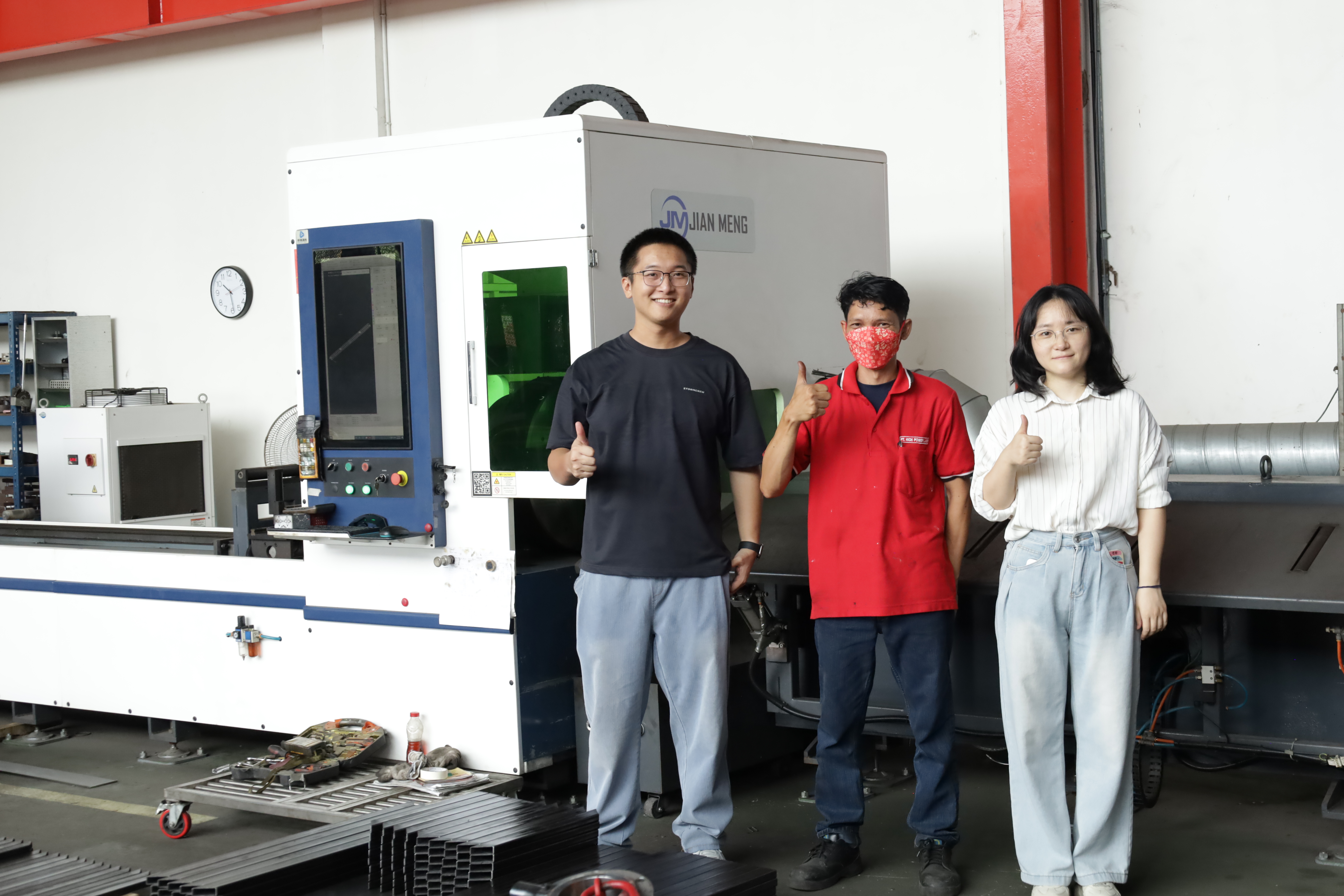
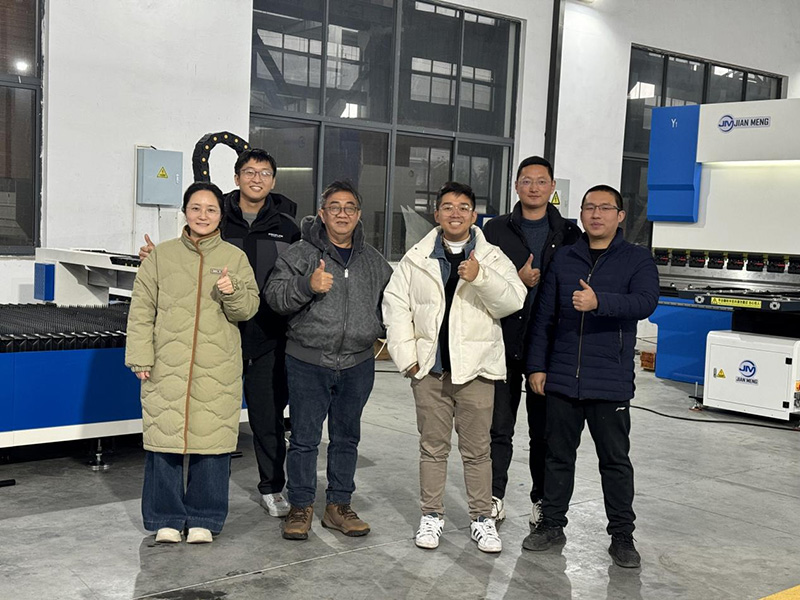
    Indonesian Customer Visits Our Factory For Equipment Acceptance And End-User Site Tour

    Indonesian Customer Visits Our Factory For Equipment Acceptance And End-User Site Tour

    2026-02-02
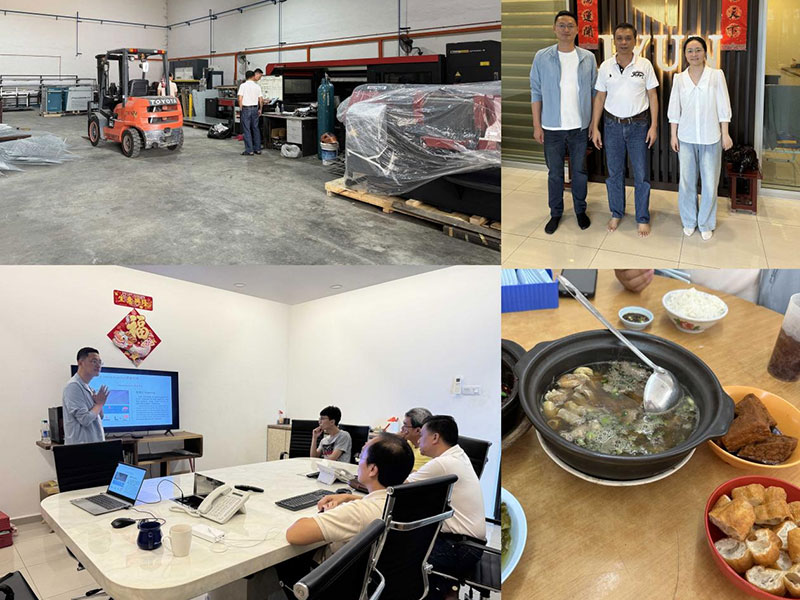
    Deepening Customer Needs · Earning Trust Through Professional Service

    Deepening Customer Needs · Earning Trust Through Professional Service

    2025-12-26
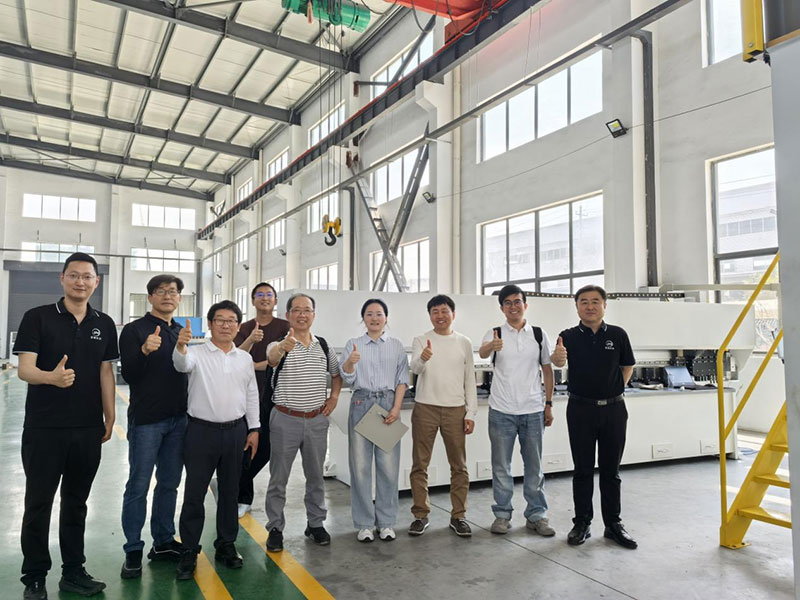
    Expanding New Markets·Strengthening Long-Term Partnerships —Korean Partner Visits Our Factory And Deepens Cooperation

    Expanding New Markets·Strengthening Long-Term Partnerships —Korean Partner Visits Our Factory And Deepens Cooperation

    2025-12-26
    • 1
    • 2
    • 3
    • ...
    • 14
    • >

    More Info? Get In Touch

    CONTACT
    Email:

    jeanie@jianmeng.com

    Phone:

    +86 19805122954


    CONTACT


    We will reply to your inquiry within 24 hours

    Jianmeng Intelligent Equipment (Taizhou) Co., Ltd.
    PRODUCTS

    Forming machine

    Deburring machine

    Press brake

    Shearing machine

    V grooving machine

    Notching machine

    CONTACT

    Contact: Jeanie Jiang

    Mobile phone: +86 19805122954

    WhatsApp: +86 19805122954

    Email: jeanie@jianmeng.com

    Address: 299 Tongchuang Road, Zhangqiao Industrial Park, Taixing, Taizhou City, Jiangsu Province

    en_US English
    EnglishEnglish 中文中文 ArabicArabic RussianRussian SpanishSpanish PortuguesePortuguese FrenchFrench GermanGerman HindiHindi ThaiThai VietnameseVietnamese KhmerKhmer ItalianItalian TurkishTurkish KoreanKorean BelarusianBelarusian

    © 2018 Jianmeng Intelligent Equipment (Taizhou) Co., Ltd. All Rights Reserved.Powered by Wangke

    Sitemap RSS XML Privacy Policy

    • +86 19805122954