We use Cookie To improve your experience. Please read our privacy policy to understand how we use it Cookie

Privacy Policy

+86 19805122954
jeanie@jianmeng.com
info@jianmeng.com
Jianmeng Intelligent Equipment (Taizhou) Co., Ltd. Jianmeng Intelligent Equipment (Taizhou) Co., Ltd.
  • HOME
  • ABOUT
    • Our company
      • Company Profile
      • Development History
      • Factory Strength
      • Group photo with clients
      • Application
    • Certification
    • Quality
    • Customization
    • Service
  • PRODUCTS
    • Forming machine
      • Power forming machine PF665
      • Power forming machine PF350
      • Pneumatic forming machine PMF400
    • Deburring machine
      • XDP-RP Series deburring machine
      • XDP-RR Series deburring and brushing machine
      • XDP-MRP Series carbon steel deburring machine
      • XDP-RPR Series deburring and surface finishing machine
      • XDP-MRPR Series carbon steel deburring and surface finishing machine
      • XDP-RPRT Series surface finishing and polishing machine
      • XDP-MRPRT Series carbon steel surface finishing and polishing machine
      • XDP-RRT Series deburring and polishing machine
      • XDP-WRR Series flat surface wet brushing machine
      • XDP-WDC Series wet dust collector
      • XDP-SD Manual deburring machine
    • Press brake
      • Electro-hydraulic CNC press brake
      • Torsion-Bar NC press brake
      • Mini electric servo press brake
      • Tandem press brake
    • Shearing machine
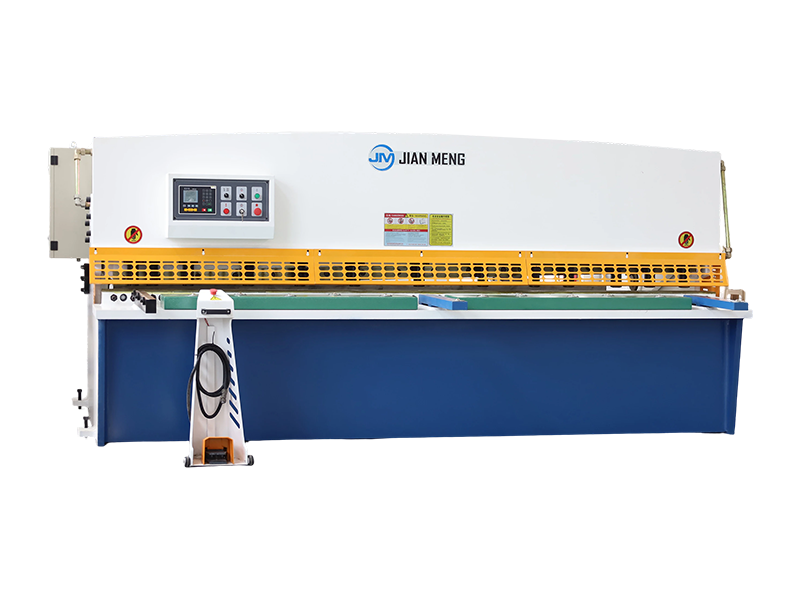
      • Hydraulic guillotine CNC shearing machine
      • Swing beam CNC shearing machine
    • V grooving machine
      • Horizontal V grooving machine
      • Automatic four-side V grooving machine
      • Vertical V grooving machine
      • Vertical reciprocating V grooving machine
      • Vertical laser&V-grooving combo machine
    • Notching machine
      • Notching Machine
  • NEWS
    • Client Case
    • Industry News
  • CONTACT
English
  • EnglishEnglish
  • 中文中文
  • ArabicArabic
  • RussianRussian
  • SpanishSpanish
  • PortuguesePortuguese
  • FrenchFrench
  • GermanGerman
  • HindiHindi
  • ThaiThai
  • VietnameseVietnamese
  • KhmerKhmer
  • ItalianItalian
  • TurkishTurkish
  • KoreanKorean
  • BelarusianBelarusian
NEWS
NEWS

HOME >NEWS > Industry News

  • Client Case
  • Industry News
  • Numerical Control Bending Machine: Analysis Of Core Technologies For High-precision Metal Sheet Forming

    Numerical Control Bending Machine: Analysis Of Core Technologies For High-precision Metal Sheet Forming

    As a core device in modern manufacturing, the numerical control bending machine precisely controls the bending and forming of metal sheets through a numerical control system. It is widely used in industries such as aerospace, automobile manufacturing, and electronics and electrical appliances. Its technological innovation has significantly improved production efficiency and process levels, becoming an important driving force for industrial automation. I. Core Technologies and Advantages 1. Full-closed-loop High-precision Control The numerical control bending machine is equipped with a grating scale and a photoelectric encoder to monitor the position of the slider and the positioning of the back gauge in real time. In combination with the full-closed-loop numerical control system, it achieves a positioning accuracy of ±0.02mm. For example, some advanced models can control the bending angle error within ±0.1 degrees through angle compensation technology, meeting the requirements of high-precision sheet metal processing. 2. Efficient and Flexible Production The equipment supports multi-step programming and automatic die-changing functions, enabling the multi-angle bending of complex workpieces in one go. The design that eliminates the need for frequent die chan...

    2026-02-08
    Essential Guide To Sheet Metal Bending Equipment

    Essential Guide To Sheet Metal Bending Equipment

    Sheet metal bending is a core metal forming process in manufacturing, enabling the transformation of flat metal sheets into structural components, enclosures, and precision parts across industries such as automotive, aerospace, construction, and electronics. By inducing controlled plastic deformation (without material fracture), bending enhances the rigidity, load-bearing capacity, and functional versatility of sheet metal—making it indispensable for producing components ranging from automotive body panels to aerospace brackets and consumer appliance housings. This guide provides a technical overview of sheet metal bending equipment, their operational principles, application scopes, and actionable insights for selection, maintenance, and safety compliance. Core Principles of Sheet Metal Bending Sheet metal bending relies on the material’s ability to undergo elastic-plastic deformation when subjected to concentrated force. The process involves three key technical parameters: - Bend Angle: The desired angle between the two folded segments (typically 0°–180°). - Inside Radius: The radius of the inner curve after bending, determined by material thickness, ductility, and tooling design (smaller radii require higher ductility to avoid cracking). - K-Fa...

    2026-02-06
    A Comprehensive Analysis Of Equipment Polishing Technology: Steps, Methods, And Application Guide

    A Comprehensive Analysis Of Equipment Polishing Technology: Steps, Methods, And Application Guide

    Equipment polishing is a crucial process for improving surface finish and aesthetics through mechanical, chemical, or electrochemical means. Its applications cover multiple fields such as metals, plastics, and stones. A reasonable polishing process can not only enhance the appearance quality but also improve corrosion resistance and extend the service life. The following systematically outlines the core points of polishing technology from steps, methods to precautions. Deburring Polishing Machine I. Core Steps of Equipment Polishing 1. Surface Pretreatment Thoroughly clean impurities such as oil stains and rust on the surface to ensure that the polishing surface is clean and pollution - free, laying a foundation for subsequent processes. 2. Graded Polishing - Rough Polishing: Use coarse - grained abrasives (such as 10 - 20μm Al₂O₃ or Cr₂O₃ suspension) and hard polishing wheels to quickly remove macroscopic scratches and unevenness. - Fine Polishing: Replace with fine - grained abrasives (such as 1 - 5μm micropowder) and soft polishing wheels to gradually reduce the surface roughness. - Precision Polishing: Use ultra - fine polishing agents (such as nano - grade polishing paste) and high - precision polishing equipment to achieve a mirror finish. ...

    2026-02-04
    Maintenance Tips For Sheet Metal Shear Machines

    Maintenance Tips For Sheet Metal Shear Machines

    For sheet metal shear machines—critical assets in fabrication that must adhere to standards like ISO 13918 (metal cutting quality) and ANSI B11.4 (shear safety)—systematic maintenance is the cornerstone of operational reliability, operator safety, and cost control. Unlike generic guidance, this framework integrates technical specifications, industry metrics, and OEM-aligned practices to tailor care for hydraulic, mechanical, and pneumatic shear types, minimizing unplanned downtime (a $2,000–$5,000/hour cost for high-volume shops) and extending machine lifespan by 30–40%. 1. Foundational Step: Understand Your Shear’s Technical Profile Before initiating maintenance, align your routine with the machine’s design—each shear type relies on distinct systems that demand targeted care. | Shear Type | Core Operating Principle | Critical Components | Key Technical Specifications | |---------------------|---------------------------------------------------|-----------------------------------------------|-------------------------------------------------------| | Hydraulic Shears | Hydraulic cylinders (15–20MPa pressure) drive blade descent; servo valves regulate force | Hydraulic manifold,...

    2026-02-02
    Laser Cutting Technology: An Analysis Of Core Principles, Advantages, And Application Areas

    Laser Cutting Technology: An Analysis Of Core Principles, Advantages, And Application Areas

    As a core process in modern manufacturing, laser cutting technology utilizes a high - energy - density laser beam to achieve efficient material processing. Since the birth of the laser in 1960, this technology has continuously evolved and become the preferred solution for processing both metallic and non - metallic materials. The following comprehensively analyzes laser cutting technology from aspects such as technical principles, core advantages, applicable materials, application scenarios, and future trends. Core Principle: The Synergistic Effect of Thermal Effect and Gas Flow In laser cutting, a high - power laser beam is generated by a laser generator and then focused by a focusing lens into an extremely small spot (usually with a diameter of 0.1 - 0.3 mm), generating an energy density as high as 10⁶ - 10⁸ W/cm². When the beam acts on the material surface, the instantaneous heating causes the material to rapidly melt, vaporize, or burn. Meanwhile, high - pressure gas (such as oxygen or nitrogen) coaxial with the beam blows away the molten material, forming a smooth cutting seam. This process can be divided into four modes according to the material properties: 1. Vaporization Cutting: Used for non - metallic materials such as wood and plastic. 2. Melting Cutting: Suit...

    2026-02-01
    Top Shrink Wrap Machines For Small Businesses: A Technical & Operational Guide

    Top Shrink Wrap Machines For Small Businesses: A Technical & Operational Guide

    For small businesses—from e-commerce startups to local retail and artisanal food producers—packaging is more than a logistical step: it safeguards product integrity, reinforces brand credibility, and controls overhead. Shrink wrap machines, tailored to low-to-medium volume needs, address these priorities by combining cost efficiency with professional-grade packaging. This guide breaks down the technical nuances of top-tier machines, their industry-specific applications, and data-driven selection criteria—all aligned with small business constraints and standards like ASTM D1790 (shrink film performance) and FDA 21 CFR 177.1630 (food-contact film compliance). 1. Fundamentals: How Shrink Wrap Machines Add Value for Small Businesses A shrink wrap machine uses heat-activated polymer films (PVC, POF, PE) to form a tight, conformable seal around products. The process relies on two core steps: 1) Sealing the film around the item (via heated bars or impulse sealing); 2) Applying controlled heat to trigger film shrinkage (via hot air or infrared). For small businesses, this delivers measurable benefits: - Cost reduction: Shrink film (e.g., 100m POF roll) costs 30–50% less than corrugated boxes for equivalent packaging. - Space efficiency: Shrink-wrapped ite...

    2026-01-30
    A Comprehensive Analysis Of Deburring Methods For Machined Parts: Core Technologies For Improving Precision And Efficiency

    A Comprehensive Analysis Of Deburring Methods For Machined Parts: Core Technologies For Improving Precision And Efficiency

    In machining, burrs generated on the surface of parts directly affect their dimensional accuracy, assembly performance, and service life. Research shows that the shedding of burrs may increase the failure rate of mechanical systems by 70%, and even cause potential hazards such as the jamming of hydraulic components or short - circuits in electrical circuits. Therefore, the deburring process has become a key link in ensuring the quality of parts. This article systematically sorts out eight mainstream deburring technologies and their applicable scenarios to help enterprises optimize the production process. Metal Deburring Machine I. Classification and Application of Deburring Technologies 1. Manual Deburring Using basic tools such as files and sandpapers, it offers high flexibility and is suitable for small - batch production or parts with complex shapes. However, it incurs high labor costs and is difficult to control the consistency. 2. Mechanical Automation Deburring Batch processing is achieved through dedicated equipment (such as vibration grinders and polishing machines), with the efficiency increased by 2 - 3 times. It is suitable for large - scale production scenarios, but requires a large initial equipment investment. 3. Chemical Corrosion Method This m...

    2026-01-28
    Essential Guide To Sheet Metal Bending Equipment

    Essential Guide To Sheet Metal Bending Equipment

    In precision sheet metal fabrication—where components must adhere to standards like ISO 7752-1 (bending machine performance) and ASTM A606 (sheet metal formability)—selecting the right bending equipment hinges on translating production requirements (material, geometry, volume) into technical specifications. This guide demystifies core bending machine types, their technical principles, and data-driven selection criteria, equipping both seasoned fabricators and industry newcomers to make informed, operation-aligned decisions. 1. Fundamentals: The Role of Bending in Modern Fabrication Sheet metal bending is a plastic deformation process that reshapes flat stock (0.1mm–25mm thick) into 2D/3D geometries (flanges, curves, channels) using controlled force. It is non-negotiable for producing critical components across industries: automotive EV battery enclosures, aerospace titanium brackets, construction steel studs, and HVAC ductwork. The right equipment ensures: - Dimensional compliance (e.g., ±0.1° bending angle tolerance for aerospace parts). - Material integrity (no cracking in high-strength steel like AH36). - Production efficiency (matching laser cutting/CNC punching throughput). 2. Core Types of Sheet Metal Bending Equipment...

    2026-01-26

    Latest case

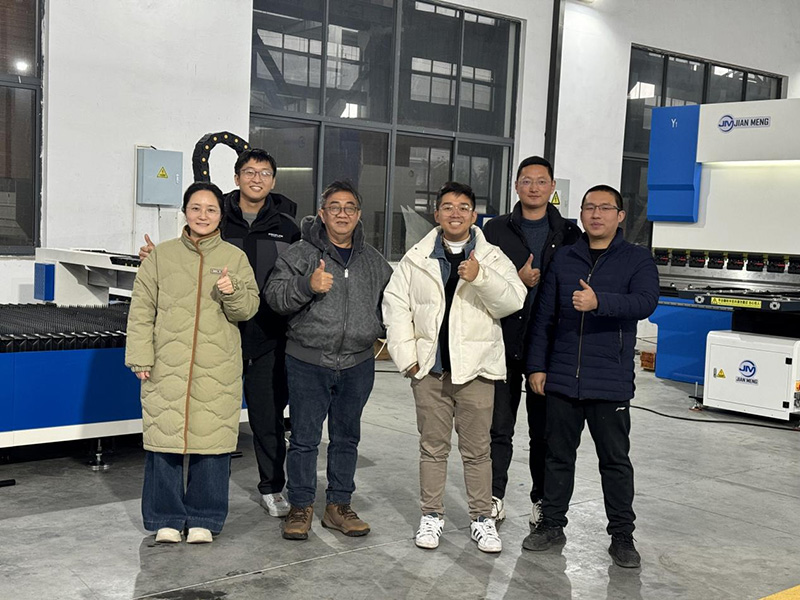
    Indonesian Customer Visits Our Factory For Equipment Acceptance And End-User Site Tour

    Indonesian Customer Visits Our Factory For Equipment Acceptance And End-User Site Tour

    2026-02-02
    Deepening Customer Needs · Earning Trust Through Professional Service

    Deepening Customer Needs · Earning Trust Through Professional Service

    2025-12-26
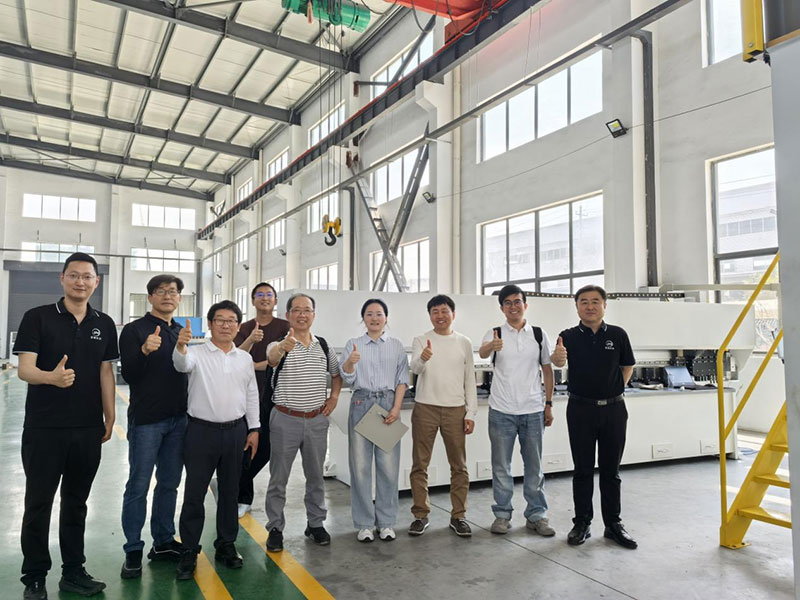
    Expanding New Markets·Strengthening Long-Term Partnerships —Korean Partner Visits Our Factory And Deepens Cooperation

    Expanding New Markets·Strengthening Long-Term Partnerships —Korean Partner Visits Our Factory And Deepens Cooperation

    2025-12-26
    • <
    • 1
    • 2
    • 3
    • 4
    • ...
    • 12
    • >

    More Info? Get In Touch

    CONTACT
    Email:

    jeanie@jianmeng.com

    Phone:

    +86 19805122954


    CONTACT


    We will reply to your inquiry within 24 hours

    Jianmeng Intelligent Equipment (Taizhou) Co., Ltd.
    PRODUCTS

    Forming machine

    Deburring machine

    Press brake

    Shearing machine

    V grooving machine

    Notching machine

    CONTACT

    Contact: Jeanie Jiang

    Mobile phone: +86 19805122954

    WhatsApp: +86 19805122954

    Email: jeanie@jianmeng.com

    Address: 299 Tongchuang Road, Zhangqiao Industrial Park, Taixing, Taizhou City, Jiangsu Province

    en_US English
    EnglishEnglish 中文中文 ArabicArabic RussianRussian SpanishSpanish PortuguesePortuguese FrenchFrench GermanGerman HindiHindi ThaiThai VietnameseVietnamese KhmerKhmer ItalianItalian TurkishTurkish KoreanKorean BelarusianBelarusian

    © 2025 Jianmeng Intelligent Equipment (Taizhou) Co., Ltd. All Rights Reserved.Powered by Wangke

    Sitemap RSS XML Privacy Policy

    • +86 19805122954