We use Cookie To improve your experience. Please read our privacy policy to understand how we use it Cookie

+86 19805122954
jeanie@jianmeng.com
info@jianmeng.com
Jianmeng Intelligent Equipment (Taizhou) Co., Ltd. Jianmeng Intelligent Equipment (Taizhou) Co., Ltd.
  • HOME
  • ABOUT
    • Our company
      • Company Profile
      • Development History
      • Factory Strength
      • Group photo with clients
      • Application
    • Certification
    • Quality
    • Customization
    • Service
  • PRODUCTS
    • Forming machine
      • Power forming machine PF665
      • Power forming machine PF350
      • Pneumatic forming machine PMF400
    • Deburring machine
      • XDP-RP Series deburring machine
      • XDP-RR Series deburring and brushing machine
      • XDP-MRP Series carbon steel deburring machine
      • XDP-RPR Series deburring and surface finishing machine
      • XDP-MRPR Series carbon steel deburring and surface finishing machine
      • XDP-RPRT Series surface finishing and polishing machine
      • XDP-MRPRT Series carbon steel surface finishing and polishing machine
      • XDP-RRT Series deburring and polishing machine
      • XDP-WRR Series flat surface wet brushing machine
      • XDP-WDC Series wet dust collector
      • XDP-SD Manual deburring machine
    • Press brake
      • Electro-hydraulic CNC press brake
      • Torsion-Bar NC press brake
      • Mini electric servo press brake
      • Tandem press brake
    • Shearing machine
      • Hydraulic guillotine CNC shearing machine
      • Swing beam CNC shearing machine
    • V grooving machine
      • Horizontal V grooving machine
      • Automatic four-side V grooving machine
      • Vertical V grooving machine
      • Vertical reciprocating V grooving machine
      • Vertical laser&V-grooving combo machine
    • Notching machine
      • Notching Machine
  • NEWS
    • Client Case
    • Industry News
  • CONTACT
English
  • EnglishEnglish
  • 中文中文
  • ArabicArabic
  • RussianRussian
  • SpanishSpanish
  • PortuguesePortuguese
  • FrenchFrench
  • GermanGerman
  • HindiHindi
  • ThaiThai
  • VietnameseVietnamese
  • KhmerKhmer
  • ItalianItalian
  • TurkishTurkish
  • KoreanKorean
  • BelarusianBelarusian
NEWS
NEWS

HOME >NEWS > Industry News

  • Client Case
  • Industry News
  • Aircraft Skin: Material Evolution And Technological Innovation Drive The Development Of The Aviation Industry

    Aircraft Skin: Material Evolution And Technological Innovation Drive The Development Of The Aviation Industry

    Aircraft skin is a shaping component wrapped around the aircraft's framework, acting like the "skin" of an aircraft. It plays a crucial role in maintaining the aerodynamic shape, bearing loads, and ensuring flight safety. From the simple cloth skin in the early days to modern high - performance composite materials, its development history is not only a microcosm of the technological evolution of the aviation industry but also a true portrayal of the breakthroughs in materials science and manufacturing processes. Forming Machine A Century of Changes in Skin Materials In the early 20th century, most aircraft used a combination of wooden frameworks and canvas skins. Air - tightness was achieved by coating the textile cloth with waterproof paint. Although this kind of skin was lightweight, it could only bear limited aerodynamic loads. The First World War gave rise to the demand for all - metal fighter jets. Due to its high strength and low weight, aluminum alloy gradually replaced cloth materials and dominated aircraft manufacturing throughout World War II. For example, the mainstream fighter jets during World War II used stainless - steel frameworks paired with aluminum - alloy skins, combining strength and workability. The skins of modern conventional a...

    2025-12-17
    Analysis Of Automobile Fenders: Functions, Design Trends, And Common Issues

    Analysis Of Automobile Fenders: Functions, Design Trends, And Common Issues

    The automobile fender is an important part that covers the wheels on the side of the vehicle body. It gets its name because it resembles a bird's wing. As a key component of the vehicle's exterior, it combines protection, aerodynamic optimization, and aesthetic appeal. The following analysis is carried out from multiple dimensions such as structural functions, material selection, and development trends. Kraftformer I. Positioning and Design of Front and Rear Fenders 1. Front Fender - Position: It is located right above the front wheel, connecting the hood and the front door, and behind the front bumper. - Core Function: It needs to reserve the extreme space for the tire to rotate and bounce. During the design process, the dimensional matching is verified through the "wheel bounce diagram". For example, the left - front fender of pure - electric vehicles is often designed as an upper - lower split structure to integrate the charging port, while the right - front side mostly adopts an integrated design. - Material Innovation: Some vehicle models use plastic materials (such as engineering plastics), which have the characteristics of lightweight and collision buffering, and comply with pedestrian protection regulations. 2. Rear Fender ...

    2025-12-14
    Classification, Application, And Core Process Analysis Of Metal Forming Molds

    Classification, Application, And Core Process Analysis Of Metal Forming Molds

    Metal forming molds are indispensable key tools in the manufacturing industry, widely used in the forming and processing of metal sheets, metal volumes, and non - metallic materials. Through precise structural design, they efficiently transform raw materials into complex parts that meet industrial requirements. The diversity of molds is reflected in process types, material selection, and structural forms, adapting to the different requirements of various industries for product size, precision, batch quantity, etc. I. Main Classification of Metal Forming Molds 1. Classification by Forming Materials - Metal Sheet Forming Molds: Represented by stamping dies, they can realize processes such as blanking, bending, and deep drawing. For example, blanking dies cut materials through the cooperation of punches and dies, while deep - drawing dies are used to process sheets into hollow parts. - Metal Volume Forming Molds: Including forging dies, extrusion dies, and die - casting dies. Forging dies cause plastic deformation of metals under high temperature and pressure; extrusion dies force metals through specific cavities to form continuous cross - sections; die - casting dies inject molten metals into cavities under high pressure, which are suitable for the production of complex thin ...

    2025-12-10
    Analysis Of The Working Principle, Application Fields, And Core Advantages Of Pneumatic Hammers

    Analysis Of The Working Principle, Application Fields, And Core Advantages Of Pneumatic Hammers

    A pneumatic hammer is an industrial tool powered by compressed air. It generates a powerful torque through the impact action of an internal piston and is widely used in various fields such as powder processing, chemical engineering, and food industries. Its design takes both efficiency and safety into account, effectively solving problems such as material adhesion, blockage, and bridging during the material conveying process while avoiding damage to the equipment walls. The following will conduct an analysis from four dimensions: working principle, core classification, application scenarios, and performance advantages. Pneumatic Power Hammer I. Working Principle of Pneumatic Hammers The core operating mechanism of a pneumatic hammer relies on the coordinated action of compressed air and a magnetic system. When compressed air is not supplied, the magnetic piston is adsorbed on the surface of the base plate by strong magnetic force. When the solenoid valve is energized, compressed air enters the interior of the hammer body. As the air pressure gradually rises above the magnetic force threshold, the magnetic piston quickly disengages from the base plate and rushes downward at high speed. At this time, the magnetic reaction force and the kinetic energy of the piston work together to...

    2025-12-07
    Analysis Of Edge Banding Machine Prices And Purchase Guide: Product Types, Function Comparison, And Supplier Selection

    Analysis Of Edge Banding Machine Prices And Purchase Guide: Product Types, Function Comparison, And Supplier Selection

    As a key piece of equipment in woodworking, panel production, and decorative material processing, the price and function of an edge banding machine directly affect processing efficiency and product quality. This article will help users systematically understand the market situation and make purchasing decisions from the perspectives of price range, equipment type, core functions, and purchase essentials. I. Price Range of Mainstream Edge Banding Machine Products According to market research, the prices of edge banding machine equipment cover multiple levels: 1. Basic models: The prices of entry - level equipment generally range from a few hundred yuan to a few thousand yuan, which are suitable for small - scale processing scenarios. For example, handheld multi - functional electric edge trimmers usually cost between 200 and 1000 yuan and can meet the chamfering and slotting requirements of materials such as acrylic and PVC. 2. Automated mid - range models: The prices of semi - automatic equipment equipped with functions such as pre - milling and profiling tracking are approximately between 10,000 and 50,000 yuan. They are suitable for edge banding of panels in small and medium - sized furniture factories, supporting batch production while taking cost control into account. ...

    2025-12-03
    Edge Winding Machine: Analysis And Application Of The Core Equipment For Efficient Industrial Coil Processing

    Edge Winding Machine: Analysis And Application Of The Core Equipment For Efficient Industrial Coil Processing

    Functions and Industry Applications of Edge Winding Machines As an indispensable coil processing equipment in industrial production, the edge winding machine is specifically designed to wind materials into circular or irregular-shaped coils. It is widely used in the processing of web materials such as films, papers, adhesive tapes, metal foils, textiles, non - woven fabrics, and medical sanitary materials. In addition, it can work in collaboration with equipment such as slitting machines, film blowing machines, casting machines, and bag making machines, playing a core role in scenarios such as printing, rubber product production, and the production of new energy materials (e.g., lithium - battery separators). It can meet the high - efficiency winding requirements of plastic films such as PP, PET, and PVC, as well as leather and composite materials. Shrinker Core Advantages and Technical Features of Edge Winding Machines 1. High - efficiency and Stable Operating Performance The edge winding machine adopts torque control technology, featuring fast response speed and stable winding tension. The maximum winding speed can reach over 400 meters per minute. The whole machine does not require a reciprocating screw structure, operates smoothly with low noise, and supports flexibl...

    2025-11-30
    Molding Molds: Structural Analysis, Technological Innovation, And Industry Application Guide

    Molding Molds: Structural Analysis, Technological Innovation, And Industry Application Guide

    As a core tool in the manufacturing industry, molding molds shape raw materials into predetermined forms through methods such as pressing, casting, or stamping. They are widely used in fields such as construction, automotive, electronics, medical, and packaging. Their design, materials, and manufacturing processes directly affect product precision, production efficiency, and cost control, and they are the "cornerstone" of industrial production. I. Mold Structure and Core Components Molding molds typically consist of an upper mold (fixed mold) and a lower mold (movable mold), which form the target cavity when closed along the parting surface. The core components include: 1. Molding Parts: Cavities, cores, etc., directly participate in material molding and determine the shape and dimensional accuracy of the product. 2. Guiding System: Guide pillars, guide bushes, etc., ensure precise positioning during mold closing and reduce errors. 3. Cooling/Heating System: Regulates the mold temperature to optimize material fluidity and molding efficiency. 4. Ejection System: Designed with ejector pins or ejector plates to ensure stable demolding of the molded product and avoid deformation. The design of the parting surface needs to balance the convenience of demo...

    2025-11-26
    Comprehensive Analysis Of Mechanical Part Correction Methods: Precise Adjustment To Improve Manufacturing Quality

    Comprehensive Analysis Of Mechanical Part Correction Methods: Precise Adjustment To Improve Manufacturing Quality

    In the process of mechanical processing and assembly, the accuracy of part correction is directly related to equipment performance and product quality. Through scientific and reasonable correction methods, the deformation and misalignment of parts caused by processing errors, installation deviations, or environmental factors can be effectively eliminated. The following are several widely used correction techniques and their operation points, which help enterprises select the most suitable solutions according to actual needs. I. Common Methods for Mechanical Part Correction 1. Measurement Method with Dial Indicators and Micrometer Indicators Such precision measuring tools achieve geometric accuracy control of parts through contact measurement. The reading value of a dial indicator is 0.01 mm, which is suitable for detecting the flatness, concentricity, etc. of parts with an accuracy level of IT6 to IT8. The resolution of a micrometer indicator reaches 0.001 mm, which can meet the verification of surface shape and position tolerances of high - precision parts with an accuracy level of IT5 to IT7. During operation, the gauge should be fixed on the measuring bracket, deviation data should be obtained through multi - point contact, and then the parts should be adjusted until they meet...

    2025-11-23

    Latest case

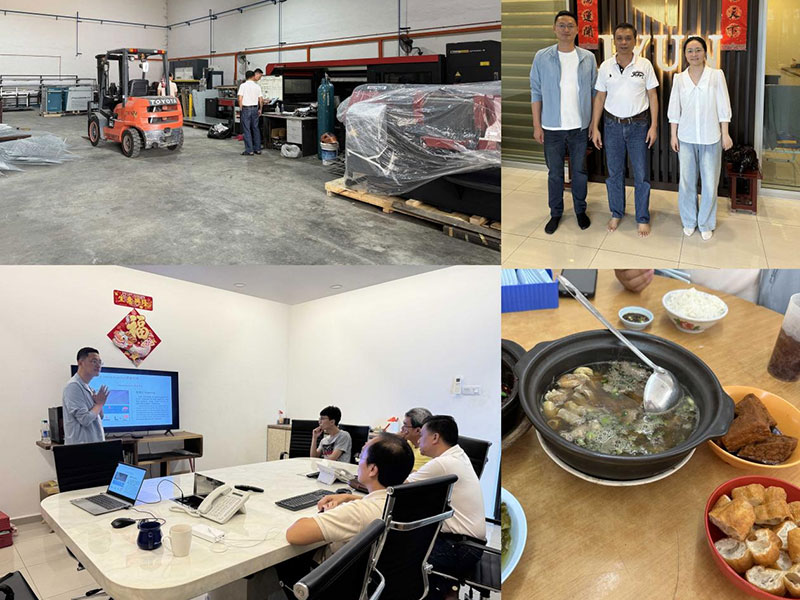
    Deepening Customer Needs · Earning Trust Through Professional Service

    Deepening Customer Needs · Earning Trust Through Professional Service

    2025-12-26
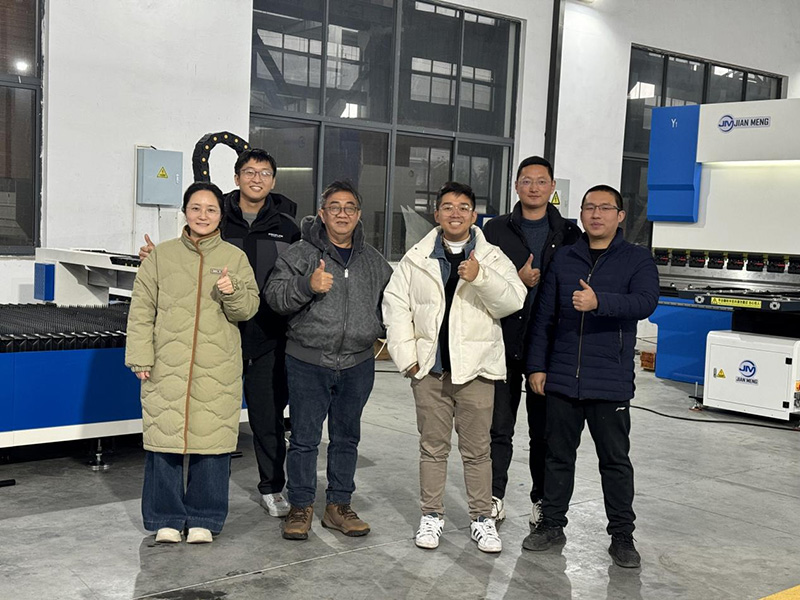
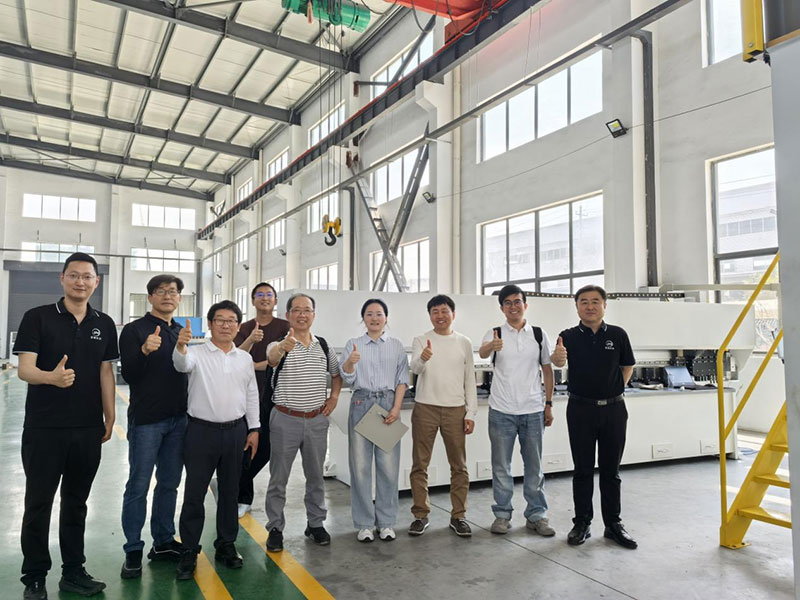
    Expanding New Markets·Strengthening Long-Term Partnerships —Korean Partner Visits Our Factory And Deepens Cooperation

    Expanding New Markets·Strengthening Long-Term Partnerships —Korean Partner Visits Our Factory And Deepens Cooperation

    2025-12-26
    • <
    • 1
    • ...
    • 3
    • 4
    • 5
    • 6
    • 7
    • 8
    • >

    More Info? Get In Touch

    CONTACT
    Email:

    jeanie@jianmeng.com

    Phone:

    +86 19805122954


    CONTACT


    We will reply to your inquiry within 24 hours

    Jianmeng Intelligent Equipment (Taizhou) Co., Ltd.
    PRODUCTS

    Forming machine

    Deburring machine

    Press brake

    Shearing machine

    V grooving machine

    Notching machine

    CONTACT

    Contact: Jeanie Jiang

    Mobile phone: +86 19805122954

    WhatsApp: +86 19805122954

    Email: jeanie@jianmeng.com

    Address: 299 Tongchuang Road, Zhangqiao Industrial Park, Taixing, Taizhou City, Jiangsu Province

    en_US English
    EnglishEnglish 中文中文 ArabicArabic RussianRussian SpanishSpanish PortuguesePortuguese FrenchFrench GermanGerman HindiHindi ThaiThai VietnameseVietnamese KhmerKhmer ItalianItalian TurkishTurkish KoreanKorean BelarusianBelarusian

    © 2025 Jianmeng Intelligent Equipment (Taizhou) Co., Ltd. All Rights Reserved.Powered by Wangke

    Sitemap RSS XML Privacy Policy

    • +86 19805122954