We use Cookie To improve your experience. Please read our privacy policy to understand how we use it Cookie

Privacy Policy

+86 19805122954
jeanie@jianmeng.com
info@jianmeng.com
Jianmeng Intelligent Equipment (Taizhou) Co., Ltd. Jianmeng Intelligent Equipment (Taizhou) Co., Ltd.
  • HOME
  • ABOUT
    • Our company
      • Company Profile
      • Development History
      • Factory Strength
      • Group photo with clients
      • Application
    • Certification
    • Quality
    • Customization
    • Service
  • PRODUCTS
    • Forming machine
      • Power forming machine PF665
      • Power forming machine PF350
      • Pneumatic forming machine PMF400
    • Deburring machine
      • XDP-RP Series deburring machine
      • XDP-RR Series deburring and brushing machine
      • XDP-MRP Series carbon steel deburring machine
      • XDP-RPR Series deburring and surface finishing machine
      • XDP-MRPR Series carbon steel deburring and surface finishing machine
      • XDP-RPRT Series surface finishing and polishing machine
      • XDP-MRPRT Series carbon steel surface finishing and polishing machine
      • XDP-RRT Series deburring and polishing machine
      • XDP-WRR Series flat surface wet brushing machine
      • XDP-WDC Series wet dust collector
      • XDP-SD Manual deburring machine
    • Press brake
      • Electro-hydraulic CNC press brake
      • Torsion-Bar NC press brake
      • Mini electric servo press brake
      • Tandem press brake
    • Shearing machine
      • Hydraulic guillotine CNC shearing machine
      • Swing beam CNC shearing machine
    • V grooving machine
      • Horizontal V grooving machine
      • Automatic four-side V grooving machine
      • Vertical V grooving machine
      • Vertical reciprocating V grooving machine
      • Vertical laser&V-grooving combo machine
    • Notching machine
      • Notching Machine
  • NEWS
    • Client Case
    • Industry News
  • CONTACT
English
  • EnglishEnglish
  • 中文中文
  • ArabicArabic
  • RussianRussian
  • SpanishSpanish
  • PortuguesePortuguese
  • FrenchFrench
  • GermanGerman
  • HindiHindi
  • ThaiThai
  • VietnameseVietnamese
  • KhmerKhmer
  • ItalianItalian
  • TurkishTurkish
  • KoreanKorean
  • BelarusianBelarusian
NEWS
NEWS

HOME > NEWS

  • Client Case
  • Industry News
  • How To Use A Shrinker Stretcher On Sheet Metals

    How To Use A Shrinker Stretcher On Sheet Metals

    A shrinker stretcher is an indispensable precision tool in sheet metal fabrication, enabling the creation of accurate curves, compound angles, and complex contours with controlled metal deformation. It is a cornerstone tool for both hobbyists (e.g., custom metal artisans) and professionals in fields requiring precise metal shaping, such as automotive restoration, aerospace component manufacturing, and industrial metalwork. Whether restoring a vintage car’s body panels, fabricating custom HVAC ductwork, or shaping aircraft interior components, a shrinker stretcher eliminates the need for cumbersome welding or multi-piece assembly by directly manipulating metal’s form. Its ability to induce localized plastic deformation (compression for shrinking, tension for stretching) makes it ideal for intricate designs that demand consistency— a trait valued across automotive, aerospace, and heavy machinery industries. Mastering a shrinker stretcher requires an understanding of metal properties, tool mechanics, and safe operating protocols. Below is a comprehensive guide to its functionality, applications, and step-by-step operation, designed to enhance precision and efficiency in sheet metal projects. What Is a Shrinker Stretcher? A shrinker stretcher is a...

    2025-12-22
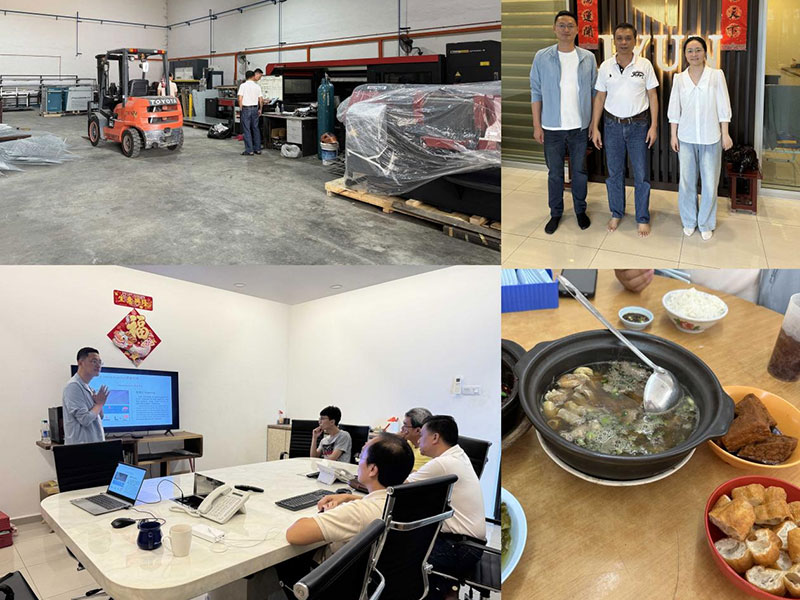
    Expanding New Markets · Strengthening Long-Term Partnerships— JM’s Indonesia Customer Visits And Industry Exhibition Tour Successfully Concluded

    Expanding New Markets · Strengthening Long-Term Partnerships— JM’s Indonesia Customer Visits And Industry Exhibition Tour Successfully Concluded

    In early December, the JIANMENG team embarked on a one-week market visit to Indonesia. The trip included visits to key existing customers, meetings with potential new clients, and attendance at a major local industry exhibition. The purpose of this journey was to further strengthen customer relationships, gain deeper insights into market trends, and continue expanding JM’s presence in the Indonesian market. During the customer visits, the team went deep into production workshops to observe machine performance and real-world applications. In-depth discussions were held with customers regarding processing techniques, efficiency improvements, and future expansion plans. Based on each customer’s specific requirements, the team provided tailored recommendations and optimization suggestions, helping customers improve productivity and earning strong recognition from them. In addition to customer visits, the team also attended an important industry exhibition in Indonesia. By closely observing the latest technologies, equipment developments, and application trends from both local and international players, JIANMENG gained valuable insights into the Indonesian and regional markets. The exhibition also provided opportunities for face-to-face communication with industry profe...

    2025-12-22
    A Comprehensive Analysis Of The Causes Of Bending In Metal Furniture Parts And Flattening Technologies

    A Comprehensive Analysis Of The Causes Of Bending In Metal Furniture Parts And Flattening Technologies

    Due to their durability and modern aesthetic characteristics, metal furniture is widely used in household and commercial scenarios. However, the problem of bending and deformation of parts often troubles production and use. This article systematically analyzes the causes of bending in metal parts and solutions from material properties, processing technology to correction techniques. Electric Press Brake I. Core Causes of Bending in Metal Parts 1. Influence of Material Properties Mechanical properties such as the elastic modulus and yield strength of metals directly determine their anti - deformation ability. For example, materials with a low elastic modulus are more likely to undergo plastic deformation after being stressed. In addition, the anisotropy of grains in the microstructure can lead to uneven stress distribution, increasing the risk of bending. 2. Defects in Processing Technology Improper operations in heat treatment, welding, cutting and other processes may cause an imbalance in internal stress. For example, the high temperature during welding causes local metal to expand, and uneven shrinkage after cooling forms residual stress, which leads to bending deformation over a long - term. 3. Damage during Logistics and Installation Collisions during tra...

    2025-12-21
    Bending Solution For Cabinet And Enclosure Fabrication

    Bending Solution For Cabinet And Enclosure Fabrication

    In the dynamic landscape of modern fabrication, achieving precision bending in materials is paramount to manufacturing high-performance cabinets and enclosures. Whether for kitchen cabinetry, electrical enclosures, or custom sheet metal components, bending directly dictates structural integrity, functional fit, and aesthetic consistency. This article explores specialized bending solutions tailored to cabinet and enclosure fabrication, highlighting advanced techniques, tooling innovations, and process optimizations that underpin efficient, high-quality production. Core Principles of Bending in Fabrication Bending is a foundational manufacturing process involving the controlled plastic deformation of a material to achieve a predefined angle, radius, or profile. In cabinet and enclosure fabrication—where component interoperability and dimensional accuracy are critical—bending ensures seamless assembly, load-bearing capability, and adherence to tight tolerances (typically ±0.1mm for precision sheet metal applications). The process must balance material properties (e.g., yield strength, ductility) with geometric requirements to avoid defects such as cracking, springback, or surface deformation. Material-Specific Bending Methodologies Cabinet ...

    2025-12-19
    Aircraft Skin: Material Evolution And Technological Innovation Drive The Development Of The Aviation Industry

    Aircraft Skin: Material Evolution And Technological Innovation Drive The Development Of The Aviation Industry

    Aircraft skin is a shaping component wrapped around the aircraft's framework, acting like the "skin" of an aircraft. It plays a crucial role in maintaining the aerodynamic shape, bearing loads, and ensuring flight safety. From the simple cloth skin in the early days to modern high - performance composite materials, its development history is not only a microcosm of the technological evolution of the aviation industry but also a true portrayal of the breakthroughs in materials science and manufacturing processes. Forming Machine A Century of Changes in Skin Materials In the early 20th century, most aircraft used a combination of wooden frameworks and canvas skins. Air - tightness was achieved by coating the textile cloth with waterproof paint. Although this kind of skin was lightweight, it could only bear limited aerodynamic loads. The First World War gave rise to the demand for all - metal fighter jets. Due to its high strength and low weight, aluminum alloy gradually replaced cloth materials and dominated aircraft manufacturing throughout World War II. For example, the mainstream fighter jets during World War II used stainless - steel frameworks paired with aluminum - alloy skins, combining strength and workability. The skins of modern conventional a...

    2025-12-17
    Integrated Deburring Wire Drawing And Polishing Machine

    Integrated Deburring Wire Drawing And Polishing Machine

    In precision metal manufacturing—where components like automotive hydraulic (spools), aerospace titanium alloy tubes, and medical stainless steel instruments demand strict surface integrity, dimensional accuracy, and aesthetic consistency—integrated deburring wire drawing and polishing machines have emerged as a transformative solution. Unlike standalone equipment that requires manual material transfer between deburring, wire drawing, and polishing stations, these integrated systems deliver a single-pass, closed-loop finishing process that eliminates bottlenecks, reduces human error, and ensures process traceability. This technical overview explores the machine’s core process integration, technical specifications, material compatibility, industrial applications, and competitive advantages, with a focus on quantifiable performance metrics and alignment with global manufacturing standards (e.g., ISO 8785, ASTM B912, ISO 4287). 1. Technical Definition & Core Process Integration An integrated deburring wire drawing and polishing machine is a modular, automated system designed to sequentially execute three critical metal finishing operations in a contiguous workflow: 1. Deburring: Removal of machining-induced burrs (rollover, split, or heat-affected zone (HA...

    2025-12-15
    Analysis Of Automobile Fenders: Functions, Design Trends, And Common Issues

    Analysis Of Automobile Fenders: Functions, Design Trends, And Common Issues

    The automobile fender is an important part that covers the wheels on the side of the vehicle body. It gets its name because it resembles a bird's wing. As a key component of the vehicle's exterior, it combines protection, aerodynamic optimization, and aesthetic appeal. The following analysis is carried out from multiple dimensions such as structural functions, material selection, and development trends. Kraftformer I. Positioning and Design of Front and Rear Fenders 1. Front Fender - Position: It is located right above the front wheel, connecting the hood and the front door, and behind the front bumper. - Core Function: It needs to reserve the extreme space for the tire to rotate and bounce. During the design process, the dimensional matching is verified through the "wheel bounce diagram". For example, the left - front fender of pure - electric vehicles is often designed as an upper - lower split structure to integrate the charging port, while the right - front side mostly adopts an integrated design. - Material Innovation: Some vehicle models use plastic materials (such as engineering plastics), which have the characteristics of lightweight and collision buffering, and comply with pedestrian protection regulations. 2. Rear Fender ...

    2025-12-14
    Deburring Machine For Stainless Steel Workpiece

    Deburring Machine For Stainless Steel Workpiece

    Stainless steel—valued for its corrosion resistance (derived from chromium oxide passivation layer), mechanical strength (yield strength: 200–500 MPa for 304/316 grades), and aesthetic versatility—finds widespread use in industries such as medical devices, food processing, aerospace, and architectural hardware. However, machining processes (milling, drilling, laser cutting, welding) of stainless steel inherently generate burrs—undesired material projections that compromise functionality (e.g., interference in precision assemblies), safety (sharp edges causing operator injury), and corrosion resistance (burrs trap contaminants, accelerating localized pitting). Deburring machines tailored for stainless steel address these challenges by removing burrs while preserving the material’s passivation layer and dimensional precision. This technical overview details the necessity, specialized technologies, core advantages, and selection criteria of deburring machines for stainless steel workpieces, with a focus on material-specific process constraints and industrial standards. 1. Why Stainless Steel Requires Specialized Deburring Stainless steel’s unique properties demand deburring solutions distinct from those for mild steel or aluminum: - Hardness ...

    2025-12-12

    Latest case

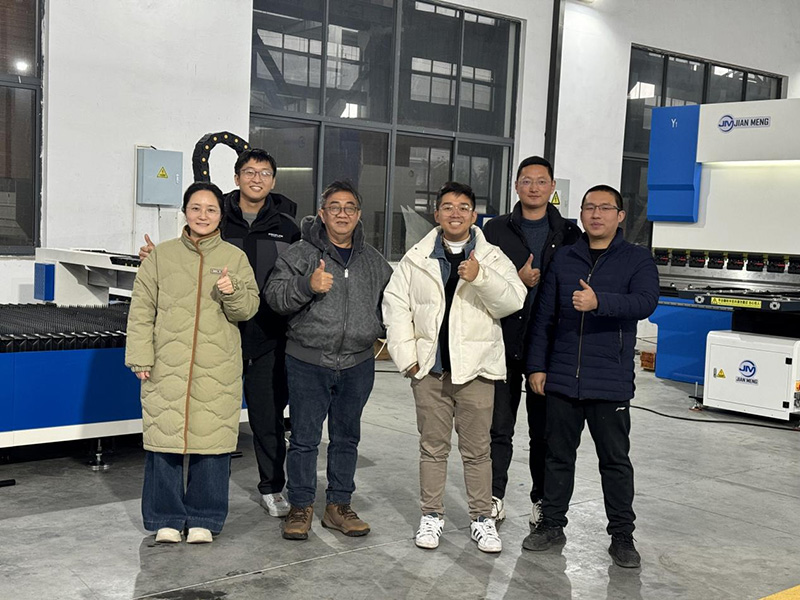
    Indonesian Customer Visits Our Factory For Equipment Acceptance And End-User Site Tour

    Indonesian Customer Visits Our Factory For Equipment Acceptance And End-User Site Tour

    2026-02-02
    Deepening Customer Needs · Earning Trust Through Professional Service

    Deepening Customer Needs · Earning Trust Through Professional Service

    2025-12-26
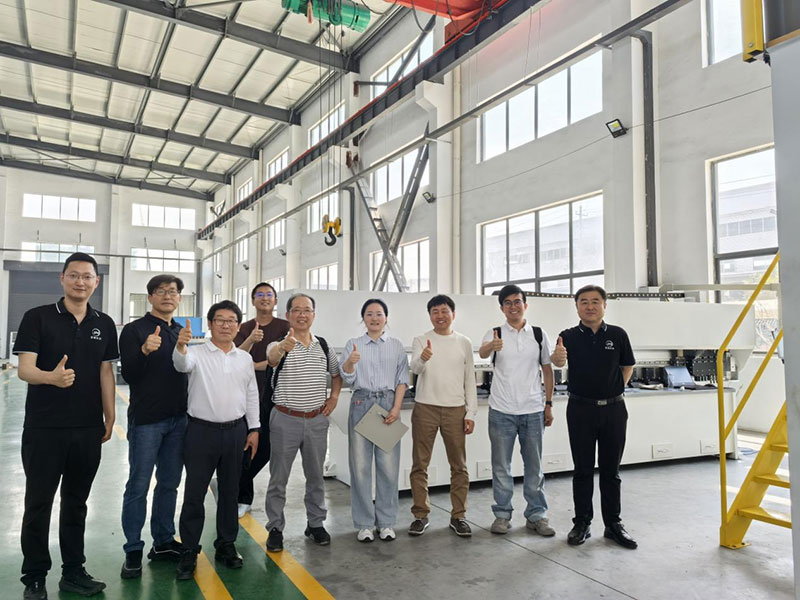
    Expanding New Markets·Strengthening Long-Term Partnerships —Korean Partner Visits Our Factory And Deepens Cooperation

    Expanding New Markets·Strengthening Long-Term Partnerships —Korean Partner Visits Our Factory And Deepens Cooperation

    2025-12-26
    • <
    • 1
    • ...
    • 4
    • 5
    • 6
    • 7
    • 8
    • ...
    • 12
    • >

    More Info? Get In Touch

    CONTACT
    Email:

    jeanie@jianmeng.com

    Phone:

    +86 19805122954


    CONTACT


    We will reply to your inquiry within 24 hours

    Jianmeng Intelligent Equipment (Taizhou) Co., Ltd.
    PRODUCTS

    Forming machine

    Deburring machine

    Press brake

    Shearing machine

    V grooving machine

    Notching machine

    CONTACT

    Contact: Jeanie Jiang

    Mobile phone: +86 19805122954

    WhatsApp: +86 19805122954

    Email: jeanie@jianmeng.com

    Address: 299 Tongchuang Road, Zhangqiao Industrial Park, Taixing, Taizhou City, Jiangsu Province

    en_US English
    EnglishEnglish 中文中文 ArabicArabic RussianRussian SpanishSpanish PortuguesePortuguese FrenchFrench GermanGerman HindiHindi ThaiThai VietnameseVietnamese KhmerKhmer ItalianItalian TurkishTurkish KoreanKorean BelarusianBelarusian

    © 2025 Jianmeng Intelligent Equipment (Taizhou) Co., Ltd. All Rights Reserved.Powered by Wangke

    Sitemap RSS XML Privacy Policy

    • +86 19805122954