We use Cookie To improve your experience. Please read our privacy policy to understand how we use it Cookie

Privacy Policy

+86 19805122954
jeanie@jianmeng.com
info@jianmeng.com
Jianmeng Intelligent Equipment (Taizhou) Co., Ltd. Jianmeng Intelligent Equipment (Taizhou) Co., Ltd.
  • HOME
  • ABOUT
    • Our company
      • Company Profile
      • Development History
      • Factory Strength
      • Group photo with clients
      • Application
    • Certification
    • Quality
    • Customization
    • Service
  • PRODUCTS
    • Forming machine
      • Power forming machine PF665
      • Power forming machine PF350
      • Pneumatic forming machine PMF400
    • Deburring machine
      • XDP-RP Series deburring machine
      • XDP-RR Series deburring and brushing machine
      • XDP-MRP Series carbon steel deburring machine
      • XDP-RPR Series deburring and surface finishing machine
      • XDP-MRPR Series carbon steel deburring and surface finishing machine
      • XDP-RPRT Series surface finishing and polishing machine
      • XDP-MRPRT Series carbon steel surface finishing and polishing machine
      • XDP-RRT Series deburring and polishing machine
      • XDP-WRR Series flat surface wet brushing machine
      • XDP-WDC Series wet dust collector
      • XDP-SD Manual deburring machine
      • XDP-1308D Series Deburring Machine
    • Press brake
      • Electro-hydraulic CNC press brake
      • Torsion-Bar NC press brake
      • Mini electric servo press brake
      • Tandem press brake
    • Shearing machine
      • Hydraulic guillotine CNC shearing machine
      • Swing beam CNC shearing machine
    • V grooving machine
      • Horizontal V grooving machine
      • Automatic four-side V grooving machine
      • Vertical V grooving machine
      • Vertical reciprocating V grooving machine
      • Vertical laser&V-grooving combo machine
    • Notching machine
      • Notching Machine
  • NEWS
    • Client Case
    • Industry News
  • CONTACT
English
  • EnglishEnglish
  • 中文中文
  • ArabicArabic
  • RussianRussian
  • SpanishSpanish
  • PortuguesePortuguese
  • FrenchFrench
  • GermanGerman
  • HindiHindi
  • ThaiThai
  • VietnameseVietnamese
  • KhmerKhmer
  • ItalianItalian
  • TurkishTurkish
  • KoreanKorean
  • BelarusianBelarusian
NEWS
NEWS

HOME >NEWS > Industry News

  • Client Case
  • Industry News
  • Analysis Of The Key Applications And Core Advantages Of Metal Sheets In Various Industries

    Analysis Of The Key Applications And Core Advantages Of Metal Sheets In Various Industries

    With its high strength, durability, and diverse surface treatment characteristics, metal sheets have become the core materials in modern construction, industrial manufacturing, transportation facilities, and other fields. This article will systematically analyze the application scenarios and core advantages of mainstream metal sheets to provide references for industry selection. Hydraulic Shearing Machine I. Comprehensive Application Advantages of Color-coated Aluminum Sheets By integrating the aluminum substrate and organic coating technology, color-coated aluminum sheets possess both the strength of metal and the decorative properties of the surface, and have now become a star material in the construction industry. In the field of industrial architecture, they are widely used in the exterior walls and roofing systems of airport terminals, stadiums, and industrial plants, ensuring the long - term durability requirements of buildings with a weather resistance of over 25 years. This material has three core characteristics: 1. Environmental Adaptability: The fluorocarbon coating technology enables it to resist acid rain, ultraviolet rays, and temperature - difference deformation, and its fire - resistance rating reaches the A2 standard. 2. Engineering Economy: Its...

    2025-10-22
    What Can I Do With A Vacuum Forming Machine

    What Can I Do With A Vacuum Forming Machine

    Vacuum forming machines are versatile thermoforming tools that shape thermoplastic sheets into precise, repeatable forms by leveraging heat and vacuum pressure. Unlike injection molding (high-cost, high-volume) or 3D printing (low-speed, small parts), vacuum forming balances affordability, speed, and scalability—making it indispensable across industries from packaging to aerospace. This guide details the core capabilities, industrial applications, material compatibility, and integration with complementary manufacturing processes (e.g., metal forming) to help you maximize the value of a vacuum forming machine. 1. Core Principles of Vacuum Forming Before exploring applications, it’s critical to understand the machine’s operational framework—this explains its strengths (e.g., rapid prototyping) and limitations (e.g., deep-draw constraints). The vacuum forming process follows four sequential steps: 1. Sheet Clamping: A thermoplastic sheet (typically 0.1–6 mm thick) is secured in a pneumatic or mechanical frame to prevent movement during heating. 2. Thermal Softening: The clamped sheet is heated via infrared heaters, convection ovens, or quartz lamps to its glass transition temperature (Tg)—the point where the plastic becomes pliable b...

    2025-10-20
    Development Trends And Core Processes Analysis Of Metal And Wood Panel Processing Technology

    Development Trends And Core Processes Analysis Of Metal And Wood Panel Processing Technology

    I. Panel Processing Technology System and Core Processes Panel processing is an industrial production process that uses raw materials such as metals, wood, and plastics as the basis and forms standardized panels through precision manufacturing processes. The current mainstream technologies mainly cover three major fields: 1. Cutting and Forming Technology Laser cutting technology has become the core means of metal panel processing with an accuracy of 0.1 mm. It achieves material melting and cutting by generating a high temperature of 6000°C instantaneously through the laser beam. Carbon steel materials are suitable for the oxidation melting cutting process, while stainless steel uses the melting cutting process under the protection of non - oxidizing gases. Both methods can reduce material loss by 30% and increase the cutting speed to three times that of traditional machining. 2. Composite Processing Devices The innovative T - slot linkage processing equipment realizes the synchronous cutting of horizontal and vertical slots through a dual - axis CNC system, reducing the number of tool feeds in traditional processes from 5 to 1 and controlling the surface roughness of the workpiece to Ra1.6μm. The intelligent punching device is equipped with a displacement sen...

    2025-10-19
    How To Choose A Pneumatic Forming Machine

    How To Choose A Pneumatic Forming Machine

    In modern manufacturing, pneumatic forming machines—which use compressed air to apply controlled force for material shaping—are valued for their speed, precision, and gentleness with delicate materials. From automotive component production to electronics miniaturization, these machines excel in applications requiring consistent pressure delivery and rapid cycle times. Selecting the right model, however, requires aligning its technical capabilities with your production goals, material properties, and quality standards. This guide outlines a systematic approach to evaluating pneumatic forming machines, covering key criteria, machine types, application, and implementation best practices. 1. Core Definition & Operational Advantages A pneumatic forming machine converts compressed air (typically 6–10 bar, regulated via valves) into linear or directional force to deform materials (metals, plastics, composites) into desired shapes. Unlike hydraulic machines (which use fluid pressure), pneumatic systems offer: - Faster Cycle Times: Compressed air acts instantaneously, reducing “time-to-force” by 30–50% vs. hydraulics—critical for high-volume production. - Gentle Force Application: Pressure ramps up gradually, minimizing damage to frag...

    2025-10-17
    A Comprehensive Analysis Of Molding Machine Types: Core Applications From Carbon Fiber Hot Pressing To Servo Powder Compression

    A Comprehensive Analysis Of Molding Machine Types: Core Applications From Carbon Fiber Hot Pressing To Servo Powder Compression

    As the core equipment in the material processing field, molding machines transform materials such as plastics, powders, and fibers into high - precision industrial components by precisely controlling temperature, pressure, and time parameters. This article will systematically analyze the working principles, technical characteristics, and industry applications of six mainstream types of molding machines. I. Carbon Fiber Hot - Press Molding Machine This equipment achieves the compounding of carbon fiber cloth and resin matrix through high temperature and high pressure, forming composite material products with both light weight and high strength. Its core advantages are as follows: 1. It adopts multi - stage pressure and temperature control technology, with a maximum pressure of up to 500 tons and a pressure accuracy error ≤ 0.5mm. 2. The oil heating system achieves a temperature uniformity of ±3°C, and the heating rate can be adjusted in sections through PLC programming. 3. The servo hydraulic system saves 50% - 70% more energy than traditional equipment, and is especially suitable for fields with strict requirements on material properties, such as aerospace and drone propellers. II. Glass Fiber Hot - Press Molding Machine According to the charact...

    2025-10-15
    What Is A Metal Forming Machine

    What Is A Metal Forming Machine

    In modern manufacturing, metal forming machines are foundational equipment designed to reshape metal workpieces through *plastic deformation*—a process that alters material geometry without adding or removing material. Unlike subtractive methods (e.g., machining) or additive processes (e.g., 3D printing), metal forming leverages mechanical force, heat, or pressure to mold metals into precise, durable shapes. This technology is indispensable across industries such as automotive, aerospace, construction, and consumer goods, where it enables high-volume production of components ranging from automotive body panels to aerospace turbine parts. This guide defines metal forming machines, details their core principles, types, processes, applications, and selection criteria. 1. Core Definition & Operating Principle A metal forming machine is specialized equipment that applies controlled force (mechanical, hydraulic, pneumatic, or thermal) to metallic workpieces (e.g., sheets, rods, billets) to induce plastic deformation—a permanent change in shape that occurs when the metal exceeds its yield strength but remains below its ultimate tensile strength. Key Principles of Metal Forming - No Material Loss: Unlike machining (which removes chips) or cutting, forming pr...

    2025-10-13
    Comprehensive Analysis Of Forming Machines: Core Types, Working Principles, And Technological Applications

    Comprehensive Analysis Of Forming Machines: Core Types, Working Principles, And Technological Applications

    As a core device in modern industry, the forming machine can efficiently process materials into specific shapes through automated processes and is widely used in fields such as packaging, manufacturing, and medicine. Its diverse models, precise working principles, and intelligent design make it a key tool for improving production efficiency. I. Core Classification of Forming Machines Forming machines can be classified into carton forming machines, paper box forming machines, case packers, cartoners, etc. according to product series to meet different packaging form requirements. For example, carton forming machines are specialized in batch - completing processes such as box opening, bottom folding, and tape sealing, while cartoners are suitable for high - precision packaging in industries such as pharmaceuticals and food. According to the degree of automation, they are divided into semi - automatic and fully automatic models. Semi - automatic equipment requires manual assistance for adjustment and is suitable for small and medium - scale production. Fully automatic models, such as fully automatic carton forming machines, integrate functions such as box suction, forming, and bottom sealing, support assembly line operations, and are suitable for large - scale industrial scenarios. ...

    2025-10-12
    A Comprehensive Analysis Of Sheet Metal Fabrication: Core Processes, Complete Workflows, And Application Areas

    A Comprehensive Analysis Of Sheet Metal Fabrication: Core Processes, Complete Workflows, And Application Areas

    Sheet metal fabrication is a metal manufacturing process based on cold-forming technology, specifically designed for processing thin metal sheets less than 6mm thick. Its core feature is to shape flat metals into high-precision, lightweight, and multi-functional components through steps such as shearing, punching, bending, riveting, and welding. Since the material thickness remains consistent during the processing, the finished products exhibit significant advantages in terms of strength, electrical conductivity, and the economy of mass production. The following is an in-depth analysis of sheet metal fabrication, covering its process characteristics, standard workflows, and industry applications. Press Brake tools I. Core Processes of Sheet Metal Fabrication 1. Combination of Cold-Forming Technologies Sheet metal fabrication integrates cold processing technologies such as shearing, punching, cutting, compounding, bending, and riveting. The whole process does not require high-temperature casting, ensuring the stability of material properties. High-precision equipment such as laser cutting and plasma cutting can handle complex patterns, while CNC bending machines can achieve angle forming with millimeter-level precision. 2. Characteristics of Standardized Production ...

    2025-10-08

    Latest case

    Indonesian Customer Visits Our Factory For Equipment Acceptance And End-User Site Tour

    Indonesian Customer Visits Our Factory For Equipment Acceptance And End-User Site Tour

    2026-02-02
    Deepening Customer Needs · Earning Trust Through Professional Service

    Deepening Customer Needs · Earning Trust Through Professional Service

    2025-12-26
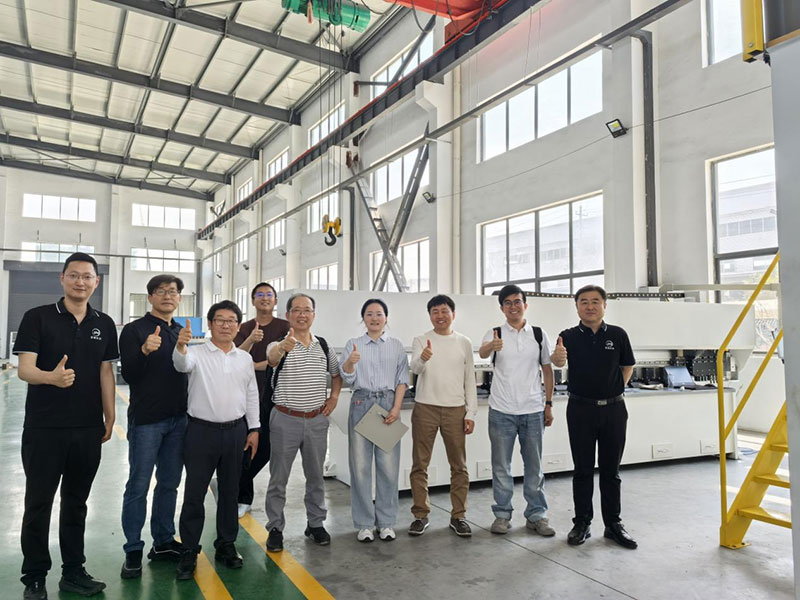
    Expanding New Markets·Strengthening Long-Term Partnerships —Korean Partner Visits Our Factory And Deepens Cooperation

    Expanding New Markets·Strengthening Long-Term Partnerships —Korean Partner Visits Our Factory And Deepens Cooperation

    2025-12-26
    • <
    • 1
    • ...
    • 9
    • 10
    • 11
    • 12
    • 13
    • >

    More Info? Get In Touch

    CONTACT
    Email:

    jeanie@jianmeng.com

    Phone:

    +86 19805122954


    CONTACT


    We will reply to your inquiry within 24 hours

    Jianmeng Intelligent Equipment (Taizhou) Co., Ltd.
    PRODUCTS

    Forming machine

    Deburring machine

    Press brake

    Shearing machine

    V grooving machine

    Notching machine

    CONTACT

    Contact: Jeanie Jiang

    Mobile phone: +86 19805122954

    WhatsApp: +86 19805122954

    Email: jeanie@jianmeng.com

    Address: 299 Tongchuang Road, Zhangqiao Industrial Park, Taixing, Taizhou City, Jiangsu Province

    en_US English
    EnglishEnglish 中文中文 ArabicArabic RussianRussian SpanishSpanish PortuguesePortuguese FrenchFrench GermanGerman HindiHindi ThaiThai VietnameseVietnamese KhmerKhmer ItalianItalian TurkishTurkish KoreanKorean BelarusianBelarusian

    © 2025 Jianmeng Intelligent Equipment (Taizhou) Co., Ltd. All Rights Reserved.Powered by Wangke

    Sitemap RSS XML Privacy Policy

    • +86 19805122954