We use Cookie To improve your experience. Please read our privacy policy to understand how we use it Cookie

Privacy Policy

+86 19805122954
jeanie@jianmeng.com
info@jianmeng.com
Jianmeng Intelligent Equipment (Taizhou) Co., Ltd. Jianmeng Intelligent Equipment (Taizhou) Co., Ltd.
  • HOME
  • ABOUT
    • Our company
      • Company Profile
      • Development History
      • Factory Strength
      • Group photo with clients
      • Application
    • Certification
    • Quality
    • Customization
    • Service
  • PRODUCTS
    • Forming machine
      • Power forming machine PF665
      • Power forming machine PF350
      • Pneumatic forming machine PMF400
    • Deburring machine
      • XDP-RP Series deburring machine
      • XDP-RR Series deburring and brushing machine
      • XDP-MRP Series carbon steel deburring machine
      • XDP-RPR Series deburring and surface finishing machine
      • XDP-MRPR Series carbon steel deburring and surface finishing machine
      • XDP-RPRT Series surface finishing and polishing machine
      • XDP-MRPRT Series carbon steel surface finishing and polishing machine
      • XDP-RRT Series deburring and polishing machine
      • XDP-WRR Series flat surface wet brushing machine
      • XDP-WDC Series wet dust collector
      • XDP-SD Manual deburring machine
    • Press brake
      • Electro-hydraulic CNC press brake
      • Torsion-Bar NC press brake
      • Mini electric servo press brake
      • Tandem press brake
    • Shearing machine
      • Hydraulic guillotine CNC shearing machine
      • Swing beam CNC shearing machine
    • V grooving machine
      • Horizontal V grooving machine
      • Automatic four-side V grooving machine
      • Vertical V grooving machine
      • Vertical reciprocating V grooving machine
      • Vertical laser&V-grooving combo machine
    • Notching machine
      • Notching Machine
  • NEWS
    • Client Case
    • Industry News
  • CONTACT
English
  • EnglishEnglish
  • 中文中文
  • ArabicArabic
  • RussianRussian
  • SpanishSpanish
  • PortuguesePortuguese
  • FrenchFrench
  • GermanGerman
  • HindiHindi
  • ThaiThai
  • VietnameseVietnamese
  • KhmerKhmer
  • ItalianItalian
  • TurkishTurkish
  • KoreanKorean
  • BelarusianBelarusian
NEWS
NEWS

HOME > NEWS

  • Client Case
  • Industry News
  • Analysis Of Automotive Body Repair Technology: Common Methods, Process Flows, And Industry Trends

    Analysis Of Automotive Body Repair Technology: Common Methods, Process Flows, And Industry Trends

    Automotive body repair is a technical process aimed at restoring damage to the vehicle body caused by collisions, corrosion, or aging. Its core objective is to restore the vehicle's exterior integrity and structural safety. With the development of the automotive industry, repair technologies have been continuously iterated, gradually forming a complete system that encompasses both traditional craftsmanship and modern technology. I. Common Repair Methods 1. Shrinkage and Shaping Repair For the deformation of metal components, local heating combined with precise hammering is used to shrink the stretched metal back to its original shape. This method is suitable for slightly dented or stretched areas. Strict temperature control is required during this process to avoid damage to the material's performance. 2. Wrinkle Unfolding Repair For complex wrinkles caused by collisions, a technique of releasing stress layer by layer, unfolding the wrinkles, and then hammering them flat is employed. During operation, professional tools (such as finishing hammers and pry bars) are needed to gradually restore the flatness, ensuring that there is no difference in feel on the repaired vehicle body. 3. Supporting and Pulling Restoration Repair For severely deformed parts, hydra...

    2025-11-12
    Top Features To Look For In Deburring Machines

    Top Features To Look For In Deburring Machines

    In precision manufacturing, the performance of a deburring machine directly impacts part quality, production efficiency, and workplace safety. With options ranging from manual bench-top units to automated CNC centers, selecting the right machine requires evaluating features that align with your material type (e.g., aluminum, stainless steel), part complexity (simple flat sheets vs. 3D aerospace components), and production volume (low-batch prototypes vs. high-volume mass production). This guide outlines the critical technical and operational features to prioritize, ensuring your deburring machine delivers consistent results, minimizes downtime, and meets long-term productivity goals. 1. Material & Part Versatility A versatile deburring machine adapts to diverse workpiece requirements, eliminating the need for multiple specialized tools. Key indicators of versatility include: - Material Compatibility: - Ability to handle a range of materials (ferrous: steel, stainless steel; non-ferrous: aluminum, brass; plastics; composites). For example, a machine designed for hard stainless steel should also accommodate soft aluminum without causing surface damage (via adjustable abrasive grit or brush material). - Support for varying material thicknesses (e.g., 0.1 mm thin s...

    2025-11-10
    Metal Exterior Wall Decorative Panels: Analysis Of Characteristics, Applications, And Future Trends

    Metal Exterior Wall Decorative Panels: Analysis Of Characteristics, Applications, And Future Trends

    Metal exterior wall decorative panels have become an important choice in the field of modern architectural decoration due to their unique performance advantages. These materials are known for their light weight, high strength, and long - term durability. They can meet the needs of diverse architectural styles and also show significant potential in terms of construction efficiency and sustainable development. I. Core Characteristics and Material Classification Metal exterior wall decorative panels are usually made of materials such as aluminum, aluminum alloy, and stainless steel, and are divided into two major categories: structural load - bearing type and decorative finishing type. Structural load - bearing materials have relatively high thickness and strength and are mainly used in building support systems. Finishing materials are thinner and achieve high surface precision through precision processing, which are suitable for exterior wall decoration. Their advantages include: 1. Superior physical properties: High strength and toughness can resist external factors such as wind pressure and temperature - difference deformation, with a service life of 15 - 20 years. 2. Lightweight design: Compared with traditional stone or concrete, the metal material significantly reduces the...

    2025-11-09
    How Deburring Machines Work For Deburring & Edge Rounding

    How Deburring Machines Work For Deburring & Edge Rounding

    In precision manufacturing—from automotive component production to aerospace part fabrication—burrs (small, jagged material protrusions formed during machining, cutting, or stamping) pose critical risks: they compromise part fit, damage mating components, and create safety hazards for operators. Deburring machines automate the removal of these burrs while often integrating edge rounding (creating controlled, smooth radii on part edges) to meet functional and regulatory standards (e.g., ISO 13715 for edge quality). This guide explains the technical principles of deburring machines, their core operating mechanisms, types, and how they deliver consistent, repeatable results for diverse manufacturing applications. 1. Foundational Context: What Are Burrs, and Why Do They Matter? Before diving into machine mechanics, it is critical to understand the problem deburring machines solve. Burrs form when machining processes (e.g., laser cutting, milling, drilling) exceed a material’s yield strength, causing plastic deformation at the cut edge. There are three primary burr types, each requiring targeted removal strategies: - Poisson Burrs: Formed when material is compressed (e.g., punching sheet metal), pushing material outward at the cut edge. - Tear Burrs: Occur w...

    2025-11-07
    A Comprehensive Analysis Of Sheet Metal Processing Technology: Processes, Materials, And Application Scenarios

    A Comprehensive Analysis Of Sheet Metal Processing Technology: Processes, Materials, And Application Scenarios

    Sheet metal processing is a comprehensive cold - working process using thin metal sheets (usually with a thickness ≤ 6mm) as raw materials. Through processing steps such as cutting, stamping, bending, and welding of the sheets, customized parts with uniform thickness are formed. Its characteristics of high processing efficiency and controllable cost make it widely used in fields such as industrial manufacturing, consumer electronics, construction engineering, and the automotive industry. I. Core Processes of Sheet Metal Processing The core process of sheet metal processing can be divided into three major stages: 1. Material Cutting The metal sheets are cut through methods such as shearing machines, laser cutting, or CNC stamping. Laser cutting technology is particularly suitable for complex structural parts and scenarios with high - precision requirements. It can process a wide range of thicknesses (e.g., from 0.5mm to 20mm) and avoids material deformation due to non - physical contact. 2. Forming Processing - Bending and Stamping: Angle forming is completed using bending machines or molds. The stamping process can mass - produce holes and concave - convex structures. - Edge Rolling and Rounding: Used for the forming of pipes and cylindrical parts, such as vent...

    2025-11-05
    Choosing The Right Forming Equipment For Projects

    Choosing The Right Forming Equipment For Projects

    In metalworking, selecting the correct forming equipment is not just a matter of efficiency—it directly impacts part precision, material integrity, and long-term project costs. Whether fabricating a small custom bracket (hobbyist) or mass-producing automotive chassis components (industrial), the right tool aligns with your project’s technical requirements (material, geometry, volume) and operational constraints (budget, space, skill level). This guide provides a structured, technical framework for evaluating forming equipment, covering core categories, selection criteria, and application-specific recommendations to ensure informed decision-making. 1. Foundational Context: Metal Forming Processes & Equipment Alignment Before selecting equipment, it is critical to map your project’s forming process to the right tool. Metal forming relies on plastic deformation (no material removal) and is categorized by workpiece type (sheet, wire, billet) and deformation method. Below is a breakdown of core processes and their associated equipment: | Forming Process | Definition | Key Equipment Types | |-----------------------|-------------------------------------------------------------------------...

    2025-11-03
    Comprehensive Analysis Of Curved Surface Forming Technology: Core Processes And Application Fields

    Comprehensive Analysis Of Curved Surface Forming Technology: Core Processes And Application Fields

    Curved surface forming technology is a core method in the manufacturing industry for producing non - planar complex curved surface parts. It features high precision and high efficiency and is widely used in fields such as aerospace, automobile manufacturing, and consumer electronics. The following will elaborate on the technical principles and applicable scenarios of five mainstream curved surface forming processes. I. Curved Surface Printing Process Curved surface printing is a key technology for achieving decoration and marking on the surface of plastic or metal curved objects. Its core processes include: 1. Degreasing Treatment: Use organic solvents to clean contaminants such as mold release agents and greases remaining on the surface of the workpiece, ensuring the cleanliness of the substrate. If there is oil on the surface, it may lead to a decrease in ink adhesion or cracking. 2. Surface Pretreatment: Improve the surface wettability of the material through chemical or physical methods to enhance the bonding force between the ink and the substrate. For example, perform plasma treatment on some plastics to improve their ink affinity. 3. Ink Transfer: Use a flexible silicone head to dip ink from the intaglio and precisely emboss it onto the curved workpiece. The doctor...

    2025-11-02
    What Are Power Hammers Used For

    What Are Power Hammers Used For

    Power hammers are mechanized forging tools that deliver controlled, repetitive blows to shape, form, or deform metal workpieces. Unlike manual hammers (which rely on human force and lack consistency), power hammers use external power sources—electricity, compressed air, hydraulics, or steam—to generate high-impact force (ranging from 1 kN to 100+ kN), making them indispensable in blacksmithing, manufacturing, automotive, and aerospace industries. Their ability to balance precision, speed, and force enables tasks from delicate sheet metal forming to heavy-duty steel forging. This guide details their core applications, categorized by industry and hammer type, while highlighting technical capabilities and operational considerations. 1. Core Definition & Classification of Power Hammers Before exploring applications, it is critical to distinguish between power hammer types—each is engineered for specific force levels, workpiece sizes, and precision requirements. | Hammer Type | Power Source | Key Technical Specs | Ideal Workpiece Scope | |----------------------------|--------------------------------------------------------------------------------|----------...

    2025-10-31

    Latest case

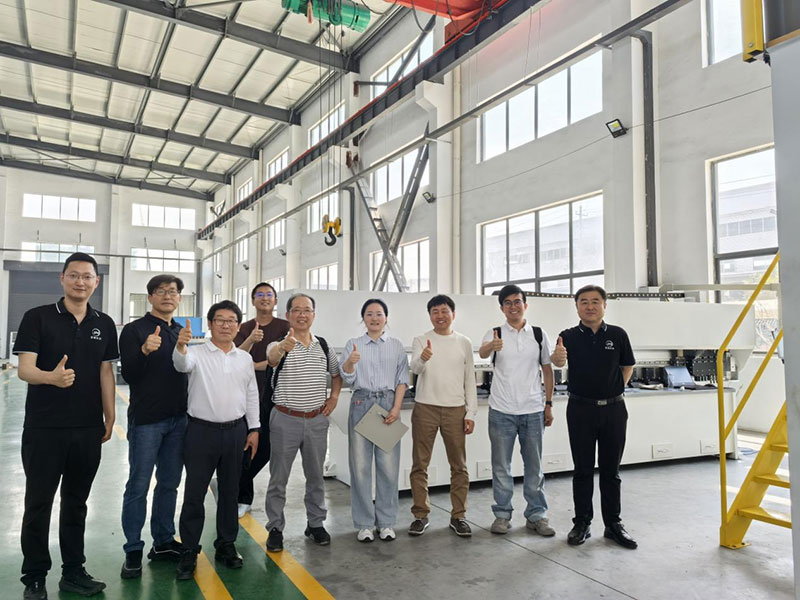
    Indonesian Customer Visits Our Factory For Equipment Acceptance And End-User Site Tour

    Indonesian Customer Visits Our Factory For Equipment Acceptance And End-User Site Tour

    2026-02-02
    Deepening Customer Needs · Earning Trust Through Professional Service

    Deepening Customer Needs · Earning Trust Through Professional Service

    2025-12-26
    Expanding New Markets·Strengthening Long-Term Partnerships —Korean Partner Visits Our Factory And Deepens Cooperation

    Expanding New Markets·Strengthening Long-Term Partnerships —Korean Partner Visits Our Factory And Deepens Cooperation

    2025-12-26
    • <
    • 1
    • ...
    • 7
    • 8
    • 9
    • 10
    • 11
    • 12
    • >

    More Info? Get In Touch

    CONTACT
    Email:

    jeanie@jianmeng.com

    Phone:

    +86 19805122954


    CONTACT


    We will reply to your inquiry within 24 hours

    Jianmeng Intelligent Equipment (Taizhou) Co., Ltd.
    PRODUCTS

    Forming machine

    Deburring machine

    Press brake

    Shearing machine

    V grooving machine

    Notching machine

    CONTACT

    Contact: Jeanie Jiang

    Mobile phone: +86 19805122954

    WhatsApp: +86 19805122954

    Email: jeanie@jianmeng.com

    Address: 299 Tongchuang Road, Zhangqiao Industrial Park, Taixing, Taizhou City, Jiangsu Province

    en_US English
    EnglishEnglish 中文中文 ArabicArabic RussianRussian SpanishSpanish PortuguesePortuguese FrenchFrench GermanGerman HindiHindi ThaiThai VietnameseVietnamese KhmerKhmer ItalianItalian TurkishTurkish KoreanKorean BelarusianBelarusian

    © 2025 Jianmeng Intelligent Equipment (Taizhou) Co., Ltd. All Rights Reserved.Powered by Wangke

    Sitemap RSS XML Privacy Policy

    • +86 19805122954