A grooving machine, also known as a slotting machine or channeling machine, is a high-precision metal processing equipment designed to cut precise grooves, slots, or channels on the surface or edge of workpieces. It is widely used in metal fabrication, automotive manufacturing, aerospace, construction, and other industrial fields, serving as a key equipment for achieving precise slotting, which directly affects the assembly accuracy, structural stability, and service life of the final products. Unlike ordinary cutting machines, grooving machines feature specialized cutting tools, precise feeding mechanisms, and stable positioning systems, enabling it to process grooves with uniform depth, consistent width, and smooth surface finish. This article systematically elaborates on the definition, core properties, manufacturing process, main types, working mechanism, typical application scenarios, and maintenance guidelines of grooving machines, integrating practical technical parameters and industry experience to provide comprehensive guidance for engineers, procurement personnel, and maintenance technicians.
I. Overview and Core Definition of Grooving Machine
In modern metal processing industry, precise slotting is an essential process for many components, as grooves are often used for assembly, positioning, sealing, or stress relief. A grooving machine is a specialized mechanical equipment that uses cutting tools (such as grooving blades, end mills, or forming tools) to remove excess material from workpieces, forming predefined grooves or slots with specific dimensions and shapes. It can process various metal materials, including carbon steel, alloy steel, stainless steel, aluminum alloy, and copper alloy, and is capable of handling workpieces of different sizes and shapes, such as plates, pipes, profiles, and shafts.
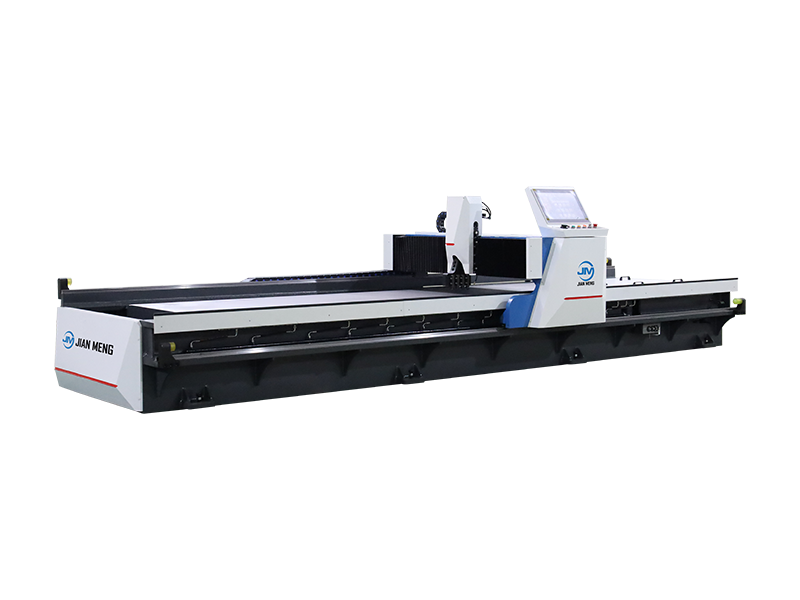
The core essence of a
grooving machine lies in the synergy between its high-precision positioning system, stable cutting mechanism, and specialized cutting tools. The positioning system ensures that the groove is cut at the correct position with high accuracy, the cutting mechanism provides stable and uniform cutting force to avoid workpiece deformation or tool damage, and the specialized cutting tools are designed to match the groove shape and material, ensuring cutting efficiency and surface quality. Unlike ordinary cutting equipment that can only perform simple cutting operations, grooving machines are optimized for slotting tasks, achieving higher precision, better consistency, and higher efficiency, making them indispensable in modern precision metal processing.
II. Core Properties of Grooving Machine
The superior performance of grooving machines is mainly reflected in six core properties, which are the key advantages over ordinary cutting equipment and the basis for their application in high-precision processing scenarios. These properties are closely related to the machine’s structural design, component quality, and control system:
1. High Positioning Accuracy
Positioning accuracy is one of the most critical properties of grooving machines, directly determining the position and dimensional accuracy of the processed grooves. Industrial-grade grooving machines usually adopt precision ball screws, linear guide rails, and servo drive systems, with a positioning accuracy of ±0.01~±0.03 mm and a repeat positioning accuracy of ±0.005~±0.01 mm. This high positioning accuracy ensures that the grooves are cut at the preset position, avoiding deviations that may affect the assembly of subsequent components. For high-precision applications, such as aerospace components, the positioning accuracy can be further improved to ±0.005 mm.
2. Excellent Cutting Stability
Grooving machines feature a rigid machine frame and stable cutting mechanism, which can effectively reduce vibration during the cutting process. The rigid frame is usually made of high-quality cast iron or steel, with good damping performance, preventing machine deformation caused by cutting force. The cutting mechanism adopts a stable feeding system, ensuring uniform feeding speed and cutting force, which avoids tool wear, workpiece deformation, and groove surface defects (such as burrs, waviness, or uneven depth). In high-speed slotting scenarios, the stable cutting performance of grooving machines can ensure consistent groove quality.
3. Versatile Processing Capability
Grooving machines have strong versatility, capable of processing various types of grooves, including rectangular grooves, V-shaped grooves, U-shaped grooves, T-shaped grooves, and special-shaped grooves. They can handle different workpiece materials (from low-carbon steel to high-hardness alloy steel) and different workpiece forms (plates, pipes, profiles, shafts). By replacing different cutting tools and adjusting processing parameters, grooving machines can adapt to different slotting requirements, reducing the need for multiple specialized equipment and improving production efficiency.
4. High Processing Efficiency
Compared with manual slotting or ordinary cutting equipment, grooving machines have significantly higher processing efficiency. They adopt automatic feeding, automatic tool changing (for advanced models), and continuous cutting mechanisms, which can reduce manual intervention and improve processing speed. The cutting speed of grooving machines usually ranges from 10~50 m/min, and the feeding speed ranges from 50~500 mm/min, depending on the workpiece material and groove size. For batch processing, grooving machines can achieve continuous and efficient production, reducing processing time and labor costs.
5. Good Surface Finish of Processed Grooves
Grooving machines use specialized cutting tools and precise cutting parameters, ensuring that the processed grooves have a smooth surface finish. The surface roughness (Ra) of the groove surface is usually controlled within 0.8~3.2 μm; for high-precision applications, it can be reduced to 0.4~0.8 μm. The smooth surface finish avoids the need for additional polishing or finishing processes, reducing production costs and improving the overall quality of the workpiece. Additionally, the uniform groove width and depth ensure good consistency between workpieces, which is crucial for batch production.
6. Strong Operational Reliability
Grooving machines are equipped with high-quality components, such as precision bearings, servo motors, and cutting tools, which have good wear resistance and long service life. The machine’s control system is stable and reliable, with functions such as overload protection, tool wear alarm, and emergency stop, ensuring safe and stable operation. Under normal maintenance, the service life of industrial-grade grooving machines can reach 8~15 years, reducing equipment replacement costs and ensuring continuous production.
III. Manufacturing Process of Grooving Machine
The manufacturing of grooving machines is a complex precision mechanical processing process that involves structural design, material selection, component processing, assembly, debugging, and quality inspection. Each step has strict requirements to ensure the machine’s precision, stability, and performance. The key processes are as follows:
1. Structural Design and Material Selection
The structural design of grooving machines is the basis for ensuring their performance. Engineers design the machine frame, cutting mechanism, feeding mechanism, and positioning system according to the processing requirements (such as groove size, workpiece material, and processing accuracy). The machine frame is usually designed as a rigid structure to reduce vibration and deformation; the cutting mechanism is designed to provide stable cutting force; the feeding mechanism is designed to ensure precise and uniform feeding.
Material selection directly affects the machine’s rigidity, stability, and service life. Common materials include:
- Machine Frame: High-quality cast iron (such as HT200, HT250) or carbon steel (such as Q235, Q355), which has good rigidity, damping performance, and machinability. Cast iron is widely used for machine frames due to its excellent damping effect, which can reduce cutting vibration.
- Key Components: Alloy steel (such as 45# steel, 40Cr) for ball screws, linear guide rails, and cutting tool holders, which has high strength, wear resistance, and toughness. Servo motors and reducers are usually selected from well-known brands to ensure stable performance.
- Cutting Tools: High-speed steel (HSS) or carbide tools, which are suitable for cutting different materials. Carbide tools are widely used for cutting high-hardness materials due to their high hardness and wear resistance.
2. Precision Processing of Components
The precision of key components directly determines the overall performance of the grooving machine. The main precision processing steps include:
- Machine Frame Processing: The cast iron frame is subjected to annealing treatment to eliminate internal stress, then processed by milling, planing, and grinding to ensure flatness, perpendicularity, and parallelism. The surface roughness of the frame’s guide rail mounting surface is controlled within Ra 0.8 μm.
- Ball Screw and Linear Guide Rail Processing: The ball screw is processed by precision turning, grinding, and polishing, with a lead accuracy of ±0.01 mm/m. The linear guide rail is processed by precision grinding to ensure smooth movement and high positioning accuracy.
- Cutting Tool Holder Processing: The tool holder is processed by precision turning and milling, ensuring that the tool installation position is accurate and the runout is within 0.005 mm. This avoids tool deviation during cutting, ensuring groove quality.
3. Assembly and Debugging
Assembly is a key link to ensure the coordination between components. The assembly process includes:
- Component Assembly: Install the linear guide rails, ball screws, servo motors, and cutting mechanism on the machine frame, ensuring that each component is properly positioned and fastened. The coaxiality of the ball screw and linear guide rail is strictly controlled to avoid movement deviation.
- Control System Installation: Install the numerical control (NC) system, servo drive system, and operation panel, and debug the control program to ensure that the machine can perform precise positioning, feeding, and cutting operations.
- Precision Debugging: Adjust the positioning accuracy, feeding speed, and cutting parameters, and test the machine with sample workpieces. Check the groove size, position, and surface quality, and adjust the machine until it meets the design requirements. The debugging process also includes testing the machine’s stability, noise, and safety functions.
4. Quality Inspection
Quality inspection is an essential link to ensure the performance of grooving machines. The inspection items mainly include:
- Structural Precision Inspection: Use a coordinate measuring machine (CMM), dial gauge, and level meter to detect the flatness, perpendicularity, and parallelism of the machine frame; detect the positioning accuracy and repeat positioning accuracy of the feeding mechanism.
- Cutting Performance Inspection: Process sample workpieces with different materials and groove sizes, and detect the groove width, depth, position accuracy, and surface roughness. Ensure that the groove size tolerance is within ±0.01~±0.03 mm, and the surface roughness meets the design requirements.
- Operational Reliability Inspection: Test the machine’s continuous operation performance, overload protection function, tool wear alarm function, and emergency stop function. Ensure that the machine can operate stably for a long time without failure.
- Safety Inspection: Check the safety protection devices (such as protective covers, emergency stop buttons) to ensure that they can effectively protect the operator and the machine. Ensure that the machine meets relevant industrial safety standards.
IV. Main Types of Grooving Machine
Grooving machines are classified into various types based on processing method, workpiece type, control mode, and application function, each tailored to specific processing needs. The main classification methods and types are as follows:
1. Classification by Processing Method
- Mechanical Grooving Machine: Adopts mechanical transmission and manual operation, suitable for simple groove processing with low precision requirements (such as general plate slotting). It has a simple structure, low cost, and is easy to operate, but the processing accuracy and efficiency are relatively low.
- Numerical Control (NC) Grooving Machine: Adopts NC control system, which can realize automatic positioning, automatic feeding, and automatic cutting. It has high processing accuracy, good consistency, and high efficiency, suitable for high-precision and batch processing. CNC grooving machines are the most widely used type in modern industrial production.
- CNC Gantry Grooving Machine: Features a gantry structure, suitable for large-scale workpieces (such as large plates, profiles) and high-precision slotting. It has a stable structure, large processing range, and high positioning accuracy, widely used in construction, shipbuilding, and aerospace fields.
2. Classification by Workpiece Type
- Plate Grooving Machine: Specialized in processing grooves on metal plates, such as steel plates, aluminum plates, and stainless steel plates. It can process grooves on the surface or edge of the plate, suitable for sheet metal processing, furniture manufacturing, and construction industries.
- Pipe Grooving Machine: Used for processing grooves on the surface or end of pipes (such as steel pipes, stainless steel pipes, copper pipes). It is widely used in pipeline installation, automotive exhaust systems, and hydraulic pipeline manufacturing.
- Profile Grooving Machine: Suitable for processing grooves on metal profiles (such as angle steel, channel steel, I-steel). It is used in steel structure manufacturing, building decoration, and mechanical equipment manufacturing.
3. Classification by Control Mode
- Single-Axis NC Grooving Machine: Only one axis (usually the feeding axis) is controlled by NC, suitable for simple groove processing with single direction feeding. It has a simple control system and low cost.
- Multi-Axis NC Grooving Machine: Multiple axes (such as X-axis, Y-axis, Z-axis) are controlled by NC, capable of processing complex-shaped grooves and multi-position slotting. It has high processing flexibility and precision, suitable for high-precision and complex components.
4. Classification by Application Function
- General-Purpose Grooving Machine: Suitable for various types of groove processing, with strong versatility, widely used in general machinery manufacturing, sheet metal processing, and other fields.
- Special-Purpose Grooving Machine: Designed for specific groove processing tasks, such as V-shaped groove grooving machines, T-shaped groove grooving machines, and special-shaped groove grooving machines. It has high processing efficiency and precision for specific grooves.
- Portable Grooving Machine: Small in size, light in weight, and easy to carry, suitable for on-site groove processing (such as on-site pipeline installation, maintenance). It is widely used in construction, petroleum, and chemical fields.
V. Working Mechanism of Grooving Machine
The working mechanism of grooving machines is based on their precise structural design, stable cutting system, and accurate positioning system. Their core functions are precise positioning, stable cutting, and uniform feeding, which are closely coordinated to ensure the quality and efficiency of groove processing:
1. Positioning Mechanism
The positioning mechanism of grooving machines is composed of servo motors, ball screws, linear guide rails, and positioning sensors. Before processing, the operator inputs the groove position, width, and depth into the control system. The servo motor drives the ball screw to rotate, and the linear guide rail guides the movement of the workpiece or cutting tool, ensuring that the cutting tool is accurately positioned at the preset groove position. The positioning sensor feeds back the position information to the control system in real time, adjusting the position to avoid deviation. This precise positioning mechanism ensures that the groove is cut at the correct position with high accuracy.
2. Cutting Mechanism
The cutting mechanism is the core part of the grooving machine, composed of cutting tools, tool holders, and cutting motors. The cutting motor drives the cutting tool to rotate at high speed (rotational speed usually ranges from 1000~5000 rpm), and the feeding mechanism drives the workpiece or cutting tool to move at a uniform speed, so that the cutting tool removes excess material from the workpiece to form the required groove. The cutting tool is selected according to the workpiece material and groove shape: for soft materials (such as aluminum alloy), high-speed steel tools are used; for hard materials (such as alloy steel), carbide tools are used. The cutting force is controlled by adjusting the cutting speed and feeding speed, ensuring stable cutting and avoiding tool wear or workpiece deformation.
3. Feeding Mechanism
The feeding mechanism is responsible for providing uniform feeding movement during the cutting process, composed of servo motors, reducers, and feeding platforms. The feeding speed is adjustable (usually 50~500 mm/min), and the operator can adjust it according to the workpiece material, groove size, and cutting tool type. The feeding mechanism ensures that the cutting tool cuts the workpiece at a uniform speed, which avoids uneven groove depth or surface defects. For batch processing, the feeding mechanism can realize automatic continuous feeding, improving processing efficiency.
VI. Typical Application Scenarios of Grooving Machine
Due to their high precision, stable performance, and strong versatility, grooving machines are widely used in various industrial fields that require precise slotting. Their application scenarios are closely related to their working mechanism and core properties:
1. Sheet Metal Processing Industry
This is the largest application field of grooving machines. They are used to process grooves on sheet metal workpieces, such as steel plates, aluminum plates, and stainless steel plates, for bending, assembly, or decorative purposes. For example, in the production of sheet metal cabinets, grooving machines process V-shaped grooves on the edge of the plate, making the plate easier to bend and ensuring the bending accuracy. In the production of decorative panels, grooving machines process rectangular grooves or special-shaped grooves to improve the decorative effect.
2. Automotive Manufacturing Industry
In the automotive manufacturing industry, grooving machines are used to process grooves on various automotive components, such as automotive body parts, engine components, and exhaust systems. For example, the exhaust pipe of an automobile requires precise grooves for welding and assembly; the engine cylinder block requires grooves for installing seals. Grooving machines ensure the precision and consistency of these grooves, improving the performance and reliability of automotive components.
3. Aerospace Industry
Aerospace components require extremely high precision and reliability, and grooving machines play an important role in their processing. They are used to process grooves on aerospace components, such as aircraft structural parts, engine blades, and hydraulic components. For example, the aircraft wing structural parts require precise T-shaped grooves for assembly; the engine blades require grooves for cooling. High-precision CNC grooving machines ensure that the grooves meet the strict technical requirements of the aerospace industry.
4. Construction and Steel Structure Industry
In the construction and steel structure industry, grooving machines are used to process grooves on steel profiles, such as angle steel, channel steel, and I-steel, for welding and assembly. For example, in the construction of steel structure buildings, grooving machines process grooves on the connection parts of steel profiles, ensuring the welding quality and structural stability. In the production of steel bridges, grooving machines process grooves on steel plates and profiles, improving the assembly accuracy and load-bearing capacity.
5. Pipeline Manufacturing Industry
Pipeline manufacturing requires precise grooves on the end or surface of pipes for welding, sealing, or connection. Pipe grooving machines are widely used in the production of oil pipelines, gas pipelines, water pipelines, and hydraulic pipelines. They can process grooves of different shapes (such as V-shaped, U-shaped) on pipes of different diameters, ensuring the welding quality and sealing performance of the pipeline.
6. Other Fields
- Mechanical Equipment Manufacturing: Grooving machines are used to process grooves on mechanical components, such as shafts, gears, and bearings, for positioning, sealing, or stress relief. For example, the shaft of a motor requires a groove for installing a retaining ring; the gear requires a groove for lubrication.
- Hardware and Furniture Manufacturing: In the hardware and furniture manufacturing industry, grooving machines are used to process grooves on hardware components and furniture parts, such as door and window frames, furniture handles, and hardware brackets. They improve the assembly accuracy and aesthetic effect of the products.
- Petroleum and Chemical Industry: Grooving machines are used to process grooves on pipeline components and equipment parts in the petroleum and chemical industry, which can withstand high pressure and corrosion, ensuring the safe operation of the equipment.
VII. Key Selection and Maintenance Guidelines
1. Selection Considerations
To select the optimal grooving machine for a specific application, consider the following key factors:
- Processing Requirements: Determine the type and size of the groove (width, depth, shape), the workpiece material (hardness, thickness), and the processing accuracy requirements. For high-precision and complex grooves, select CNC grooving machines; for simple and low-precision grooves, select mechanical grooving machines.
- Workpiece Size: Select the grooving machine according to the size of the workpiece. For large-scale workpieces (such as large plates, long pipes), select gantry grooving machines or large-scale pipe grooving machines; for small workpieces, select desktop or portable grooving machines.
- Production Batch: For large-batch production, select CNC grooving machines with automatic feeding and tool changing functions to improve production efficiency; for small-batch or single-piece production, select simple mechanical grooving machines to reduce costs.
- Operational Requirements: Consider the operator’s technical level. For operators with low technical level, select grooving machines with simple operation and intuitive control panels; for professional operators, select multi-axis CNC grooving machines with high flexibility.
- Cost and After-Sales Service: Consider the equipment cost, maintenance cost, and after-sales service. Select grooving machines with reliable quality and perfect after-sales service to reduce maintenance costs and ensure continuous production.
2. Maintenance Guidelines
Proper maintenance is essential to extend the service life of grooving machines and ensure their stable performance. Follow these guidelines:
- Regular Cleaning: Clean the machine regularly to remove metal chips, dust, and cutting fluid residues. Focus on cleaning the linear guide rails, ball screws, and cutting tools to avoid debris affecting the machine’s movement and cutting performance. Use a soft cloth or brush to clean, and avoid using corrosive cleaning agents.
- Lubrication Maintenance: Apply lubricating oil to the linear guide rails, ball screws, and other moving components regularly to reduce friction and wear. Use lubricating oil that matches the machine’s requirements, and replenish or replace the lubricating oil according to the maintenance schedule. Ensure that the lubricating oil is clean and free of impurities.
- Tool Maintenance: Inspect the cutting tools regularly for wear, damage, or deformation. Replace worn or damaged tools in time to avoid affecting groove quality and machine performance. Sharpen the tools regularly (for high-speed steel tools) to maintain their cutting performance. Store the tools in a dry and clean environment to avoid rust.
- Regular Inspection: Regularly inspect the machine’s components, such as servo motors, reducers, ball screws, and linear guide rails, for loose fasteners, abnormal noise, or wear. Use precision measuring tools to detect the machine’s positioning accuracy and repeat positioning accuracy, and adjust if necessary. Check the control system for faults, and repair in time if any abnormalities are found.
- Proper Storage: Store the grooving machine in a dry, clean, and well-ventilated environment, avoiding direct sunlight, moisture, and corrosive substances. For long-term storage, disconnect the power supply, clean the machine thoroughly, apply anti-rust oil to the metal components, and cover the machine with a dust cover to prevent dust and rust.
VIII. Limitations and Future Development Trends
1. Limitations
Despite their excellent performance, grooving machines have some limitations. First, the cost of high-precision CNC grooving machines is relatively high, which may increase the production cost for small and medium-sized enterprises. Second, the processing of high-hardness materials (such as hardened steel, titanium alloy) still has certain challenges, requiring specialized cutting tools and processing parameters, which increases the processing cost and difficulty. Third, the traditional grooving machines have limited flexibility, and it is difficult to adapt to the processing of complex-shaped grooves and multi-variety, small-batch workpieces. Fourth, the operation of CNC grooving machines requires professional operators, and the training cost is relatively high.
2. Future Development Trends
With the continuous development of intelligent manufacturing, precision machining technology, and material science, grooving machines are developing in the direction of intelligence, high precision, high efficiency, and versatility. First, the integration of artificial intelligence (AI) and CNC technology will realize intelligent cutting parameter adjustment, tool wear prediction, and fault diagnosis, improving processing efficiency and reducing manual intervention. Second, the application of ultra-precision machining technology will further improve the positioning accuracy and surface quality of grooving machines, meeting the higher precision requirements of aerospace, medical, and other high-tech fields. Third, the development of multi-functional grooving machines (integrating slotting, cutting, drilling, and other functions) will improve production efficiency and reduce the need for multiple equipment. Fourth, the application of new materials (such as ceramic cutting tools, diamond tools) will expand the processing range of grooving machines, enabling the processing of high-hardness and high-strength materials. Fifth, the development of portable and lightweight grooving machines will meet the needs of on-site processing and improve the flexibility of processing.
IX. Conclusion
The grooving machine is a key precision processing equipment in modern metal manufacturing industry, whose high positioning accuracy, stable cutting performance, and strong versatility provide a solid foundation for the high-quality, efficient processing of grooves. Unlike ordinary cutting equipment, grooving machines are optimized for slotting tasks, relying on precise structural design, high-quality components, and advanced control systems to achieve a balance of precision, efficiency, and reliability, enabling them to adapt to various industrial processing scenarios and become an indispensable part of modern precision metal processing.
From the manufacturing process to the working mechanism, from application adaptation to maintenance management, every link of the grooving machine is closely related to its performance and service life. By understanding the core properties, manufacturing process, and working mechanism of grooving machines, engineers can select the appropriate grooving machine for specific applications, optimize processing parameters, and improve production efficiency; proper maintenance can extend the service life of the machine, reduce operational costs, and ensure stable production. For enterprises engaged in metal processing, mastering the knowledge of grooving machines is crucial to improving product quality, reducing production costs, and enhancing market competitiveness.
With the continuous development of intelligent manufacturing and precision processing technology, the demand for grooving machines in high-tech fields such as aerospace, automotive, and medical will continue to grow. In the future, grooving machines will be more intelligent, precise, and efficient, playing an increasingly important role in promoting the development of modern metal manufacturing industry and intelligent equipment. For anyone engaged in mechanical design, metal processing, or equipment maintenance, mastering the knowledge of grooving machines is essential to adapting to the development trend of the industry and improving work efficiency.




 English
  中文
中文  Arabic
  Russian
  Spanish
  Portuguese
  French
  German
  Hindi
Hindi  Thai
Thai  Vietnamese
  Khmer
Khmer  Italian
  Turkish
  Korean
  Belarusian