1. Introduction
In modern metal processing industry, sheet cutting is a basic and essential process, which directly affects the processing quality, production efficiency, and product cost of subsequent processes such as bending, stamping, and welding. Metal sheets of different materials (such as carbon steel, stainless steel, aluminum alloy) and thicknesses require cutting equipment with corresponding precision and efficiency to ensure the accuracy of the cutting size, the flatness of the cutting surface, and the integrity of the edge quality. Traditional sheet cutting methods, such as manual cutting and guillotine shear cutting, have limitations in terms of cutting precision, efficiency, and edge quality, which can no longer meet the needs of modern large-scale, high-precision metal sheet processing.
Swing beam shears, as a specialized high-precision sheet cutting equipment, have gradually replaced traditional shears in many fields due to their unique structural design and excellent performance. The core feature of swing beam shears is that the upper blade carrier swings around a fixed fulcrum during the cutting process, forming a gradual cutting effect from one end to the other, which not only reduces the cutting force required but also ensures the flatness of the sheet after cutting and the smoothness of the cutting edge. With the continuous development of numerical control technology, hydraulic technology, and mechanical manufacturing technology, swing beam shears have realized automation, intelligence, and high precision, further expanding their application scope and improving their market competitiveness.
At present, there are various types of swing beam shears on the market, with different structural forms, performance parameters, and application scenarios. For related practitioners, it is crucial to accurately understand the working principle, performance advantages, and application fields of swing beam shears. This paper comprehensively and systematically analyzes the core technical points and application value of swing beam shears, providing a comprehensive and professional technical guide for the selection, use, and promotion of swing beam shears.
2. Working Principle of Swing Beam Shears
The working principle of swing beam shears is based on the unique swing cutting structure, which is composed of mechanical transmission, hydraulic control, and electrical control systems. The core is to drive the upper blade carrier to swing around the fulcrum through power transmission, so that the upper blade and the lower blade form a relative shearing motion to complete the cutting of the metal sheet. The following is a detailed elaboration of the structural composition and specific working process of swing beam shears.
2.1 Core Structural Composition
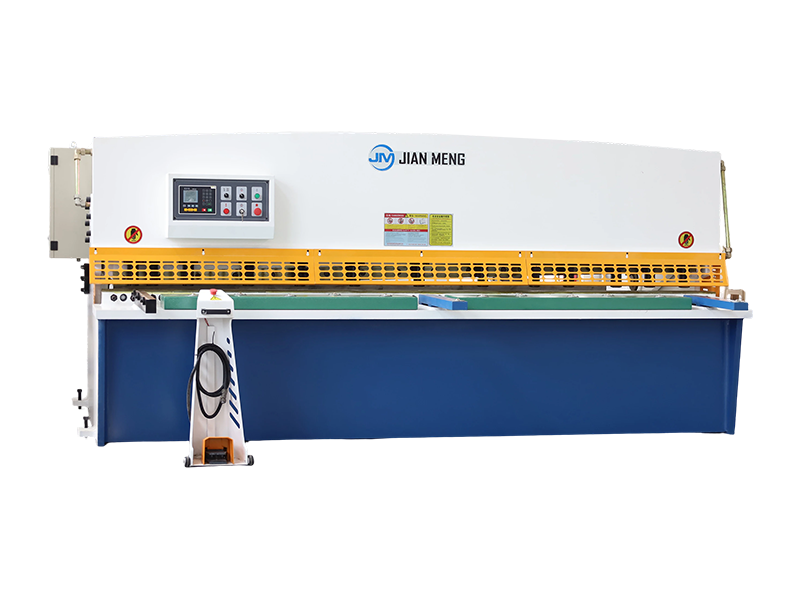
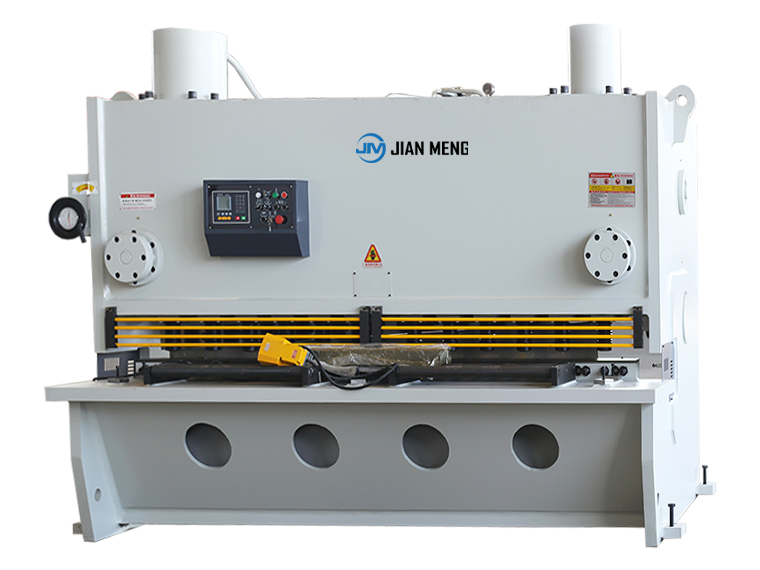
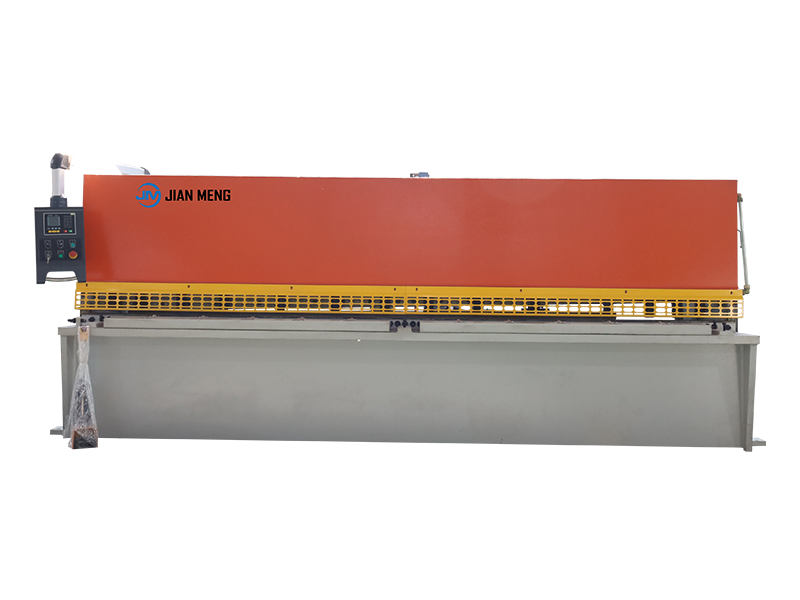
Swing beam shears are mainly composed of a frame, swing beam (upper blade carrier), upper blade, lower blade, fulcrum mechanism, power system, transmission system, hydraulic system, electrical control system, and auxiliary devices (such as sheet positioning device, pressure plate device). Each component cooperates closely to ensure the stable, precise, and efficient operation of the equipment:
2.1.1 Frame
The frame is the foundation of swing beam shears, bearing the weight of all components and the cutting force during the cutting process. It is usually made of high-strength welded steel plate or cast steel,经过 stress relief treatment to eliminate internal stress, ensuring high rigidity, stability, and anti-deformation ability. The frame structure is designed as a closed type, which can effectively disperse the cutting force, reduce equipment vibration, and lay the foundation for high-precision cutting.
2.1.2 Swing Beam (Upper Blade Carrier)
The swing beam is the core moving component of swing beam shears, which is installed on the frame through a fulcrum mechanism and can swing around the fulcrum. The upper blade is fixed on the lower surface of the swing beam, and the swing motion of the swing beam drives the upper blade to move towards the lower blade to complete the shearing action. The swing beam is usually made of high-strength alloy steel,经过 quenching and tempering treatment to improve its strength and wear resistance, ensuring stable swing motion and long service life.
2.1.3 Blades (Upper and Lower Blades)
The upper and lower blades are the core cutting components of swing beam shears, directly determining the cutting quality and efficiency. The blades are made of high-speed steel or alloy tool steel,经过 precision grinding and heat treatment to ensure high hardness, sharpness, and wear resistance. The upper blade is installed on the swing beam, and the lower blade is fixed on the frame's worktable. The gap between the upper and lower blades can be adjusted according to the thickness and material of the metal sheet to ensure the smoothness of the cutting edge and avoid edge burrs.
2.1.4 Fulcrum Mechanism
The fulcrum mechanism is the key component that realizes the swing motion of the swing beam, usually composed of a fulcrum shaft, bearing, and support seat. The fulcrum shaft is fixed on the frame, and the swing beam is connected to the fulcrum shaft through bearings, ensuring that the swing beam can swing flexibly and stably around the fulcrum. The fulcrum mechanism is designed with high precision to ensure that the swing track of the upper blade is accurate, avoiding deviation during the cutting process.
2.1.5 Power System and Transmission System
The power system of swing beam shears is usually composed of a motor and a hydraulic pump (for hydraulic swing beam shears) or a reducer (for mechanical swing beam shears). The transmission system transmits the power of the motor to the swing beam to drive its swing motion. Hydraulic swing beam shears adopt hydraulic transmission, which has the advantages of stable power transmission, adjustable cutting force, and smooth operation; mechanical swing beam shears adopt mechanical transmission (such as gear transmission, crankshaft transmission), which has the advantages of high transmission efficiency and fast cutting speed.
2.1.6 Hydraulic System (for Hydraulic Swing Beam Shears)
The hydraulic system is the core control system of hydraulic swing beam shears, composed of hydraulic pump, hydraulic cylinder, solenoid valve, relief valve, and oil tank. It is responsible for controlling the swing speed, cutting force, and return motion of the swing beam. The hydraulic system adopts proportional control technology, which can adjust the cutting force and swing speed according to the thickness and material of the sheet, ensuring stable cutting and improving cutting quality.
2.1.7 Electrical Control System
The electrical control system is the ""brain"" of
swing beam shears, composed of a PLC controller, touch screen, frequency converter, and various sensors. It is responsible for receiving and processing operation instructions, controlling the operation of the power system, hydraulic system, and auxiliary devices, and realizing automatic, semi-automatic, and manual cutting modes. The numerical control (CNC) swing beam shears are equipped with a high-performance CNC system, which can realize precise positioning of the sheet, automatic adjustment of cutting parameters, and continuous batch cutting, improving production efficiency and cutting precision.
2.1.8 Auxiliary Devices
Auxiliary devices include sheet positioning device, pressure plate device, and safety protection device. The sheet positioning device is used to accurately position the sheet, ensuring the accuracy of the cutting size; the pressure plate device compresses the sheet during the cutting process to avoid sheet movement and deformation, ensuring the flatness of the cutting surface; the safety protection device (such as protective cover, emergency stop button) is used to protect the personal safety of operators, avoiding safety accidents.
2.2 Specific Working Process
The working process of swing beam shears is divided into four stages: sheet positioning, pressure plate compression, swing cutting, and resetting. The specific process is as follows:
1. Sheet Positioning: Place the metal sheet on the worktable of the swing beam shear, and adjust the sheet positioning device to position the sheet accurately according to the required cutting size. Ensure that the cutting edge of the sheet is aligned with the gap between the upper and lower blades, and the sheet is placed flat without tilting or offset.
2. Pressure Plate Compression: Start the equipment, and the hydraulic system drives the pressure plate device to move down, compressing the sheet firmly on the worktable. The compression force can be adjusted according to the thickness and material of the sheet to avoid sheet movement during the cutting process and ensure the flatness of the cutting surface.
3. Swing Cutting: The power system drives the swing beam to swing around the fulcrum through the transmission system. The upper blade fixed on the swing beam moves towards the lower blade, and the upper and lower blades form a relative shearing motion. Due to the swing motion of the swing beam, the upper blade contacts the sheet from one end to the other, forming a gradual cutting effect. This cutting method can reduce the cutting force required, avoid sheet deformation, and ensure the smoothness of the cutting edge.
4. Resetting: After the cutting is completed, the swing beam resets to its original position under the action of the hydraulic system or mechanical spring, and the pressure plate device moves up to release the sheet. Take down the cut sheet, and the equipment is ready for the next cutting cycle.
2.3 Key Technical Points of Working Principle
The high-precision and stable cutting performance of swing beam shears is closely related to the following key technical points:
- Swing Track Control: The swing track of the swing beam must be accurate to ensure that the upper blade is always parallel to the lower blade during the cutting process, avoiding deviation and ensuring the cutting precision. The fulcrum mechanism and transmission system are designed with high precision to control the swing track error within ±0.01mm.
- Blade Gap Adjustment: The gap between the upper and lower blades is an important factor affecting the cutting edge quality. It needs to be adjusted according to the thickness and material of the sheet: for thin sheets, the gap is small; for thick sheets, the gap is large. The reasonable blade gap can avoid edge burrs, reduce blade wear, and improve cutting quality.
- Cutting Force Control: The cutting force is adjusted according to the thickness and material of the sheet to ensure that the sheet is cut smoothly without deformation. Hydraulic swing beam shears can realize stepless adjustment of cutting force through the hydraulic system, which is more flexible and adaptable.
3. Performance Advantages of Swing Beam Shears
Compared with traditional guillotine shears, hydraulic shears, and other sheet cutting equipment, swing beam shears have unique performance advantages in terms of cutting precision, edge quality, energy consumption, and adaptability. These advantages make swing beam shears widely used in high-precision metal sheet processing fields. The specific performance advantages are as follows:
3.1 High Cutting Precision and Stable Quality
Swing beam shears adopt a swing cutting structure, and the upper blade contacts the sheet from one end to the other, forming a gradual shearing effect. This cutting method can effectively reduce the cutting force, avoid sheet deformation caused by excessive local force, and ensure the flatness of the sheet after cutting. At the same time, the high-precision fulcrum mechanism and blade gap adjustment system ensure that the cutting size error is within ±0.02mm, and the cutting edge is smooth and free of burrs, which can directly enter the next processing procedure without secondary processing.
3.2 Low Cutting Force and Energy Saving
Compared with guillotine shears (which adopt vertical downward cutting), swing beam shears have a longer cutting stroke and a gradual cutting method, which can reduce the maximum cutting force by 30%-50%. The reduction of cutting force not only reduces the load of the equipment, extends the service life of the blades and other components but also reduces the power consumption of the equipment, achieving the effect of energy saving and environmental protection. For example, a 10mm thick carbon steel sheet cut by a swing beam shear consumes 20%-30% less energy than a guillotine shear of the same specification.
3.3 Good Adaptability to Different Materials and Thicknesses
Swing beam shears can cut various metal sheets, including carbon steel, stainless steel, aluminum alloy, copper alloy, and other materials. The cutting thickness ranges from 0.1mm to 60mm (depending on the equipment specification). By adjusting the blade gap, cutting force, and swing speed, swing beam shears can adapt to the cutting requirements of different materials and thicknesses, with strong versatility. Especially for thin sheets and high-hardness sheets, swing beam shears can achieve better cutting effect than other types of shears.
3.4 Stable Operation and Low Vibration
The frame of swing beam shears adopts a closed structure and undergoes stress relief treatment, which has high rigidity and anti-deformation ability. The swing cutting method reduces the impact force during cutting, and the hydraulic system (for hydraulic swing beam shears) has a good shock absorption effect, making the equipment run stably with low vibration and low noise. The stable operation not only improves the cutting precision but also reduces the impact on the surrounding environment and extends the service life of the equipment.
3.5 High Automation and Intelligence Level
Modern swing beam shears are equipped with advanced electrical control systems and CNC systems, which can realize automatic positioning, automatic parameter adjustment, automatic cutting, and continuous batch cutting. The touch screen operation interface is user-friendly, and operators can complete the setting of cutting parameters (such as cutting size, cutting speed, cutting force) with simple operation. Some high-end swing beam shears are also equipped with automatic loading and unloading devices and online measurement systems, which further improve production efficiency and reduce labor intensity.
3.6 Long Service Life and Easy Maintenance
The key components of swing beam shears (such as swing beam, blades, fulcrum shaft) are made of high-strength materials and undergo strict heat treatment, which has high wear resistance and service life. The daily maintenance of the equipment is relatively simple, mainly including lubrication, cleaning, and blade inspection and replacement. The hydraulic system and electrical system adopt modular design, which is convenient for maintenance and troubleshooting, reducing maintenance costs and downtime.
4. Industrial Applications of Swing Beam Shears
Due to their excellent performance advantages, swing beam shears are widely used in various industrial fields that require high-precision metal sheet cutting. They are not only used in the production of metal parts but also in the processing of sheet metal components in construction, automotive, aerospace, and other industries. The following is a detailed analysis of the application scenarios of swing beam shears in various industries:
4.1 Machinery Manufacturing Industry
The machinery manufacturing industry is the largest application field of swing beam shears. In the production process of mechanical equipment, a large number of metal sheets need to be cut into various sizes and shapes to make parts such as housings, brackets, and connecting plates. Swing beam shears are used for cutting sheet metal raw materials, ensuring the precision and quality of the parts, and laying the foundation for subsequent bending, stamping, and welding processes.
Specific Applications: Cutting of sheet metal parts for machine tools, pumps, valves, and other equipment; cutting of structural parts for agricultural machinery, engineering machinery, and other equipment; cutting of precision sheet metal parts for electrical equipment (such as switch cabinets, distribution boxes).
4.2 Automotive Manufacturing Industry
The automotive manufacturing industry has extremely strict requirements on the precision and quality of sheet metal parts. The body, chassis, door, hood, and other components of automobiles are made of metal sheets, which need high-precision cutting to ensure the assembly accuracy and safety of automobiles. Swing beam shears, with their high cutting precision and stable edge quality, are widely used in the cutting of automotive sheet metal parts.
Specific Applications: Cutting of automotive body panels, chassis structural parts, door inner and outer panels, hood panels, and other sheet metal parts; cutting of sheet metal parts for automotive engines, gearboxes, and other components; cutting of precision sheet metal parts for new energy vehicle batteries and charging piles.
4.3 Aerospace Industry
The aerospace industry has ultra-high requirements on the precision, surface quality, and material performance of components. The sheet metal parts used in aircraft, rockets, satellites, and other aerospace equipment are mostly made of high-strength alloy materials (such as titanium alloy, aluminum alloy), which require ultra-high-precision cutting. Swing beam shears, with their high precision, low cutting force, and good adaptability to high-hardness materials, are essential equipment in the aerospace sheet metal processing field.
Specific Applications: Cutting of sheet metal parts for aircraft fuselage, wings, tail, and other components; cutting of precision sheet metal parts for aerospace engines, avionics equipment; cutting of sheet metal parts for satellite housings, solar panels, and other components.
4.4 Construction Industry
In the construction industry, swing beam shears are used for cutting metal sheets used in building structures, decoration, and municipal engineering. The metal sheets used in construction (such as steel plates, aluminum plates, stainless steel plates) have different thicknesses and sizes, requiring cutting equipment with strong adaptability and high efficiency. Swing beam shears can meet the cutting requirements of various construction metal sheets, improving construction efficiency and quality.
Specific Applications: Cutting of steel plates for building steel structures (such as beams, columns, purlins); cutting of aluminum plates, stainless steel plates for building decoration (such as curtain walls, ceilings, handrails); cutting of metal sheets for municipal engineering (such as street lamp poles, guardrails, signboards).
4.5 Electrical and Electronic Industry
The electrical and electronic industry requires a large number of precision sheet metal parts, such as shells of electrical appliances, heat sinks, and connectors. These parts have small sizes, high precision requirements, and smooth edge surfaces, which need high-precision cutting equipment. Swing beam shears, with their high cutting precision and smooth edge quality, are widely used in the cutting of precision sheet metal parts in the electrical and electronic industry.
Specific Applications: Cutting of sheet metal shells for household appliances (such as refrigerators, air conditioners, washing machines); cutting of precision sheet metal parts for electronic equipment (such as computers, mobile phones, servers); cutting of heat sinks, connectors, and other parts for electrical components.
4.6 Other Application Fields
In addition to the above fields, swing beam shears are also used in other industries that require metal sheet cutting, such as:
- Hardware Manufacturing Industry: Cutting of sheet metal parts for hardware products (such as locks, hinges, brackets).
- Container Manufacturing Industry: Cutting of steel plates for containers, tank bodies, and other components.
- Metallurgical Industry: Cutting of metal sheets and strips produced by metallurgical enterprises, ensuring the size accuracy of the products.
5. Common Problems and Solutions in the Use of Swing Beam Shears
In the process of using swing beam shears, due to factors such as improper operation, parameter setting, blade wear, and equipment aging, some common problems may occur, which affect the cutting quality and efficiency. The following are common problems and corresponding solutions:
5.1 Problem 1: Cutting Edge with Burrs
Causes: Improper blade gap adjustment, blunt blades, uneven sheet placement, or insufficient pressure plate compression force.
Solutions: Adjust the blade gap according to the thickness and material of the sheet; dress or replace the blunt blades; reposition the sheet to ensure it is flat and free of offset; increase the pressure plate compression force to avoid sheet movement during cutting.
5.2 Problem 2: Cutting Size Deviation
Causes: Inaccurate sheet positioning, deviation of the swing beam swing track, improper blade installation, or wear of the positioning device.
Solutions: Calibrate the sheet positioning device to ensure accurate positioning; check the fulcrum mechanism and transmission system to adjust the swing beam swing track; re-install the blades to ensure they are parallel to each other; replace the worn positioning device components.
5.3 Problem 3: Sheet Deformation After Cutting
Causes: Excessive cutting force, uneven pressure plate compression, improper blade gap, or thin sheet thickness.
Solutions: Reduce the cutting force and adjust the swing speed to reduce the impact on the sheet; adjust the pressure plate compression force to ensure uniform compression; adjust the blade gap to the appropriate value; use a supporting device for thin sheets to avoid deformation during cutting.
5.4 Problem 4: Equipment Vibration or Abnormal Noise
Causes: Loose equipment components, uneven foundation, worn bearings, or insufficient lubrication.
Solutions: Check and tighten the loose components (such as bolts, nuts); adjust the equipment foundation to ensure it is flat and stable; replace the worn bearings; add lubricating oil to the moving components (such as fulcrum shaft, transmission system) in time.
5.5 Problem 5: Hydraulic System Failure (for Hydraulic Swing Beam Shears)
Causes: Hydraulic oil leakage, blocked oil circuit, damaged solenoid valve, or insufficient hydraulic oil.
Solutions: Check the hydraulic oil pipeline and joints to repair leaks; clean the oil circuit and filter to remove blockages; replace the damaged solenoid valve; add hydraulic oil to the specified level and replace the hydraulic oil regularly.
6. Development Trends of Swing Beam Shear Technology
With the continuous advancement of intelligent manufacturing, precision processing, and green manufacturing technology, swing beam shear technology is developing in the direction of ultra-high precision, intelligence, high efficiency, and greenization. The main development trends are as follows:
- Ultra-High Precision Development: With the increasing demand for ultra-high-precision sheet cutting in aerospace, semiconductor, and other fields, swing beam shears are developing towards ultra-high precision. The swing track control, blade gap adjustment, and sheet positioning technology will be further optimized, and the cutting size error will be controlled within ±0.01mm, meeting the ultra-high precision requirements of complex components.
- Intelligent Development: The integration of artificial intelligence (AI), Internet of Things (IoT), and big data technology into swing beam shears will realize intelligent functions such as automatic parameter optimization, fault early warning, predictive maintenance, and online monitoring. The equipment can automatically adjust the cutting parameters according to the sheet material and thickness, real-time monitor the equipment operation status, and avoid sudden faults. At the same time, the integration of robot technology will realize automatic loading and unloading of sheets, improving production efficiency and reducing labor intensity.
- High Efficiency Development: By optimizing the structural design, improving the swing speed, and integrating multi-station processing technology, the cutting efficiency of swing beam shears will be further improved. The development of high-speed cutting technology and super-hard blades will greatly improve the cutting speed and reduce the processing cycle. In addition, the development of integrated processing technology will realize the integration of cutting, bending, and stamping, further improving production efficiency.
- Green Development: By optimizing the hydraulic system, using environmentally friendly hydraulic oil, and improving the energy efficiency of the equipment, the environmental impact of swing beam shears will be reduced. The development of dry cutting technology (for specific materials) will avoid the pollution caused by hydraulic oil, conforming to the concept of green manufacturing. At the same time, the recyclability of the equipment and blades will be improved, reducing resource waste.
- Customization Development: With the diversification of sheet cutting needs, swing beam shears will develop towards customization. Manufacturers will design and produce swing beam shears with specific functions and performance according to the special requirements of different industries and customers, such as large-format swing beam shears, ultra-thin sheet swing beam shears, and high-hardness material swing beam shears, to meet the personalized processing needs.
7. Conclusion
Swing beam shears, as high-precision metal sheet cutting equipment with unique swing cutting structure, have the advantages of high cutting precision, stable operation, low energy consumption, and strong adaptability. Their core working principle is to drive the upper blade to swing around the fulcrum through power transmission, forming a gradual cutting effect, which effectively solves the problems of poor edge quality, sheet deformation, and high energy consumption of traditional shears.
This paper systematically elaborates on the core structural composition and specific working process of swing beam shears, clarifies the key technical points that ensure high-precision cutting; deeply analyzes the performance advantages of swing beam shears compared with other types of shears, including high cutting precision, low cutting force, good adaptability, stable operation, high automation, and long service life; details their application scenarios in machinery manufacturing, automotive, aerospace, construction, electrical and electronic, and other industries, showing the wide application value of swing beam shears; summarizes common problems and solutions in the use process, providing practical guidance for equipment operation and maintenance; and prospects the development trends of swing beam shear technology towards ultra-high precision, intelligence, high efficiency, greenization, and customization.
It is hoped that this paper can help relevant practitioners fully grasp the technical characteristics and application value of swing beam shears, master scientific operation methods and maintenance skills, and promote the rational and efficient application of swing beam shears in high-precision metal sheet processing. With the continuous advancement of technology, swing beam shears will continue to upgrade and improve, making greater contributions to the development of modern metal processing industry and the upgrading of high-end equipment manufacturing.




 English
  中文
中文  Arabic
  Russian
  Spanish
  Portuguese
  French
  German
  Hindi
Hindi  Thai
Thai  Vietnamese
  Khmer
Khmer  Italian
  Turkish
  Korean
  Belarusian