A guillotine shearing machine (often referred to as a guillotine shear) is a vital piece of equipment in metal processing and manufacturing industries, specifically designed to cut sheet metal, plates, and thin metal profiles with high precision and efficiency. Unlike other cutting machines that rely on rotary blades or abrasive cutting, guillotine shears use a straight, sharp blade that descends vertically (or at a slight angle) to shear materials cleanly, ensuring uniform cuts and minimal material waste. This article systematically elaborates on the definition, core significance, main types, working principles, typical application scenarios, process optimization, and maintenance guidelines of guillotine shearing machines, integrating practical technical parameters and industry operational experience to provide comprehensive guidance for engineers, production managers, quality control personnel, and maintenance technicians.
I. Overview and Core Definition of Guillotine Shearing Machines
In metal processing,
shearing is a fundamental cutting process that involves separating sheet metal or plates into smaller, desired sizes using mechanical force. A guillotine shearing machine is a specialized device that executes this process through a reciprocating linear motion of a sharp, straight blade, paired with a fixed lower blade. The core mechanism relies on the shearing force generated by the upper blade’s downward movement, which overcomes the material’s shear strength and separates the workpiece along a straight line.
Guillotine shears are distinguished by their ability to produce clean, straight cuts with high dimensional accuracy, making them ideal for mass production and precision processing. Unlike plasma or laser cutting machines, guillotine shears do not generate heat during cutting, which avoids material distortion, discoloration, or changes in mechanical properties— a critical advantage for applications requiring post-processing (such as bending, welding, or painting). The machines can handle a wide range of metal materials, including steel, aluminum, copper, and various alloys, with thicknesses ranging from thin sheets (0.1mm) to thick plates (up to 30mm, depending on the machine’s capacity).
The performance of a guillotine shearing machine directly impacts the quality of cut edges, production efficiency, and overall manufacturing costs. A high-performance guillotine shear ensures consistent cut accuracy, minimal edge burrs, and stable operation, while reducing material waste and labor costs. In contrast, improper selection, operation, or maintenance of guillotine shears may lead to uneven cuts, edge defects, equipment malfunctions, or even safety hazards.
II. Core Significance of Guillotine Shearing Machines in Manufacturing
Guillotine shearing machines play an irreplaceable role in modern metal processing, with their significance reflected in production efficiency, processing quality, material utilization, and operational safety. The core significance can be summarized into five key points:
1. Ensuring High-Precision and Consistent Cutting Quality
Modern guillotine shearing machines are equipped with advanced positioning systems (such as CNC control, linear guides, and digital readouts) that ensure precise control of the cutting length, angle, and blade gap. This precision eliminates human errors associated with manual cutting, ensuring that every cut is consistent and meets design specifications. The clean, burr-free edges produced by guillotine shears reduce the need for post-cut finishing (such as deburring), saving time and labor costs.
2. Improving Production Efficiency and Enabling Mass Production
Guillotine shearing machines, especially automated and CNC-controlled models, can achieve high-speed cutting, with cutting speeds ranging from 10 to 50 strokes per minute (depending on the machine type and material thickness). This high efficiency makes them suitable for mass production of sheet metal parts, such as those used in automotive, construction, and electronics industries. Automated guillotine shears can also be integrated with feeding systems and conveyors, realizing continuous, unattended operation and further improving production throughput.
3. Reducing Material Waste and Controlling Costs
The precise cutting capability of guillotine shears minimizes material waste by ensuring that the cut dimensions match the required specifications exactly. Unlike manual cutting, which often results in uneven edges or incorrect sizes (leading to scrapped materials), guillotine shears optimize material utilization, especially when cutting large sheets into smaller parts. Additionally, the cold-cutting process avoids material loss due to heat distortion, further reducing waste and raw material costs.
4. Versatility in Material and Thickness Processing
Guillotine shearing machines can handle a wide range of metal materials, including carbon steel, stainless steel, aluminum, copper, and various alloys. They are also capable of cutting materials of different thicknesses, from thin foils to thick plates, by adjusting the blade gap, cutting force, and blade speed. This versatility makes guillotine shears suitable for diverse industries, from small-scale hardware manufacturing to large-scale aerospace component production.
5. Enhancing Operational Safety and Reducing Labor Intensity
Modern guillotine shearing machines are equipped with multiple safety features, such as safety guards, emergency stop buttons, two-hand operation controls, and light curtains, which prevent operator injuries during operation. These safety mechanisms reduce the risk of accidents associated with manual cutting, protecting workers and ensuring compliance with industrial safety standards. Additionally, automated and semi-automated guillotine shears reduce manual labor, minimizing operator fatigue and improving workplace safety.
III. Main Types of Guillotine Shearing Machines and Their Working Principles
Guillotine shearing machines are classified into various types based on their drive mode, control system, blade movement, and application scenarios. Each type has unique structural characteristics, working principles, and applicable fields. The following is a systematic classification and detailed introduction of mainstream guillotine shearing machines:
1. Based on Drive Mode
The drive mode determines the cutting force, speed, and stability of the guillotine shear, and is the primary classification criterion for these machines.
1.1 Mechanical Guillotine Shearing Machine
Mechanical guillotine shears are the most traditional type, using a mechanical drive system (such as a flywheel, crankshaft, and connecting rod) to transmit power to the upper blade. They adopt a key-type clutch structure and open gear transmission, with relatively simple operation and maintenance, and low noise during operation. These machines are suitable for small to medium-scale production and are widely used in industries such as hardware manufacturing and light industry.
Working Principle: The motor drives the flywheel to rotate, and the crankshaft converts the rotational motion into linear motion of the upper blade. When the clutch is engaged, the upper blade descends rapidly, applying shearing force to the material placed between the upper and lower blades. The lower blade is fixed, and the blade gap can be adjusted manually to adapt to different material thicknesses. After cutting, the upper blade returns to its original position under the action of a spring or counterweight.
Key Advantages: Simple structure, low equipment cost, easy operation and maintenance, low energy consumption, and low noise. Limitations: Limited cutting force, unsuitable for thick plates (usually up to 10mm), and low automation level, requiring manual feeding and positioning. Best For: Small-batch production of thin sheet metal parts, hardware accessories, and light industry products.
1.2 Hydraulic Guillotine Shearing Machine
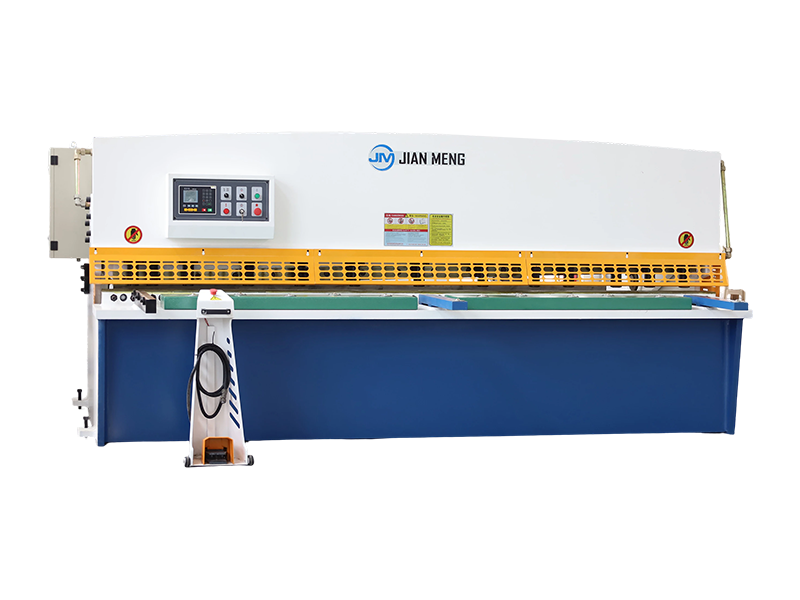
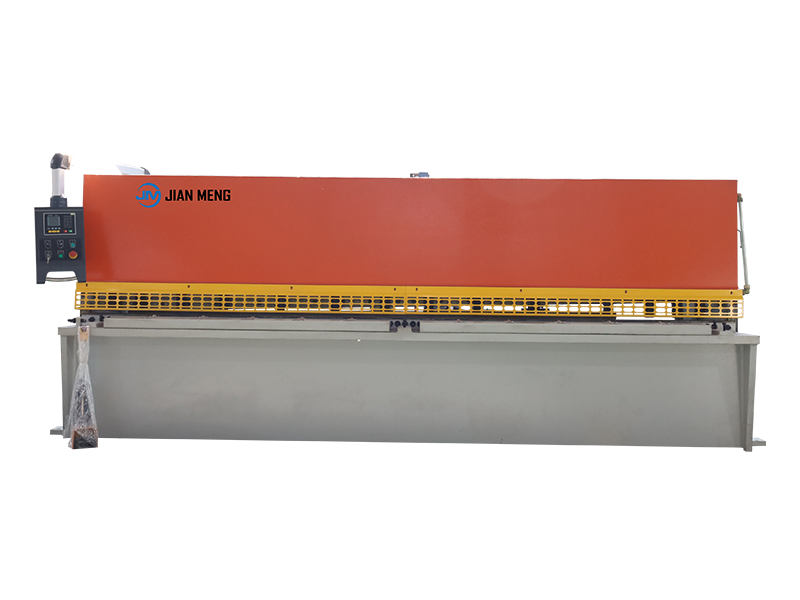
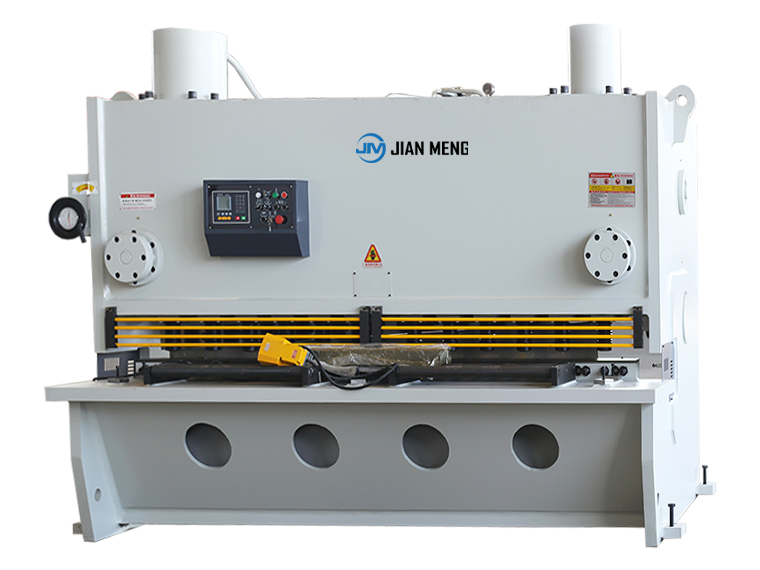
Hydraulic guillotine shears are the most widely used type in modern manufacturing, using a hydraulic drive system to provide stable, adjustable cutting force. They are capable of cutting thick plates and are known for their smooth operation, high cutting precision, and strong load-bearing capacity. These machines are widely used in automotive, construction, and heavy machinery industries.
Working Principle: The hydraulic system (composed of a hydraulic pump, cylinder, and control valve) generates high-pressure oil, which drives the upper blade to descend at a uniform speed. The cutting force can be adjusted by changing the hydraulic pressure, and the blade gap can be precisely controlled through a digital adjustment system. Hydraulic guillotine shears often adopt a double-cylinder structure to ensure that the upper blade descends evenly, avoiding uneven cuts caused by blade tilt.
Key Advantages: Large cutting force, suitable for thick plates (up to 30mm), smooth operation, high cutting precision, and adjustable cutting speed. Limitations: Higher equipment cost than mechanical shears, requiring regular maintenance of the hydraulic system (such as oil replacement and leak detection). Best For: Mass production of thick sheet metal parts, automotive body components, and construction steel structures.
1.3 Pneumatic Guillotine Shearing Machine
Pneumatic guillotine shears use compressed air as the power source, suitable for cutting thin sheet metal (usually up to 3mm) with high speed and low noise. They are lightweight, compact, and easy to install, making them ideal for small workshops and small-batch production.
Working Principle: Compressed air drives the cylinder piston, which drives the upper blade to descend and shear the material. The cutting speed is fast, and the operation is simple, with no need for complex hydraulic or mechanical systems. The blade gap is adjustable, and the machine can be equipped with a foot pedal for hands-free operation.
Key Advantages: High cutting speed, low noise, lightweight, low energy consumption, and easy operation. Limitations: Small cutting force, only suitable for thin sheets, and limited cutting precision. Best For: Cutting thin sheet metal, aluminum foil, and small-sized metal parts in small workshops and electronics manufacturing.
2. Based on Control System
The control system determines the automation level and cutting precision of the guillotine shear, with two main types:
2.1 Manual Guillotine Shearing Machine
Manual guillotine shears are the simplest type, with no automated control system. The operator manually adjusts the blade gap, positions the material, and controls the cutting process (usually through a hand lever or foot pedal). These machines are low-cost and suitable for small-scale, low-precision production.
Key Advantages: Low cost, simple structure, easy maintenance, and suitable for small-batch, low-precision cutting. Limitations: Low production efficiency, high labor intensity, and poor cutting consistency. Best For: Small workshops, manual processing, and prototype production.
2.2 CNC Guillotine Shearing Machine
CNC (Computer Numerical Control) guillotine shears are advanced models equipped with a digital control system, which can automatically control the cutting length, blade gap, cutting speed, and number of cuts. They can be programmed to process multiple workpieces with different specifications, realizing automated and intelligent operation.
Working Principle: The operator inputs the cutting parameters (length, thickness, material type) into the CNC system, which controls the hydraulic or mechanical drive system to execute the cutting process. The machine is equipped with a digital readout and positioning system, ensuring precise material positioning and cutting accuracy. Some advanced CNC guillotine shears can be integrated with automatic feeding systems and robotic arms, realizing fully automated production.
Key Advantages: High cutting precision, high production efficiency, good consistency, and reduced labor intensity. Limitations: High equipment cost, requiring professional operators to program and maintain the CNC system. Best For: Mass production of high-precision sheet metal parts, aerospace components, and automotive parts.
3. Other Special Types
- Angle Guillotine Shearing Machine: Equipped with an adjustable workbench that can rotate at different angles (usually 0°–45°), allowing for angular cutting of sheet metal. Suitable for processing beveled edges for welding or assembly.
- Thin-Sheet Guillotine Shearing Machine: Specifically designed for cutting thin sheets (0.1mm–2mm), with a sharp, narrow blade gap to avoid material deformation. Widely used in electronics, packaging, and precision instrument manufacturing.
- Heavy-Duty Guillotine Shearing Machine: Designed for cutting thick plates (10mm–30mm) and high-strength alloys, with a large hydraulic system and reinforced frame to ensure stable cutting. Used in heavy machinery, construction, and shipbuilding industries.
IV. Typical Application Scenarios of Guillotine Shearing Machines
Guillotine shearing machines are widely used in various metal processing industries, with application scenarios closely related to the machine type, cutting capacity, and precision. The following are typical application scenarios and corresponding guillotine shearing machines:
1. Automotive Manufacturing Industry
The automotive industry requires a large number of sheet metal parts (such as body panels, door panels, fenders, and brackets) with high precision and consistent quality. CNC hydraulic guillotine shears are the primary equipment used, as they can cut thick sheet metal (up to 15mm) with high precision, ensuring that the cut parts meet the assembly requirements. For example, automotive body panels are cut using CNC guillotine shears to ensure uniform dimensions, which is critical for subsequent bending and welding processes.
2. Construction Industry
The construction industry uses a large number of steel plates, aluminum profiles, and sheet metal components for buildings, bridges, and infrastructure. Heavy-duty hydraulic guillotine shears are used to cut thick steel plates (10mm–30mm) for structural components, while mechanical guillotine shears are used to cut thin sheet metal for roofing, wall cladding, and decorative parts. For example, steel plates used in bridge structures are cut using heavy-duty guillotine shears to ensure clean edges and precise dimensions.
3. Electronics and Precision Instrument Industry
The electronics industry requires small, high-precision sheet metal parts (such as electronic component shells, heat sinks, and connectors). Thin-sheet CNC guillotine shears are used to cut thin metal sheets (0.1mm–2mm) with high precision, avoiding material deformation and ensuring the parts fit perfectly with other components. For example, heat sinks for electronic devices are cut using thin-sheet guillotine shears to ensure uniform thickness and smooth edges.
4. Hardware and Daily Necessities Industry
The hardware industry produces a wide range of products, such as metal brackets, hinges, and tools, which require simple, efficient cutting. Mechanical and pneumatic guillotine shears are widely used in this industry, as they are low-cost and suitable for small-batch production. For example, metal brackets for furniture are cut using mechanical guillotine shears, while thin aluminum sheets for kitchen utensils are cut using pneumatic guillotine shears.
5. Aerospace Industry
The aerospace industry requires high-precision, high-strength sheet metal components (such as aircraft fuselage parts, engine components, and landing gear parts). CNC hydraulic guillotine shears with high precision and stability are used to cut thick, high-strength alloys (such as titanium alloys and aluminum alloys) with minimal edge defects, ensuring the safety and reliability of the components.
6. Other Fields
- Shipbuilding Industry: Heavy-duty guillotine shears are used to cut thick steel plates for ship hulls and structural components, ensuring high strength and precise dimensions.
- Medical Equipment Industry: Precision CNC guillotine shears are used to cut thin, biocompatible metal sheets (such as stainless steel and titanium) for medical devices (such as surgical instruments and implantable components).
- New Energy Industry: Guillotine shears are used to cut sheet metal for solar panel brackets, wind turbine components, and battery pack shells, ensuring the structural integrity and precision of the parts.
V. Guillotine Shearing Machine Process Optimization and Selection Guidelines
Selecting the optimal guillotine shearing machine and optimizing the cutting process are crucial to ensuring cutting quality, improving production efficiency, and reducing costs. The following are key selection factors and process optimization guidelines:
1. Key Factors for Selecting Guillotine Shearing Machines
- Material Type and Thickness: Select the machine based on the material to be cut (steel, aluminum, alloy) and its thickness. For thin sheets (≤3mm), pneumatic or mechanical shears are suitable; for thick plates (3mm–30mm), hydraulic shears are preferred; for high-strength alloys, heavy-duty hydraulic or CNC shears are required. It is strictly prohibited to shear hardened steel, high-carbon steel, alloy tool steel, cast iron, or brittle materials, as these can damage the blades and equipment.
- Cutting Precision Requirements: For high-precision cutting (tolerance ≤±0.1mm), select CNC guillotine shears with digital positioning systems; for general precision requirements, manual or mechanical shears are sufficient.
- Production Batch: For mass production, select automated CNC shears with automatic feeding systems to improve efficiency; for small-batch or prototype production, select manual or mechanical shears to reduce equipment investment.
- Workpiece Size: For large-sized workpieces (length >2m), select guillotine shears with a long workbench and large cutting width; for small-sized workpieces, select compact models with precise positioning.
- Cost Budget: Consider the equipment cost, maintenance cost, and energy consumption. Manual and mechanical shears have low initial investment but high labor costs; CNC hydraulic shears have high initial investment but low long-term operating costs.
2. Process Optimization Best Practices
Blade Gap Adjustment
The blade gap is a critical parameter that directly affects cutting quality. It should be adjusted according to the material thickness and type: for thin sheets, the gap should be small (0.05–0.1 times the material thickness); for thick plates, the gap should be larger (0.1–0.2 times the material thickness). An inappropriate blade gap can lead to uneven cuts, burrs, or blade damage. For thin sheets, the upper and lower blades must be kept parallel, and the gap should not exceed one-third of the material thickness.
Cutting Speed and Force Optimization
Adjust the cutting speed and force based on the material’s hardness and thickness. For soft materials (aluminum, copper), use a higher cutting speed and lower force to avoid material deformation; for hard materials (steel, alloy), use a lower cutting speed and higher force to ensure clean cuts. Avoid overloading the machine, as this can damage the blade and drive system.
Material Positioning and Fixing
Use positioning stops, clamps, or digital positioning systems to ensure accurate material positioning. The material should be firmly fixed to avoid movement during cutting, which can cause uneven cuts. For large sheets, use auxiliary supports to prevent sagging, which can affect cutting precision. When feeding materials, strictly avoid placing fingers under the sheet or near the blade to ensure safety.
Blade Maintenance and Replacement
Keep the blades sharp to ensure clean cuts. Dull blades can cause burrs, uneven edges, and increased cutting force, which may damage the machine. Regularly sharpen the blades and replace them when they are worn or damaged. Before operation, check the blade condition and ensure it is properly installed and tightened.
3. Common Defect Prevention
- Edge Burrs: Adjust the blade gap and sharpen the blades regularly; ensure the material is clean and free of debris before cutting; avoid overloading the machine.
- Uneven Cuts: Check and adjust the blade parallelism; ensure accurate material positioning; maintain stable cutting speed and force; avoid material movement during cutting.
- Material Deformation: Use appropriate cutting speed and force; select the correct blade gap; use clamps to fix the material firmly; avoid cutting thin sheets at too high a speed.
- Blade Damage: Do not cut hard or brittle materials beyond the machine’s capacity; adjust the blade gap correctly; avoid overloading the machine; sharpen and maintain blades regularly.
VI. Maintenance Guidelines for Guillotine Shearing Machines
Proper maintenance of guillotine shearing machines is essential to ensure stable performance, extend service life, maintain cutting quality, and ensure operational safety. The following are maintenance guidelines for common guillotine shearing machines, integrating practical operational requirements:
1. Daily Maintenance
- Cleaning: Clean the machine surface, workbench, blades, and guide rails regularly to remove metal chips, dust, and debris. Pay special attention to cleaning the blade gap and positioning stops to avoid debris affecting cutting precision. Clean the machine thoroughly for 10 minutes before the end of each workday.
- Lubrication: Apply lubricating oil to the moving components (blade guide rails, crankshaft, connecting rod, hydraulic cylinder) according to the lubrication chart, ensuring timely, fixed-point, and quantitative lubrication. Use clean lubricating oil without sediment to reduce friction and wear. Regularly check the lubricating oil level and replenish or replace it as needed.
- Safety Inspection: Check the safety guards, emergency stop buttons, two-hand operation controls, and light curtains to ensure they are intact and functional. Check for loose connections, leaks (hydraulic/pneumatic), and abnormal noises. Ensure that only designated personnel operate the equipment, and implement the personnel leave, machine stop rule.
- Blade Inspection: Check the blade for wear, damage, or deformation. If burrs or dullness are found, sharpen the blade in time; replace the blade if it is severely worn or damaged. Ensure the blade is properly installed and tightened.
2. Regular Maintenance (Weekly/Monthly)
- Hydraulic System Maintenance (for hydraulic shears): Check the hydraulic oil level and quality; replace the hydraulic oil and filter element according to the maintenance schedule. Inspect the hydraulic cylinder, hoses, and valves for leaks; tighten loose connections. Clean the hydraulic oil tank to remove sediment.
- Mechanical System Maintenance (for mechanical shears): Check the flywheel, crankshaft, and clutch for wear or damage; adjust the clutch clearance if necessary. Inspect the triangular belt for wear and tension; replace worn belts in time and report for replacement备货.
- Electrical System Maintenance: Check the motor, sensor, controller, and wiring for loose connections or faults. Clean the control panel and electrical components to avoid dust affecting operation. Regularly check the motor bearings and add lubricating oil; ensure the electrical system is safe and reliable.
- Blade Sharpening and Calibration: Sharpen the blades regularly to maintain their sharpness. Calibrate the blade parallelism and gap to ensure cutting precision. After sharpening, test the machine with a test cut to verify performance.
3. Long-Term Storage Maintenance
- Disconnect the power supply and drain the hydraulic oil (for hydraulic shears) or compressed air (for pneumatic shears).
- Clean the machine thoroughly, including the blades, workbench, and guide rails. Apply anti-rust oil to the metal components to prevent rust, especially on unpainted surfaces.
- Cover the machine with a dust cover to avoid dust and moisture. Store the machine in a dry, clean, and well-ventilated environment, away from direct sunlight, moisture, and corrosive substances.
- Regularly check the machine during storage to prevent rust and component damage.
4. General Maintenance Principles
- Establish a regular maintenance schedule based on the machine’s operating hours and usage frequency, including daily, weekly, and monthly inspections, to identify potential issues in advance.
- Train maintenance personnel and operators to master the machine’s structure, working principle, and maintenance skills. Ensure that all operations, including maintenance and operation, are standardized to avoid equipment damage caused by improper operation.
- Keep detailed maintenance records, including maintenance time, maintenance content, replaced parts, and machine operating status, to track the machine’s performance and facilitate subsequent maintenance and troubleshooting.
- Before adjusting or cleaning the machine, ensure it is shut down and the power is disconnected to avoid safety hazards.
VII. Limitations and Future Development Trends of Guillotine Shearing Machines
1. Current Limitations
Despite the continuous development of guillotine shearing machine technology, there are still some limitations that need to be addressed: First, traditional guillotine shears are only suitable for straight-line cutting and cannot handle complex shapes, which limits their application in industries requiring irregular cuts. Second, high-precision CNC guillotine shears have high equipment and maintenance costs, which are not affordable for small and medium-sized enterprises. Third, the cutting of ultra-thick plates (above 30mm) and ultra-hard alloys is still challenging, requiring high-power machines and special blades. Fourth, the automation level of some mechanical and manual shears is low, requiring manual feeding and positioning, which affects production efficiency and increases labor intensity.
2. Future Development Trends
With the development of intelligent manufacturing, precision machining, and green manufacturing, guillotine shearing machines are moving toward intelligence, high precision, high efficiency, and versatility. The main development trends are as follows:
- Intelligent Guillotine Shears: Integrate AI, machine vision, and IoT technology to realize automatic blade gap adjustment, fault diagnosis, and predictive maintenance. For example, machine vision can automatically detect the material thickness and type, and AI algorithms can adjust the cutting parameters in real time to ensure optimal cutting quality. IoT technology can monitor the machine’s operating status in real time, realizing remote maintenance and troubleshooting.
- High-Precision and High-Efficiency Cutting: Develop high-precision CNC guillotine shears with servo control systems, improving cutting precision to ±0.05mm or higher. Increase cutting speed and stroke frequency to improve production efficiency. Integrate automatic feeding, positioning, and sorting systems to realize fully automated production lines.
- Versatile Cutting Capabilities: Develop guillotine shears with multi-functional cutting capabilities, such as angular cutting, curved cutting (combined with other cutting technologies), and multi-layer cutting. This expands the application scope of guillotine shears, enabling them to handle complex processing requirements.
- Green and Energy-Saving Technology: Optimize the drive system (such as using servo hydraulic systems) to reduce energy consumption. Use eco-friendly lubricating oil and materials to reduce environmental impact. Improve material utilization through precise cutting and waste recycling.
- Lightweight and Compact Design: Develop lightweight, compact guillotine shears suitable for small workshops and limited space. Use high-strength materials to reduce the machine’s weight while ensuring structural stability and cutting performance.
VIII. Conclusion
Guillotine shearing machines are essential equipment in modern metal processing, playing a crucial role in cutting sheet metal, plates, and profiles with high precision and efficiency. From traditional mechanical shears to advanced CNC hydraulic shears, guillotine shearing machines have continuously evolved to meet the increasingly diverse and strict requirements of various industries. Their cold-cutting process ensures clean, burr-free edges and avoids material deformation, making them indispensable in automotive, construction, electronics, and aerospace manufacturing.
Selecting the appropriate guillotine shearing machine based on material type, thickness, production batch, and precision requirements, and optimizing the cutting process, is crucial to improving production efficiency, reducing costs, and ensuring product quality. Meanwhile, proper daily maintenance and regular inspection can extend the machine’s service life, ensure stable operation, and avoid safety hazards. Adhering to operational specifications, such as prohibiting overload operation and ensuring safe feeding, is also essential to protect equipment and operators.
With the integration of intelligent technology, green manufacturing, and precision machining, guillotine shearing machines will continue to develop toward intelligence, high precision, and versatility. They will not only promote the transformation and upgrading of traditional metal processing industries but also support the development of new industries such as new energy and aerospace. For engineers, production managers, and maintenance personnel, mastering the knowledge of guillotine shearing machines—including their types, working principles, process optimization, and maintenance—is essential to adapting to the development trend of the manufacturing industry and improving work efficiency and product quality.




 English
  中文
中文  Arabic
  Russian
  Spanish
  Portuguese
  French
  German
  Hindi
Hindi  Thai
Thai  Vietnamese
  Khmer
Khmer  Italian
  Turkish
  Korean
  Belarusian