A multi-station sheet metal deburring machine is a specialized and efficient piece of equipment in the metal processing industry, designed to remove burrs, sharp edges, and surface defects from sheet metal workpieces through multiple consecutive processing stations. Unlike single-station deburring machines that require manual repositioning of workpieces for different deburring tasks, multi-station models integrate multiple processing functions into one automated system, enabling continuous, high-precision deburring of sheet metal parts. This article systematically elaborates on the definition, core significance, main types, working principles, typical application scenarios, process optimization, and maintenance guidelines of multi-station sheet metal deburring machines, integrating practical technical parameters and industry operational experience to provide comprehensive guidance for engineers, production managers, quality control personnel, and maintenance technicians.
I. Overview and Core Definition of Multi-station Sheet Metal Deburring Machines
In sheet metal processing,
deburring is a critical post-processing step that follows cutting, bending, stamping, or punching operations. Burrs—small, irregular protrusions formed on the edges or surfaces of workpieces during processing—can affect the dimensional accuracy, surface quality, and assembly performance of products, and may even pose safety hazards to operators. A multi-station sheet metal deburring machine is a automated or semi-automated device that addresses this issue by incorporating multiple deburring stations (each with specific functions) into a single production line, allowing workpieces to undergo sequential deburring, edge rounding, polishing, and cleaning processes without manual intervention.
The core feature of a multi-station sheet metal deburring machine is its ability to handle multiple deburring tasks in one continuous operation. Each station is equipped with specialized tools (such as abrasive belts, brushes, grinding wheels, or laser heads) tailored to a specific type of burr or surface defect. Workpieces are transported between stations via a conveyor system, rotary table, or robotic arm, ensuring consistent processing quality and high production efficiency. These machines can handle a wide range of sheet metal materials, including carbon steel, stainless steel, aluminum, copper, and various alloys, with thicknesses ranging from thin sheets (0.1mm) to thick plates (up to 20mm, depending on the machine’s capacity).
The performance of a multi-station sheet metal deburring machine directly impacts the final quality of sheet metal parts, production efficiency, and overall manufacturing costs. A high-performance multi-station deburring machine ensures uniform deburring results, minimal surface damage, and stable operation, while reducing labor costs and material waste. In contrast, improper selection, operation, or maintenance of these machines may lead to incomplete deburring, uneven edge rounding, surface scratches, or equipment malfunctions.
II. Core Significance of Multi-station Sheet Metal Deburring Machines in Manufacturing
Multi-station sheet metal deburring machines play an irreplaceable role in modern sheet metal processing, with their significance reflected in production efficiency, processing quality, operational safety, and cost control. The core significance can be summarized into five key points:
1. Ensuring Consistent and High-Precision Deburring Quality
Multi-station deburring machines eliminate human errors associated with manual deburring or single-station machines that require frequent workpiece repositioning. Each station is precisely calibrated to handle specific deburring tasks, ensuring that every workpiece undergoes the same processing parameters (such as pressure, speed, and tool angle). This consistency ensures uniform edge quality, accurate edge rounding (usually 0.1mm–1mm, adjustable), and smooth surface finish, meeting the strict quality requirements of high-end manufacturing industries.
2. Dramatically Improving Production Efficiency
Compared to single-station deburring machines or manual deburring, multi-station models significantly reduce processing time by integrating multiple tasks into one continuous workflow. Workpieces are loaded once and transported automatically between stations, eliminating the need for manual reloading, repositioning, or transfer. High-end automated models can achieve processing speeds of 10–60 workpieces per minute (depending on workpiece size and deburring complexity), making them ideal for mass production of sheet metal parts.
3. Reducing Labor Costs and Labor Intensity
Manual deburring is a labor-intensive, time-consuming, and repetitive task that requires skilled operators to ensure quality. Multi-station sheet metal deburring machines automate the entire deburring process, reducing the need for manual intervention. Most models only require one operator to load/unload workpieces and monitor the machine, significantly reducing labor costs and minimizing operator fatigue. Additionally, automated operation reduces the risk of operator injuries caused by sharp burrs or repetitive movements.
4. Versatility in Processing Complex Workpieces
Multi-station deburring machines can be customized with different station configurations to handle complex sheet metal workpieces, such as those with holes, slots, edges, and irregular shapes. Each station can be equipped with specialized tools to target specific areas (e.g., hole edges, sharp corners, or large flat surfaces), ensuring comprehensive deburring without missing any defects. This versatility makes them suitable for diverse sheet metal processing scenarios, from simple flat sheets to complex stamped or bent parts.
5. Enhancing Product Reliability and Safety
Burrs on sheet metal parts can cause premature wear of assembly components, poor fit during assembly, or even damage to other parts in the production line. By removing burrs and rounding sharp edges, multi-station deburring machines improve the reliability and service life of final products. Additionally, smooth edges reduce the risk of operator injuries during assembly, transportation, or use of the products, ensuring compliance with industrial safety standards.
III. Main Types of Multi-station Sheet Metal Deburring Machines and Their Working Principles
Multi-station sheet metal deburring machines are classified into various types based on their station layout, processing method, automation level, and application scenarios. Each type has unique structural characteristics, working principles, and applicable fields. The following is a systematic classification and detailed introduction of mainstream multi-station sheet metal deburring machines:
1. Based on Station Layout
The station layout determines the workflow, processing efficiency, and suitability for different workpiece sizes, and is a primary classification criterion for these machines.
1.1 Linear Multi-station Deburring Machine
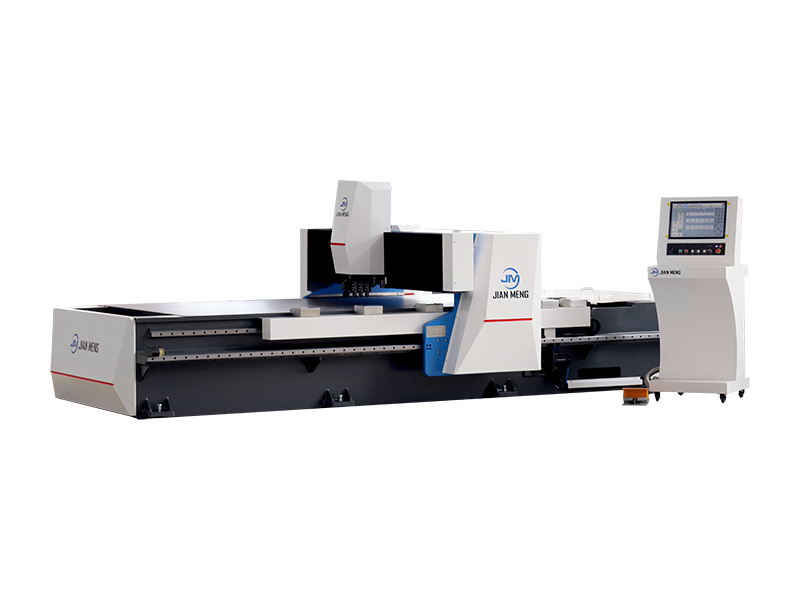
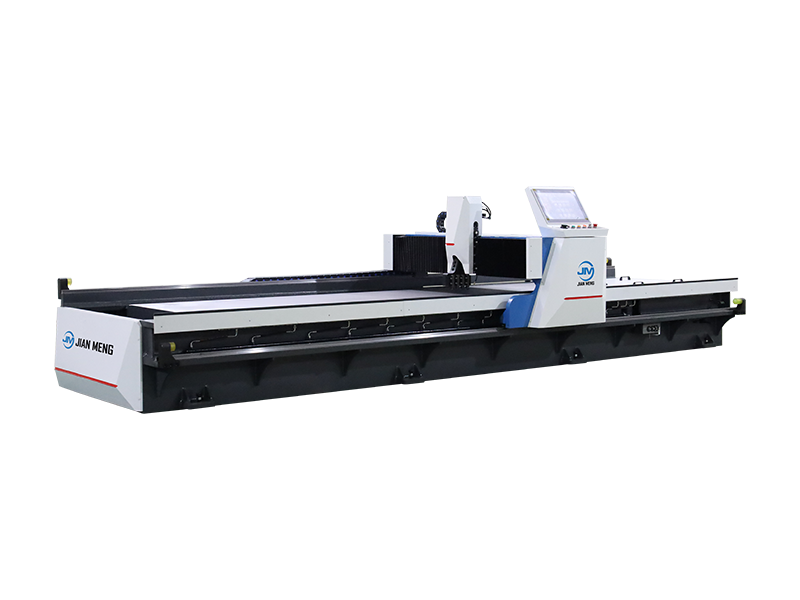
Linear multi-station deburring machines feature stations arranged in a straight line, with workpieces transported along a linear conveyor belt or slide rail. Each station is positioned sequentially, and workpieces move from one station to the next in a straight path. These machines are suitable for large or long sheet metal workpieces and are widely used in automotive, construction, and heavy machinery industries.
Working Principle: The machine consists of a linear conveyor system, multiple deburring stations (e.g., edge deburring, hole deburring, polishing), and a loading/unloading station. Workpieces are loaded onto the conveyor, which transports them to the first station for initial deburring (e.g., removing large burrs from cut edges). The workpiece then moves to subsequent stations for fine deburring, edge rounding, and surface polishing. After the final station, the workpiece is unloaded automatically or manually. The conveyor speed and station processing parameters are adjustable to adapt to different workpiece sizes and materials.
Key Advantages: Suitable for large/long workpieces, easy to expand additional stations, simple workflow, and high processing stability. Limitations: Requires more floor space, less suitable for small or irregularly shaped workpieces. Best For: Mass production of large sheet metal parts, such as automotive body panels, construction steel plates, and shipbuilding components.
1.2 Rotary Multi-station Deburring Machine
Rotary multi-station deburring machines (also known as turntable deburring machines) feature stations arranged in a circular pattern around a rotating turntable. Workpieces are placed on the turntable, which rotates to move them sequentially through each station. These machines are compact, space-saving, and suitable for small to medium-sized sheet metal workpieces.
Working Principle: The machine consists of a rotating turntable (with multiple workpiece fixtures), several deburring stations positioned around the turntable, and a loading/unloading station. Operators load workpieces onto the fixtures at the loading station; the turntable then rotates, moving each workpiece to the first deburring station (e.g., hole deburring). As the turntable continues to rotate, the workpiece passes through subsequent stations for edge deburring, polishing, and cleaning. After completing all stations, the workpiece is unloaded at the unloading station. The turntable speed and station processing parameters are precisely controlled by a PLC or CNC system.
Key Advantages: Compact design (saves floor space), high processing efficiency for small/medium workpieces, continuous operation, and easy integration into automated production lines. Limitations: Limited by turntable size, not suitable for large workpieces. Best For: Mass production of small to medium-sized sheet metal parts, such as electronic component shells, hardware accessories, and medical device parts.
2. Based on Processing Method
The processing method determines the deburring effect, surface quality, and suitability for different material types, with three main types:
2.1 Mechanical Multi-station Deburring Machine
Mechanical multi-station deburring machines use physical contact between tools (such as abrasive belts, wire brushes, grinding wheels, or scrapers) and workpieces to remove burrs. They are the most widely used type, suitable for most sheet metal materials and burr types (e.g., cutting burrs, stamping burrs).
Working Principle: Each station is equipped with a mechanical tool tailored to a specific deburring task. For example, the first station may use a wire brush to remove loose burrs from edges, the second station uses an abrasive belt for edge rounding, and the third station uses a polishing wheel for surface finishing. The tools are driven by motors, and the pressure, speed, and angle are adjustable to ensure optimal deburring results. Workpieces are fixed in fixtures to prevent movement during processing.
Key Advantages: Versatile (handles various burr types and materials), low equipment cost, easy maintenance, and effective for heavy burrs. Limitations: Tool wear requires regular replacement, may cause minor surface scratches if parameters are not adjusted properly. Best For: General sheet metal processing, such as hardware, automotive parts, and construction components.
2.2 Abrasive Flow Multi-station Deburring Machine
Abrasive flow multi-station deburring machines use a flow of abrasive media (a mixture of abrasive particles and a flexible polymer) to remove burrs from complex internal or external surfaces, such as holes, slots, and crevices. They are suitable for workpieces with hard-to-reach areas that mechanical tools cannot access.
Working Principle: Each station is equipped with a chamber that holds the abrasive media. Workpieces are placed in the chamber, and the abrasive media is forced to flow through or around the workpiece under pressure. The abrasive particles in the media abrade the burrs and sharp edges, leaving a smooth surface. Multiple stations can handle different workpiece sizes or types, with adjustable pressure and media flow rate to adapt to different materials and burr sizes.
Key Advantages: Effective for complex workpieces with hard-to-reach areas, uniform deburring results, no surface scratches, and suitable for delicate or high-precision parts. Limitations: Higher equipment and media costs, slower processing speed than mechanical models. Best For: High-precision sheet metal parts, such as aerospace components, medical devices, and electronic connectors.
2.3 Laser Multi-station Deburring Machine
Laser multi-station deburring machines use high-energy laser beams to vaporize or melt burrs on sheet metal surfaces, achieving non-contact deburring. They are suitable for high-precision, delicate workpieces and materials that are sensitive to mechanical contact.
Working Principle: Each station is equipped with a laser head that emits a focused laser beam. The laser beam is directed at the burrs, vaporizing or melting them without touching the workpiece surface. The laser parameters (power, speed, focus) are precisely controlled by a CNC system to ensure accurate deburring without damaging the workpiece. Workpieces are transported between stations via a precision conveyor or robotic arm, and machine vision systems may be integrated to automatically detect burr positions.
Key Advantages: Non-contact processing (no tool wear or surface damage), high precision (handles micro-burrs), fast processing speed for small burrs, and suitable for delicate materials. Limitations: High equipment cost, not effective for large or heavy burrs, requires professional operators. Best For: High-precision, delicate sheet metal parts, such as electronic components, aerospace parts, and medical devices.
3. Based on Automation Level
3.1 Semi-automatic Multi-station Deburring Machine
Semi-automatic models require manual loading and unloading of workpieces, while the deburring process itself is automated. They are suitable for small-batch production or workshops with limited budget.
Key Advantages: Lower equipment cost, easy operation, suitable for small-batch production. Limitations: Lower production efficiency than fully automatic models, requires more manual labor. Best For: Small workshops, prototype production, and small-batch sheet metal processing.
3.2 Fully Automatic Multi-station Deburring Machine
Fully automatic models integrate automatic loading/unloading systems (such as robotic arms, conveyor belts, or feeding trays), CNC control systems, and machine vision systems to realize unattended operation. They are ideal for mass production of high-precision sheet metal parts.
Working Principle: The machine automatically loads workpieces from a feeding tray or conveyor, transports them through each deburring station, and unloads the finished workpieces into a collection bin. Machine vision systems detect workpiece position and burr location, and the CNC system adjusts processing parameters in real time to ensure quality. Some models can be integrated with other equipment (such as stamping machines or cutting machines) to form a fully automated production line.
Key Advantages: High production efficiency, minimal manual intervention, consistent quality, and easy integration into intelligent production lines. Limitations: High equipment cost, requires professional maintenance and programming. Best For: Mass production of high-precision sheet metal parts, such as automotive components, electronic products, and aerospace parts.
IV. Typical Application Scenarios of Multi-station Sheet Metal Deburring Machines
Multi-station sheet metal deburring machines are widely used in various sheet metal processing industries, with application scenarios closely related to the machine type, processing method, and automation level. The following are typical application scenarios and corresponding multi-station deburring machines:
1. Automotive Manufacturing Industry
The automotive industry requires a large number of sheet metal parts (such as body panels, door frames, engine brackets, and chassis components) with high precision and smooth edges. Fully automatic linear or rotary multi-station mechanical deburring machines are the primary equipment used, as they can handle large volumes of workpieces with consistent quality. For example, automotive body panels after stamping or cutting are processed through multiple stations to remove burrs, round edges, and polish surfaces, ensuring proper assembly and safety.
2. Electronics and Precision Instrument Industry
The electronics industry requires small, high-precision sheet metal parts (such as electronic component shells, heat sinks, connectors, and circuit board brackets) with no burrs or surface defects. Laser or abrasive flow multi-station deburring machines are suitable for these applications, as they can handle micro-burrs and delicate surfaces without causing damage. For example, heat sinks for electronic devices are processed through laser deburring stations to remove micro-burrs from fins, ensuring heat dissipation efficiency and product reliability.
3. Aerospace Industry
The aerospace industry requires high-precision, high-strength sheet metal components (such as aircraft fuselage parts, engine components, and landing gear parts) with strict surface quality requirements. Abrasive flow or laser multi-station deburring machines are used to remove burrs from complex internal and external surfaces, ensuring the components meet the high reliability and safety standards of the aerospace industry. For example, aircraft engine components with complex holes and slots are processed using abrasive flow deburring stations to ensure uniform deburring in hard-to-reach areas.
4. Hardware and Daily Necessities Industry
The hardware industry produces a wide range of sheet metal products, such as metal brackets, hinges, tools, and kitchen utensils, which require smooth edges and surfaces. Semi-automatic or fully automatic mechanical multi-station deburring machines are widely used in this industry, as they are cost-effective and efficient. For example, metal hinges are processed through multiple mechanical deburring stations to remove stamping burrs, round edges, and polish surfaces, ensuring smooth operation and user safety.
5. Medical Equipment Industry
The medical equipment industry requires sheet metal parts (such as surgical instruments, implantable components, and medical device housings) with high precision, smooth surfaces, and no burrs (to avoid tissue damage). Laser or abrasive flow multi-station deburring machines are used to process these parts, ensuring they meet biocompatibility and safety standards. For example, surgical instrument blades are processed through laser deburring stations to remove micro-burrs and ensure sharp, smooth edges.
6. Other Fields
- Construction Industry: Linear mechanical multi-station deburring machines are used to process large sheet metal parts for buildings, bridges, and infrastructure, ensuring smooth edges and structural integrity.
- Shipbuilding Industry: Heavy-duty mechanical multi-station deburring machines are used to process thick sheet metal parts for ship hulls and structural components, removing large burrs and ensuring high strength.
- New Energy Industry: Fully automatic multi-station deburring machines are used to process sheet metal parts for solar panel brackets, wind turbine components, and battery pack shells, ensuring precision and reliability.
V. Multi-station Sheet Metal Deburring Machine Process Optimization and Selection Guidelines
Selecting the optimal multi-station sheet metal deburring machine and optimizing the deburring process are crucial to ensuring processing quality, improving production efficiency, and reducing costs. The following are key selection factors and process optimization guidelines:
1. Key Factors for Selecting Multi-station Sheet Metal Deburring Machines
- Workpiece Characteristics: Consider the workpiece size, shape, material, and burr type (e.g., cutting burrs, stamping burrs, micro-burrs). For large/long workpieces, select linear models; for small/complex workpieces, select rotary models. For hard-to-reach burrs, select abrasive flow or laser models; for heavy burrs, select mechanical models.
- Processing Quality Requirements: For high-precision, delicate workpieces (e.g., aerospace, medical parts), select laser or abrasive flow models; for general quality requirements, select mechanical models. Consider the required edge rounding size and surface finish (e.g., Ra ≤ 0.8μm for high-precision parts).
- Production Batch: For mass production, select fully automatic models with automatic loading/unloading systems; for small-batch or prototype production, select semi-automatic models to reduce equipment investment.
- Floor Space: For workshops with limited space, select rotary models; for large workshops, linear models can be considered for easier expansion.
- Cost Budget: Consider the equipment cost, maintenance cost, and operating cost (e.g., tool replacement, abrasive media, energy consumption). Mechanical models are more cost-effective; laser and abrasive flow models have higher initial investment but lower long-term labor costs for high-precision applications.
2. Process Optimization Best Practices
Parameter Adjustment
Adjust processing parameters (such as tool speed, pressure, laser power, or abrasive flow rate) based on the workpiece material and burr type. For soft materials (aluminum, copper), use lower pressure and higher speed to avoid material deformation; for hard materials (steel, stainless steel), use higher pressure and lower speed to ensure effective deburring. For micro-burrs, reduce laser power or abrasive flow rate to avoid surface damage.
Tool and Media Maintenance
For mechanical models, regularly inspect and replace worn tools (abrasive belts, brushes, grinding wheels) to ensure consistent deburring results. For abrasive flow models, replace abrasive media regularly (when the abrasive particles are worn down) to maintain deburring efficiency. For laser models, clean the laser head and lens regularly to ensure laser focus and processing precision.
Workpiece Fixturing
Use appropriate fixtures to fix workpieces firmly during processing, avoiding movement or vibration that can cause uneven deburring or surface scratches. Fixtures should be tailored to the workpiece shape to ensure full contact and stable positioning. For irregularly shaped workpieces, use custom fixtures to ensure all burrs are accessible to the deburring tools.
Quality Inspection and Feedback
Implement regular quality inspections of finished workpieces to check for incomplete deburring, uneven edge rounding, or surface defects. Use measuring tools (such as calipers, surface roughness testers) to verify processing quality. Adjust processing parameters or tool positions based on inspection results to optimize the deburring process.
3. Common Defect Prevention
- Incomplete Deburring: Adjust processing parameters (increase pressure, reduce speed), replace worn tools or abrasive media, and ensure workpiece fixturing is stable. Check for hard-to-reach areas and adjust station layout if necessary.
- Surface Scratches: Reduce tool pressure or laser power, use softer abrasive media, and ensure tools are clean and free of debris. Check fixtures for sharp edges that may scratch the workpiece.
- Uneven Edge Rounding: Calibrate tool angles and positions, adjust processing speed and pressure, and ensure workpiece movement is uniform. Inspect and replace worn tools regularly.
- Workpiece Deformation: Reduce processing pressure, use appropriate fixturing to distribute force evenly, and adjust processing speed for soft materials. Avoid over-processing thin sheet metal parts.
VI. Maintenance Guidelines for Multi-station Sheet Metal Deburring Machines
Proper maintenance of multi-station sheet metal deburring machines is essential to ensure stable performance, extend service life, maintain processing quality, and ensure operational safety. The following are maintenance guidelines for common multi-station deburring machines, integrating practical operational requirements:
1. Daily Maintenance
- Cleaning: Clean the machine surface, stations, tools, and conveyor system regularly to remove metal chips, abrasive debris, and dust. Pay special attention to cleaning tool holders, fixtures, and laser heads (for laser models) to avoid debris affecting processing precision. Clean the machine thoroughly for 10 minutes before the end of each workday.
- Lubrication: Apply lubricating oil to moving components (conveyor belts, turntable bearings, tool shafts, and hydraulic/pneumatic components) according to the lubrication chart, ensuring timely, fixed-point, and quantitative lubrication. Use clean lubricating oil without sediment to reduce friction and wear. Regularly check the lubricating oil level and replenish or replace it as needed.
- Safety Inspection: Check the safety guards, emergency stop buttons, light curtains, and safety interlocks to ensure they are intact and functional. Check for loose connections, leaks (hydraulic/pneumatic), and abnormal noises or vibrations. Ensure that only designated personnel operate the equipment, and implement the personnel leave, machine stop rule.
- Tool and Media Inspection: Check the condition of tools (abrasive belts, brushes, grinding wheels) and abrasive media. Replace worn tools or media in time. For laser models, check the laser head, lens, and cooling system to ensure normal operation.
2. Regular Maintenance (Weekly/Monthly)
- Mechanical System Maintenance: Check the conveyor belt tension, turntable rotation accuracy, and tool alignment. Adjust or replace worn conveyor belts, bearings, or tool holders. Calibrate the position of each station to ensure consistent processing parameters.
- Electrical and Control System Maintenance: Check the motor, sensor, controller, and wiring for loose connections or faults. Clean the control panel and electrical components to avoid dust affecting operation. Regularly check the motor bearings and add lubricating oil; ensure the CNC system and machine vision system are functioning properly.
- Hydraulic and Pneumatic System Maintenance (for mechanical/abrasive flow models): Check the hydraulic oil level and quality; replace the hydraulic oil and filter element according to the maintenance schedule. Inspect the hydraulic cylinder, hoses, and valves for leaks; tighten loose connections. Clean the hydraulic oil tank to remove sediment. For pneumatic components, check for air leakage and clean the air filter.
- Laser System Maintenance (for laser models): Clean the laser lens and mirror, check the laser power and focus, and replace the laser tube if necessary. Inspect the cooling system (water tank, pump) to ensure proper cooling and prevent overheating.
3. Long-Term Storage Maintenance
- Disconnect the power supply and drain the hydraulic oil (for hydraulic models) or compressed air (for pneumatic models).
- Clean the machine thoroughly, including tools, fixtures, stations, and conveyor systems. Remove all abrasive media (for abrasive flow models) and store it in a sealed container. Apply anti-rust oil to metal components to prevent rust, especially on unpainted surfaces.
- Cover the machine with a dust cover to avoid dust and moisture. Store the machine in a dry, clean, and well-ventilated environment, away from direct sunlight, moisture, and corrosive substances.
- Regularly check the machine during storage to prevent rust, component damage, or dust accumulation. For laser models, remove the laser lens and store it in a dry, clean container.
4. General Maintenance Principles
- Establish a regular maintenance schedule based on the machine’s operating hours and usage frequency, including daily, weekly, and monthly inspections, to identify potential issues in advance.
- Train maintenance personnel and operators to master the machine’s structure, working principle, and maintenance skills. Ensure that all operations, including maintenance and operation, are standardized to avoid equipment damage caused by improper operation.
- Keep detailed maintenance records, including maintenance time, maintenance content, replaced parts, and machine operating status, to track the machine’s performance and facilitate subsequent maintenance and troubleshooting.
- Before adjusting, cleaning, or maintaining the machine, ensure it is shut down and the power is disconnected to avoid safety hazards. For laser models, ensure the laser is turned off and the cooling system is stopped before maintenance.
VII. Limitations and Future Development Trends of Multi-station Sheet Metal Deburring Machines
1. Current Limitations
Despite the continuous development of multi-station sheet metal deburring machine technology, there are still some limitations that need to be addressed: First, high-precision models (laser, abrasive flow) have high equipment and operating costs, which are not affordable for small and medium-sized enterprises. Second, for extremely complex or irregularly shaped workpieces, some hard-to-reach areas may still require manual deburring, reducing overall efficiency. Third, tool wear (for mechanical models) and abrasive media consumption (for abrasive flow models) increase long-term operating costs. Fourth, the automation level of some semi-automatic models is low, requiring manual intervention for loading/unloading and parameter adjustment.
2. Future Development Trends
With the development of intelligent manufacturing, precision machining, and green manufacturing, multi-station sheet metal deburring machines are moving toward intelligence, high precision, high efficiency, and sustainability. The main development trends are as follows:
- Intelligent Deburring Machines: Integrate AI, machine vision, and IoT technology to realize automatic burr detection, parameter adjustment, and predictive maintenance. For example, machine vision can automatically detect burr location and size, and AI algorithms can adjust processing parameters in real time to ensure optimal deburring results. IoT technology can monitor the machine’s operating status (tool wear, media consumption) in real time, realizing remote maintenance and troubleshooting.
- High-Precision and Multi-functional Processing: Develop multi-station machines that integrate deburring, edge rounding, polishing, and cleaning into one system, with higher precision (edge rounding accuracy up to ±0.05mm) and versatility. Integrate multiple processing methods (mechanical + laser + abrasive flow) to handle complex workpieces and diverse burr types.
- Green and Energy-Saving Technology: Optimize the drive system (such as using servo motors) to reduce energy consumption. Develop eco-friendly abrasive media (recyclable, non-toxic) to reduce environmental impact. Improve tool life (e.g., diamond-coated tools) to reduce waste and operating costs.
- Flexible and Customizable Design: Develop modular multi-station machines that allow users to add or remove stations based on processing needs, improving flexibility and adaptability. Customize station configurations and tools for specific industries or workpieces, such as aerospace or medical equipment.
- Integration with Intelligent Production Lines: Integrate multi-station deburring machines with other sheet metal processing equipment (stamping, cutting, bending machines) and robotic arms to form a fully automated production line. Realize seamless connection between processing steps, improving overall production efficiency and reducing manual intervention.
VIII. Conclusion
Multi-station sheet metal deburring machines are essential equipment in modern sheet metal processing, playing a crucial role in improving product quality, enhancing production efficiency, and reducing labor costs. By integrating multiple deburring tasks into one continuous automated system, these machines eliminate the limitations of single-station models and manual deburring, ensuring consistent, high-precision deburring results for a wide range of sheet metal workpieces.





 English
  中文
中文  Arabic
  Russian
  Spanish
  Portuguese
  French
  German
  Hindi
Hindi  Thai
Thai  Vietnamese
  Khmer
Khmer  Italian
  Turkish
  Korean
  Belarusian