CNC Laser Processing: An Analysis Of The Core Technology Of Modern Manufacturing With High Precision And High Efficiency
Release time:2026-07-29
Visits:145
In today's manufacturing industry that pursues ultimate precision and efficiency, CNC laser processing technology has become a key force driving industrial upgrading. This advanced manufacturing process combines the excellent programming control capability of Computer Numerical Control (CNC) systems with the high-energy characteristics of laser beams, providing a revolutionary solution for the manufacturing of everything from macroscopic structures to microscopic parts. It is not just a processing method, but also an important engine for realizing complex designs, improving product quality and shortening production cycles.
The core advantages of CNC laser processing are remarkable, making it stand out among numerous technologies. First and foremost, its high precision feature is unparalleled. The laser beam precisely controlled by a computer can perform cutting, engraving or marking with an extremely small spot, easily meeting strict tolerance requirements and satisfying the needs of fields with almost demanding dimensional requirements such as aerospace and precision instruments. Secondly, high-efficiency production is another major label of it. The laser beam moves rapidly and can complete the cutting path in an instant, greatly shortening the processing time of a single product, thus effectively improving the overall production capacity.
Particularly importantly, this is a non-contact processing process. The laser head does not need to physically touch the material, completely eliminating mechanical stress, which means that even brittle materials, ultra-thin plates or finished precision components can be processed without deformation or damage. At the same time, this technology demonstrates strong material adaptability, capable of handling a variety of substances including various metals, plastics, wood, ceramics and even composite materials, making cross-industry applications possible.
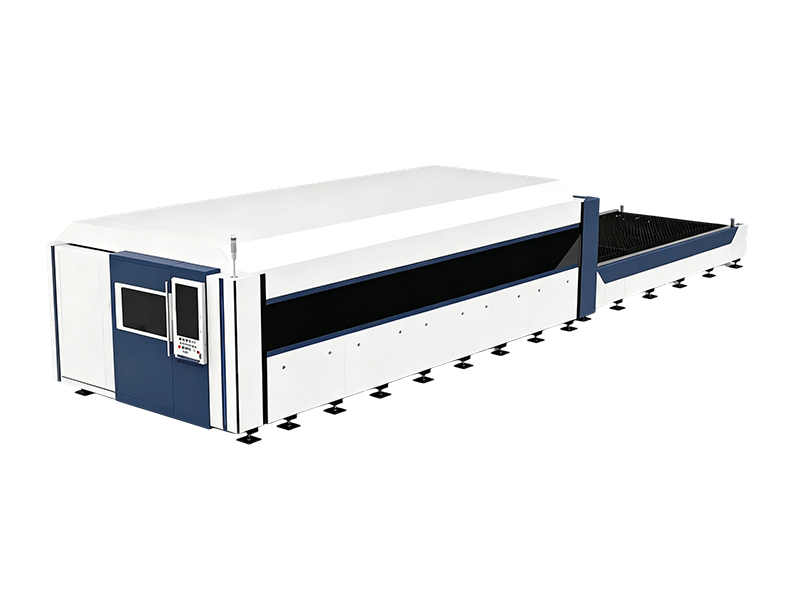
Highly integrated automation is an inherent attribute of
CNC laser processing systems. From design drawings to finished products, the process hardly requires manual intervention, ensuring the stability of the production process and the consistency of high-quality products. The edges formed by laser cutting are usually smooth and free of burrs, reducing secondary processing procedures such as subsequent grinding and polishing, and directly lowering the comprehensive production cost.
With these excellent features, CNC laser processing has an extremely wide range of applications. In the automobile manufacturing field, it efficiently cuts body panels and structural parts; in the aerospace industry, it is responsible for manufacturing precision parts with extremely high reliability requirements; in electronic manufacturing, it accurately engraves circuit boards and casings; in the construction and furniture industry, it cuts complex metal structures and decorative elements; even in fine work such as jewelry manufacturing, it can complete amazing engraving and fine marking work.
Of course, we also need to view it rationally while embracing the changes brought by this technology. The initial investment in CNC laser processing equipment is relatively high, and it requires professional personnel for programming, maintenance and operation, which has certain requirements for the skills of technical personnel. However, in the long run, its value in improving product quality, production flexibility and reducing long-term operating costs makes it a highly competitive investment choice in the process of modern manufacturing moving towards intelligence and high-end. It continues to empower all walks of life, quickly turning innovative designs into reality, and consolidating the cornerstone of high-quality manufacturing.




 English
  中文
中文  Arabic
  Russian
  Spanish
  Portuguese
  French
  German
  Hindi
Hindi  Thai
Thai  Vietnamese
  Khmer
Khmer  Italian
  Turkish
  Korean
  Belarusian