In modern industrial production that pursues high efficiency and precision, fully automatic cutting machines have become an indispensable core equipment. Through highly automated processes, they have significantly improved the efficiency, consistency and safety of cutting operations, and are continuously driving the intelligent upgrading of the manufacturing industry. This article will deeply explore the core advantages, main types and extensive application scenarios of fully automatic cutting machines, to provide you with a comprehensive analysis of this key industrial equipment.
Core Advantages of Fully Automatic Cutting Machines
Compared with traditional manual or semi-automatic cutting methods, fully automatic cutting machines realize full-process automation from material loading, graphic positioning, path planning to cutting completion. Their core advantages are mainly reflected in the following aspects:
Extreme Precision and Consistency: Relying on advanced numerical control systems, the equipment can strictly execute preset programs, ensuring that the cutting dimensions and shapes of each product reach millimeter-level or even higher precision, completely eliminating human errors and achieving high consistency of batch products.
Outstanding Production Efficiency: The automated continuous operation capability greatly reduces manual intervention and waiting time between processes. The high-speed cutting head combined with the optimized motion trajectory multiplies the processing speed, effectively shortening the product delivery cycle.
Strong Flexibility and Adaptability: Through simple software programming, cutting patterns and sizes can be quickly switched, easily meeting the flexible production needs of small batches and multiple varieties. This flexibility enables it to adapt to rapidly changing markets.
Significantly Reduced Operating Costs: Although the initial investment is high, in the long run, automated production saves a lot of labor costs, reduces material waste caused by misoperation, and at the same time, lower failure rate and maintenance requirements also ensure the stable operation of production.
Improved Operation Safety: Operators are physically isolated from hazard sources such as cutting heads, high temperature and high pressure, and multiple protection mechanisms such as safety gratings and protective covers greatly improve the safety guarantee of the working environment.
Mainstream Fully Automatic Cutting Technology Types
According to different cutting principles and applicable materials, mainstream fully automatic cutting machines are mainly divided into the following categories:
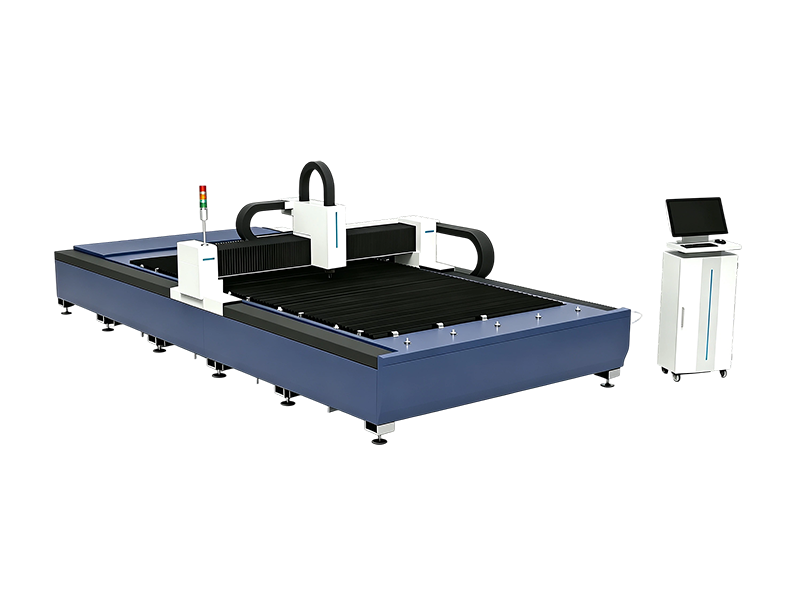
1. Fully Automatic Laser Cutting Machine: Uses a high-energy-density laser beam to melt and vaporize for cutting. It is characterized by narrow kerf, extremely high precision, and small heat-affected zone, and is especially suitable for fine processing of metal sheets such as carbon steel, stainless steel, and aluminum alloy, as well as non-metal materials such as cloth and acrylic.
2. Fully Automatic Plasma Cutting Machine: Uses high-temperature and high-speed plasma arc to melt metal for cutting. Its advantage is that it has a faster cutting speed for thick metal plates and relatively low cost, making it a commonly used equipment in fields such as shipbuilding, heavy machinery, and steel structures.
3. Fully Automatic Waterjet Cutting Machine: Uses ultra-high-pressure water flow (or mixed with abrasives) for cutting. As a cold cutting process, it hardly produces thermal deformation, can cut almost all materials such as metal, stone, glass, composite materials, and ceramics, and is environmentally friendly and pollution-free.
4. Fully Automatic Numerical Control Cutting Machine: This is a broader category, usually referring to flame cutting machines or multifunctional cutting platforms equipped with numerical control systems, which can perform multiple processes such as flame and plasma, and are especially suitable for processing large outdoor workpieces and thick plates.
Extensive Application Fields
Metal Processing and Machinery Manufacturing: Used for cutting various metal plates and structural parts, it is a key link in sheet metal processing, machine tool shells, and construction machinery component production.
Automotive and Rail Transit: Precisely cuts automotive body panels, structural parts, airbag fabrics, interior materials, and metal components of high-speed railways.
Construction and Building Materials Industry: Efficiently processes building glass, stone curtain walls, metal decorative panels, thermal insulation composite materials, etc., meeting the needs of modern architecture for complex shapes and precise dimensions.
Furniture and Home Decoration: Performs special-shaped cutting on materials such as wood boards, artificial stone, and acrylic for the production of custom furniture, cabinets, and decorative lines.
Electronic and Electrical Industry: Precisely cuts micro-precision components such as circuit boards (FPC/PCB), mobile phone middle frames, insulating materials, and heat sinks.
Advertising Signage and Art Creation: Easily handles metal characters, acrylic signboards, art sculpture models, etc., and is an ideal tool for realizing complex creative designs.
Textile and Apparel Industry: Laser cutting machines can complete fabric cutting and edge sealing in one go without burrs, and are widely used for efficient cutting of clothing, shoe materials, and luggage fabrics.
How to Choose the Right Fully Automatic Cutting Machine
Facing a variety of equipment, making the right choice requires comprehensive consideration of the following points:
1. Core Processing Materials: First clarify the main types of materials to be cut (metal, non-metal, composite materials) as well as their thickness and hardness, which is the premise for choosing laser, plasma or waterjet technology.
2. Precision and Speed Requirements: Evaluate the production's emphasis on cutting precision and efficiency. Laser is the first choice for high-precision fine processing, and plasma or waterjet can be considered if pursuing thick plate cutting efficiency.
3. Equipment Functions and Automation Degree: According to the budget and production scale, select whether advanced functions such as automatic loading and unloading, multi-worktable exchange, and automatic waste disposal are required to realize unmanned or less-manned operations.
4. Software and System Compatibility: Excellent numerical control systems and easy-to-use programming software can greatly improve the operation experience and preparation efficiency, and attention should be paid to their data docking capability with existing design software (such as CAD).
All in all, as a model of intelligent manufacturing, fully automatic cutting machines continue to empower various industries by deeply integrating cutting-edge cutting technology with automatic control. Investing in a suitable fully automatic cutting solution is not only a key step to improve current production capacity and quality, but also a wise decision to lay a solid foundation for enterprises to face future Industry 4.0 competition.




 English
  中文
中文  Arabic
  Russian
  Spanish
  Portuguese
  French
  German
  Hindi
Hindi  Thai
Thai  Vietnamese
  Khmer
Khmer  Italian
  Turkish
  Korean
  Belarusian