CO₂ Lasers: Core Tools For Industrial Manufacturing And Medical Aesthetics
Release time:2026-06-03
Visits:10
Among numerous laser technologies, CO₂ lasers, with their outstanding performance and wide application scope, have become indispensable core tools in the industrial manufacturing and medical aesthetics industries. As a type of gas laser that uses carbon dioxide gas as the working medium, it generates laser beams of specific wavelengths through efficient energy conversion, demonstrating strong technical advantages in multiple dimensions.
Core Principle and Structure: The Cornerstone of High-Efficiency Conversion
The working principle of a CO₂ laser is based on transitions between molecular vibrational and rotational energy levels. Its laser tube is usually filled with a mixed gas of CO₂, nitrogen (N₂), and helium (He). Excited by a high-voltage current, nitrogen molecules first gain energy, then efficiently transfer the energy to CO₂ molecules through collisions, causing the CO₂ molecules to undergo energy level transitions and form the population inversion state necessary for laser generation.
The generated laser is repeatedly reflected and amplified within the optical resonator composed of a fully reflective mirror and an output coupler, finally outputting a high-power, high-quality laser beam. The entire system has a high energy conversion efficiency, meaning the input electrical energy can be effectively converted into usable laser energy, laying the foundation for its efficient operation.
In terms of structure, a CO₂ laser is mainly composed of core components such as a discharge tube, a resonator, and electrodes. The discharge tube is usually made of materials like glass or quartz to ensure gas sealing and stability. The optimized structural design not only guarantees stable laser output but also makes the overall equipment more compact, facilitating integration and maintenance.
Prominent Advantages: Why Choose CO₂ Lasers?
CO₂ lasers stand out in numerous fields thanks to a series of key advantages:
High Power and High Energy: It can achieve power output ranging from hundreds of watts to tens of kilowatts, meeting diverse needs from precision processing to heavy-duty material handling.
Excellent Beam Quality: The output laser beam has good directivity and focusing performance, and can be converged into an extremely small spot, enabling precise cutting and engraving.
High Processing Efficiency: It has good absorption rate for many non-metallic materials (such as wood, acrylic, fabric, glass) and some metallic materials, with fast processing speed and remarkable efficiency.
Stable Operation and Long Service Life: Mature gas discharge technology and optimized heat dissipation design ensure that the equipment can run stably for long periods, reducing maintenance costs.
Wide Application Range: Its specific wavelength characteristics give it unique effects in both material processing and biological tissue interaction.
Wide Application Scenarios
With the above advantages, the application of CO₂ lasers has penetrated into many aspects of modern industry and daily life:
1. Industrial Material Processing: This is the most traditional advantageous field of CO₂ lasers. They are widely used in processes such as cutting, welding, marking, and surface treatment. Whether it is body panel cutting in automobile manufacturing, precision component processing in the aerospace field, or personalized customization in the electronics industry, textile and garment sector, craft gift industry, and wood processing, CO₂ lasers can provide efficient and precise solutions.
2. Medical and Aesthetic Fields: In the medical field, due to their strong absorption of tissue moisture, CO₂ lasers are used in dermatological surgery, otolaryngological surgery, and gynecological surgery, featuring less bleeding and high precision. In the aesthetic field, their fractional laser technology is commonly used for skin resurfacing, effectively improving wrinkles, scars, pigmented lesions, and achieving skin tightening, with remarkable effects and a relatively controllable recovery cycle.
3. Scientific Research and Military: In scientific research, they are important light source tools. Meanwhile, due to their high-power output and atmospheric transmission characteristics, they also hold a place in research on specific military applications such as directed energy.
Future Development Trends
With continuous technological advancements, CO₂ lasers are developing towards higher power, higher efficiency, and greater intelligence. Through integration with optical fiber transmission technology, automatic control systems, and artificial intelligence algorithms, their processing accuracy, flexibility, and automation level will be further improved. Meanwhile, in emerging fields such as new material processing (e.g., composite materials), clean energy manufacturing (e.g., solar panel processing), and minimally invasive medicine, CO₂ lasers are constantly expanding new application boundaries, and continuously consolidating their position as a key basic tool.
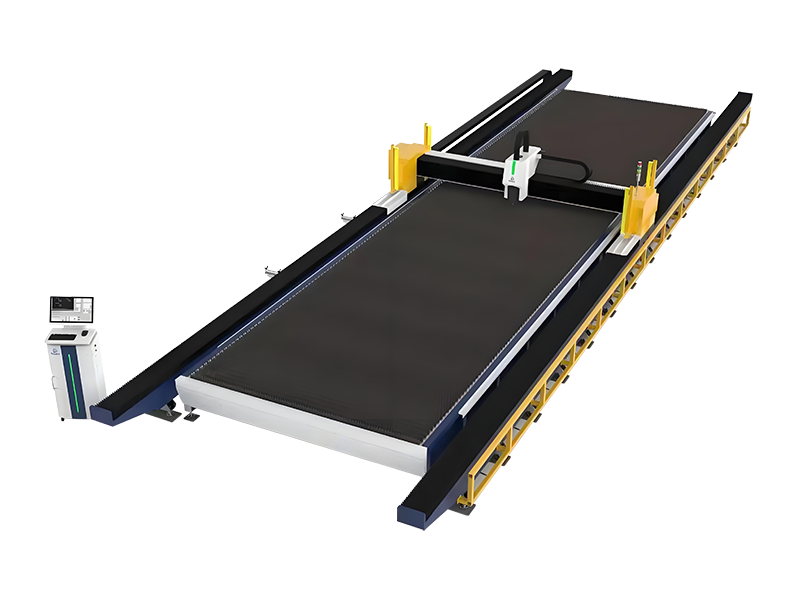
In summary, with mature and reliable technology, strong processing capabilities, and wide application adaptability, CO₂
lasers play a vital role in promoting the upgrading of modern manufacturing and the advancement of medical technology. For enterprises and individuals seeking high-quality, high-efficiency processing solutions, understanding the core value of CO₂ lasers is a key step in making the right technical choice.