Automatic Bending Machine: A Practical Guide For Sheet Metal Shops
Release time:2026-09-04
Visits:1
What an automatic bending machine actually does
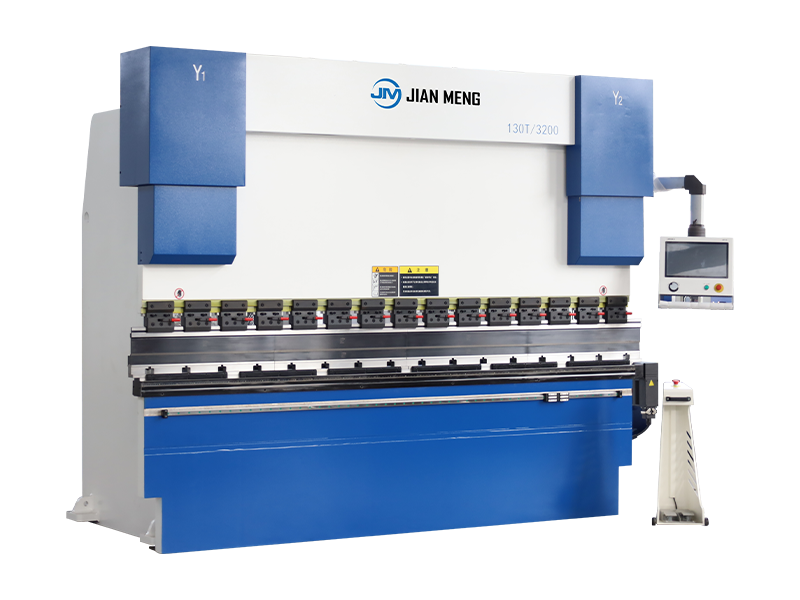
Walk into any sheet metal shop that has grown past one or two parts and you will see the same bottleneck. A skilled operator stands at a press brake all day, reading drawings, jogging the back gauge, testing bends on scrap, and correcting springback bend after bend. The automatic bending machine exists to take most of that judgement out of the equation.
"Automatic" here does not mean a robot folds the part for you. It means the machine stores programs, drives the back gauge to position, controls bend angle through the CNC, and repeats the same sequence without the operator resetting anything between parts. Set it up once and it produces consistent parts for the rest of the shift.
What makes a bending machine "automatic"
There are three layers that turn a manual brake into an automatic bending machine:
- CNC control. The controller holds programs for dozens or hundreds of parts. You pick a program number, and the machine recalls every parameter: bend sequence, gauge position, ram speed and force.
- Programmable back gauge. Instead of a manual stop the operator moves with a wrench, servo or stepper motors position the fingers automatically before each bend.
- Ram control. The stroke, speed and pressure of the ram are set by the program rather than by foot pedal feel.
The degree of automation ranges from a basic NC machine that stores programs, all the way to a fully integrated cell where a robot loads blanks, a sensor checks bend angle, and the machine compensates automatically on the next cycle.
The three main automatic bending systems
Torsion-shaft (mechanical-sync) machines
Two C-frame columns are tied together by a torsion shaft, so the ram stays parallel without hydraulic cylinders that must be synced electronically. These are the workhorses of the industry, simpler to maintain and lower in price. They suit general fabrication and mid-volume work where absolute precision on long bends is not the deciding factor.
Electro-hydraulic machines
Here each column has its own hydraulic cylinder, and a position sensor plus servo valve keeps the two ends moving in step. Because the cylinders are independent, you can skew the ram to bend a taper. Hydraulic machines produce high tonnage per unit of size, and remain the best choice for thick plate and long bending lengths.
Servo-electric machines
The ram is driven by ballscrews coupled to servo motors, with no hydraulics at all. Response is faster, positioning is extremely repeatable, and energy use drops sharply because the motors only draw power during the working stroke. They are quieter and cleaner, which is why many electronics and light-fabrication shops prefer them.
Where an automatic bending machine earns its keep
The machine is only worth the premium when the payback is real. Look at the numbers honestly before you spend.
|
Scenario |
Manual brake |
Automatic bending machine |
|
Setup time between parts |
10–20 minutes |
2–4 minutes |
|
Operator skill needed |
High |
Moderate |
|
Repeatability on 100 identical parts |
Drifts with fatigue |
Same every time |
|
First-article scrap on new jobs |
Higher |
Lower, via programmed compensation |
A shop bending the same families of parts in batch sizes of 10 to 500 will typically see the machine pay for itself through setup-time savings alone. Shops doing one-off custom work gain less, because the automation is mostly idle while the operator fumbles with the first article.
Key specs to compare before you buy
- Bending tonnage. Match it to your thickest and longest bending job, not your average.
- Bending length. The distance between the frames. Oversize parts do not always need a bigger machine; sometimes you can angle the work.
- Back gauge travel and axes. A multi-axis gauge (X, R, Z) handles different flange heights and multiple stops automatically.
- Repeatability and positioning accuracy. Look for positioning accuracy around ±0.01 mm and angle repeatability you can rely on for the tolerance your customers demand.
- Program storage and offline programming. Can you import a DXF, or do you key in every bend by hand? The ability to draw the part and have the machine generate the bend sequence is a huge time-saver.
Automation around the brake
An
automatic bending machine is often the middle of a wider cell, not the whole story. If you already run a V-grooving machine, you will notice the two work well together: grooving a relief line at the bend edge lets the brake produce sharp, accurate right angles with less force and less springback. Add a robot arm for blank loading, a crowning table for long parts, and tooling that changes itself, and you have a lights-out line that runs unattended.
Choosing the right automatic bending machine
Start from the part list, not the machine. Write down the thickest material, the longest bend, the tolerance you have to hold, and the batch sizes. That shortlist rules out half the options before you ever talk to a supplier. Then weigh running cost against purchase price: an electric servo machine costs more up front but eats far less electricity and needs no hydraulic oil changes.
Ask the supplier for reference installations doing work similar to yours. A machine that performs well bending 2 mm stainless for cabinet doors is not automatically right for 12 mm structural plate. Get a demonstration with your own material if you can.
Frequently asked questions
What is the difference between an automatic bending machine and a CNC press brake?
The terms overlap heavily. Most CNC press brakes are automatic in the sense described above. "Automatic" emphasises the stored-program, hands-off operation; "CNC" refers to the computer control that makes it possible.
Can an automatic bending machine handle small batches?
Yes, but the benefit shrinks. The value shows most clearly when the same programs are recalled again and again.
Does it remove the need for a skilled operator?
It reduces the skill needed for repeat work, but someone still has to load material, choose tooling and confirm the first article. The operator's role shifts from bending to supervising and programming.
How does V-grooving help bending?
A V-groove cut at the bend line removes material, so the brake bends the sheet more easily and produces a sharp outside corner instead of a rounded one.
About Jianmeng
Jianmeng Intelligent Equipment (Taizhou) Co., Ltd. has spent more than 30 years building sheet metal forming and grooving machinery, with 50+ patents and more than 3,500 customers worldwide. Our V-grooving machines and forming equipment are used in high-end metal doors, stainless steel cabinets, curtain walls and elevator manufacturing. If you are looking for an automatic bending machine or the grooving line that feeds it, talk to our engineers about your parts list first.




 English
  中文
中文  Arabic
  Russian
  Spanish
  Portuguese
  French
  German
  Hindi
Hindi  Thai
Thai  Vietnamese
  Khmer
Khmer  Italian
  Turkish
  Korean
  Belarusian