Electric Bending Machine: What It Is And Whether It Suits Your Shop
Release time:2026-09-18
Visits:1
Why "electric" is not just a marketing word
Twenty years ago almost every bending machine in the world was hydraulic. The press brake pushed a ram with oil pressure, and that was that. Then servo-electric technology crept in from the electronics industry, where clean rooms and precision mattered more than brute force. Today an electric bending machine is a serious alternative, and for a lot of work it is the better one.
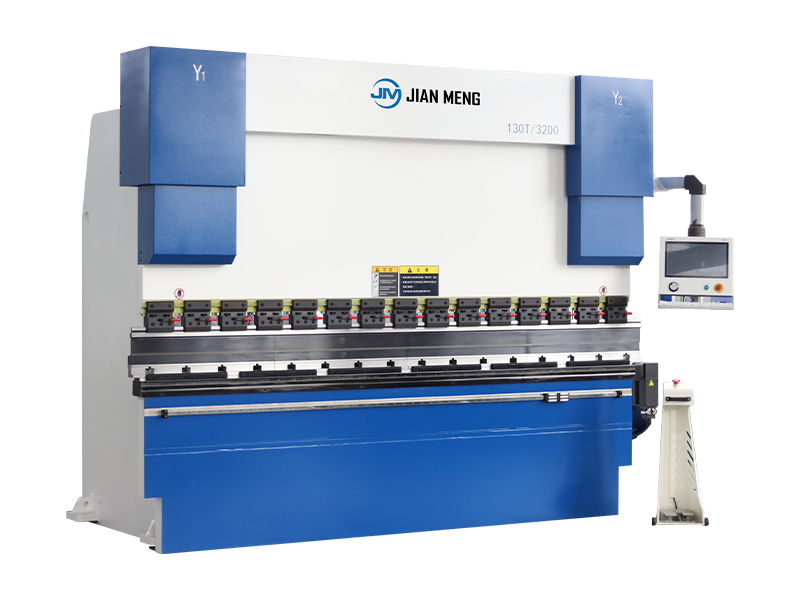
An electric bending machine drives the ram with servo motors and ballscrews. There is no oil, no pump running continuously, no hydraulic valves to tune. The servo turns only when the ram actually moves. That single difference changes the running costs, the accuracy and the maintenance picture of the machine.
How an electric bending machine works
The principle is straightforward. A servo motor spins a ballscrew, and the ballscrew pushes the ram down. Two motors, one on each side, are controlled electronically so both ends of the ram stay level.
Because the drive is mechanical and direct, there is no fluid to compress and no valve lag. The response is immediate. When the program calls for a bend, the ram moves, slows near the bottom dead centre, holds at the required depth, and returns. Position comes from the motor encoder rather than from a hydraulic position sensor, which is one reason repeatability is so good.
Electric vs hydraulic at a glance
|
Point of comparison |
Electric bending machine |
Hydraulic bending machine |
|
Energy use |
Draws power only during the stroke |
Pump runs much of the time |
|
Speed |
Faster cycle times on light work |
Can be slower, especially on small parts |
|
Positioning accuracy |
Very high and consistent |
Good, but oil temperature affects it |
|
Oil / maintenance |
None — no hydraulic system |
Regular oil checks and changes |
|
Noise |
Quiet |
Pump noise throughout the shift |
|
Tonnage for size |
Limited by motor size |
High tonnage in a compact frame |
|
Purchase price |
Higher |
Lower |
Where an electric bending machine wins
The strongest cases are not the ones you might expect.
Short, light, high-repeat work. Bending brackets, clips and small panels all day at the same angles? The electric machine cycles fast and never drifts. This is where it pays back fastest.
Energy-sensitive production. If you run multiple shifts and your electricity bill is a line item someone actually watches, the difference adds up. Idle time costs almost nothing on an electric machine because the motors stop drawing power.
Clean rooms and electronics. No oil mist, no leaks, quieter operation. Manufacturers of electrical enclosures and instrument housings often choose electric for this reason alone.
Precision thin sheet. When you are bending 0.5 to 1.5 mm material to tight tolerances, the electric machine's crisp position control and low springback sensitivity win the day.
Be realistic. Electric machines are limited in tonnage. Bending 10 mm plate across a 3 m bed needs a hydraulic cylinder that a motor-and-ballscrew drive struggles to match. Very long beds also push the price up fast. If your work is thick and long, a hydraulic machine is still the pragmatic choice.
There is also the upfront price. For the same bending length and tonnage range, an electric machine usually costs more than a hydraulic one. You are buying lower running costs and higher accuracy, and you only get that money back if the machine is actually used.
Making the choice
Draw up a simple profile of your work: material thicknesses, longest bend, batch sizes, tolerance demands and shift pattern. If the profile says thin-to-medium material, small-to-mid batches and tight angles, an electric bending machine is worth a serious quote. If it says thick plate and long beds, save the premium and go hydraulic.
One more thing worth noting. The bending machines in a shop do not work alone. A V-grooving machine that cuts a relief line at the bend edge lowers the force required and sharpens the corner, which takes pressure off whichever drive system you choose. Jianmeng builds the grooving side of that relationship, and our engineers are happy to recommend a bending setup that matches your parts.
Frequently asked questions
Is an electric bending machine the same as a servo bending machine?
Yes. "Electric", "servo-electric" and "electric servo" bending machines describe the same drive principle — servo motors turning ballscrews instead of hydraulic cylinders.
How much energy does it save?
Savings depend on use, but shops commonly report a substantial cut in power consumption compared with a hydraulic machine doing the same work, because motors only draw current during the stroke.
Is it harder to maintain?
Easier in most ways. There is no hydraulic oil to change, no seals to replace, no filters. The wear items shift to the ballscrews and bearings.
Can it bend stainless steel?
Yes, within its tonnage range. Thin and medium stainless is exactly the kind of work it does well. For thick stainless plate you still need hydraulics.




 English
  中文
中文  Arabic
  Russian
  Spanish
  Portuguese
  French
  German
  Hindi
Hindi  Thai
Thai  Vietnamese
  Khmer
Khmer  Italian
  Turkish
  Korean
  Belarusian