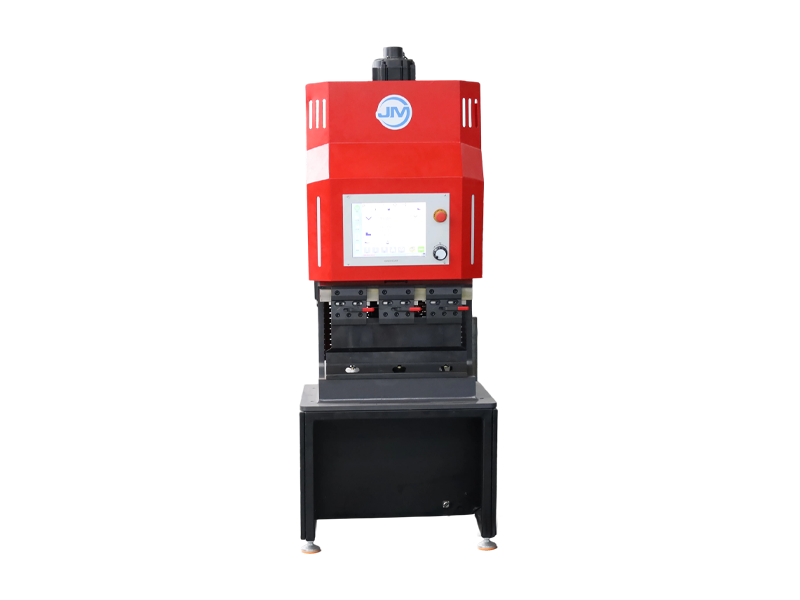
Electro-Hydraulic Bending Machine: Power And Precision On Long Beds
Release time:2026-09-25
Visits:1
Why hydraulic still has a place
Every few years someone declares the hydraulic press brake dead, replaced by servo-electric motors. Then a shop needs to bend 12 mm stainless across a 3 metre bed and the electric machine quietly drops out of the conversation. The electro-hydraulic bending machine survives because it delivers tonnage and length that electric drives cannot economically match, and modern electronics have fixed the accuracy problems hydraulics used to have.
How an electro-hydraulic bending machine works
The machine has a hydraulic cylinder at each end of the ram, pressurised by a central pump. The two cylinders are independent, and that independence is both the source of its power and the point that needs managing.
Two things make it "electro-hydraulic" rather than plain hydraulic:
- Electronic ram synchronisation. A linear encoder on each side measures the ram position constantly. A servo-controlled valve adjusts oil flow to each cylinder so both ends stay level to within microns. This replaces the mechanical torsion bar used on simpler machines.
- CNC depth control. The ram's bottom position — which sets the bend angle — is controlled digitally through the controller, giving repeatable angles from the first part.
Because the cylinders are independent, the machine can also tilt the ram deliberately, which opens up taper bending and allows correction when tooling or material varies across the bed.
The strengths that keep it in the lineup
Raw tonnage. Hydraulics generate enormous force from a compact cylinder. For thick plate, deep boxes and heavy structural work, there is no practical substitute at comparable cost.
Long bending lengths. Big beds need force spread along the length, and hydraulic machines handle the full size range comfortably.
Flexibility. Independent cylinders mean taper and off-centre bending are possible — a real advantage in toolroom and custom work.
Consistent accuracy with modern controls. The older reputation of hydraulics for drift came from temperature-sensitive valves and simple controls. With encoder feedback and closed-loop servo valves, a good electro-hydraulic machine now holds repeatability to the same order as other precision brakes.
The trade-offs to budget for
|
Consideration |
Detail |
|
Energy |
The pump runs whenever the machine is active, even between bends |
|
Oil maintenance |
Regular checks, filtering and changes; oil temperature affects behaviour |
|
Heat |
Hydraulic systems generate heat in the shop |
|
Noise |
Pump noise is continuous, not just during the stroke |
|
Cost |
More than a torsion shaft machine, less than a comparable electric servo machine |
None of these is a deal-breaker, but they are real running costs. A shop running long shifts should put electricity and oil into the total cost of ownership calculation.
Electro-hydraulic vs torsion shaft vs electric
The three designs cover different ground, and it helps to see them side by side.
- Torsion shaft. Cheapest, simplest, mechanically locked parallel ram. No taper bending. Ideal for general fabrication and mid-volume work.
- Electro-hydraulic. High tonnage, long beds, independent cylinders, taper capability. The best all-rounder for heavy and mixed work.
- Electric servo. Fast cycles, lowest running cost, clean and quiet, but limited tonnage and expensive on long beds. Suits thin-to-medium precision work.
What to check when buying
- Tonnage and bending length matched to your thickest, longest job.
- Sync system quality — the encoders, servo valve and controller determine how well the two cylinders stay level.
- Crowning table for long beds, so angle stays uniform across the part.
- Back gauge axes and travel for the flange heights your parts need.
- Offline programming and drawing import, if you run many different parts.
Bending after V-grooving
There is a way to take load off any
bending machine, hydraulic or not. If the sheet has been V-grooved at the bend line, the brake works less hard: lower force, less springback, sharp outside corners. This is why shops making stainless steel cabinets and aluminium curtain walls run a grooving machine ahead of the brake. Jianmeng builds V-grooving machines for exactly that job, and our engineers can advise on how grooving changes the tonnage and accuracy requirements of your bending setup.
Frequently asked questions
What is the difference between electro-hydraulic and torsion shaft bending machines?
Both use hydraulics to drive the ram, but the torsion shaft machine ties the two sides together with a mechanical bar, while the electro-hydraulic machine synchronises independent cylinders electronically. The electro-hydraulic machine is more accurate on long beds and can bend tapers; the torsion shaft machine is simpler and cheaper.
Are electro-hydraulic machines accurate?
Yes, with modern encoder feedback and servo-controlled valves they hold repeatability comparable to other precision designs. Temperature and oil condition matter, so routine maintenance counts.
Why choose electro-hydraulic over electric servo?
For high tonnage and long beds. Electric servo machines cannot match hydraulic force economically at large sizes.
Do they need more maintenance than electric machines?
Generally yes — hydraulic oil, filters, seals and temperature all need attention. In return you get force and flexibility that electric drives cannot offer.




 English
  中文
中文  Arabic
  Russian
  Spanish
  Portuguese
  French
  German
  Hindi
Hindi  Thai
Thai  Vietnamese
  Khmer
Khmer  Italian
  Turkish
  Korean
  Belarusian