CNC Laser Cutting Machines: Working Principles, Core Application Fields And Selection Guide
Release time:2026-07-22
Visits:128
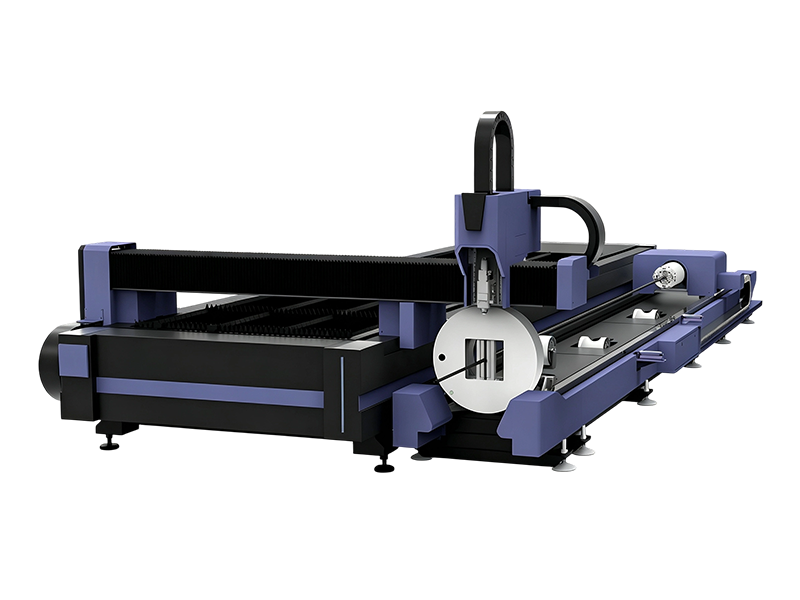
In modern manufacturing, CNC laser cutting machines have become key equipment for improving production efficiency and machining accuracy. They use high-power-density laser beams as cutting tools, controlled by a precise numerical control system, to perform non-contact processing on metal materials. Their working principle is that the laser beam is focused on the material surface, making the irradiated area reach its melting or boiling point in an extremely short time; meanwhile, high-speed gas (such as oxygen and nitrogen) coaxial with the beam blows away the melted or vaporized material, so as to achieve smooth and precise cutting. This process has a small heat-affected zone, which can minimize material deformation and ensure excellent cutting quality.
Core Application Fields of CNC Laser Cutting Machines
With high precision, high speed, high flexibility and excellent cutting section quality, CNC laser cutting technology has penetrated into numerous industries and become an important tool for upgrading manufacturing processes.
1. Automobile Manufacturing and Rail Transit
This field has extremely high requirements for the precision, consistency and production efficiency of components. CNC laser cutting machines are ideal for cutting automobile doors, body frames, exhaust pipes, airbag components, as well as metal structural parts for rail transit. They can easily handle high-strength steel plates, realize rapid mass production of complex contours, and significantly improve the response speed of the industrial chain and product quality.
2. Advertising Signage and Art Creation
The advertising industry is full of personalized and customized demands. Whether it is thick metal characters, fine signage patterns or complex art decoration parts, laser cutting machines can handle them with ease. Free from the limitations of traditional molds, they can directly draw design patterns on various metal sheets quickly, greatly expanding design possibilities and shortening the production cycle.
3. Kitchen Utensils and Household Appliances
Most kitchen products such as stainless steel sinks, range hood panels and oven shells are made of thin stainless steel or carbon steel. Laser cutting machines can perform precise contour cutting and hole processing with smooth, burr-free edges, meeting the stringent requirements of kitchen and electrical products for aesthetics, hygiene and safety, while supporting a flexible production mode of small batches and multiple varieties.
4. Sheet Metal Processing and Cabinet Manufacturing
This is one of the most classic application scenarios of laser cutting technology. Whether it is standardized products such as distribution cabinets, server cabinets and filing cabinets, or various sheet metal parts requiring complex openings and trimming, laser cutting machines can achieve efficient and flexible processing. Their digital processing method is very suitable for meeting market demands of diversified orders and short delivery cycles, making them the preferred equipment for intelligent upgrading of sheet metal workshops.
5. Fitness Equipment and Metal Furniture
Fitness equipment (such as treadmill frames and strength equipment components) and modern metal furniture make extensive use of round pipes, square pipes and special-shaped pipes. Special pipe laser cutting machines can perform high-speed and high-precision cutting, drilling and engraving at any position on pipes, meeting the processing demands of complex structures and novel designs and boosting product innovation.
6. Precision Machinery and Electronic Appliances
In the machinery manufacturing and electronics industries, laser cutting is used to process precision metal parts, heat sinks, mold inserts, electrical enclosures, etc. Their micron-level positioning accuracy and minimal heat influence ensure the dimensional stability and performance reliability of key components.
How to Choose a Suitable CNC Laser Cutting Machine: Key Considerations
Faced with a variety of equipment on the market, reasonable selection is the basis for ensuring return on investment and production benefits. The following aspects should be focused on during decision-making:
Laser Type and Power: Currently, mainstream fiber lasers have higher efficiency and lower energy consumption when cutting thin to medium-thick metal plates, making them the first choice for most metal processing scenarios. Laser power directly determines the maximum thickness of cuttable materials and cutting speed.
Cutting Format and Machine Tool Structure: Select a model with a suitable worktable (format) according to the maximum size of your daily processing materials. A stable machine tool structure is the foundation for long-term maintenance of high-precision cutting.
Positioning Accuracy and Repeat Positioning Accuracy: These two parameters are directly related to the dimensional accuracy and consistency of cut parts, and are core indicators for measuring the grade of equipment.
Cutting Speed and Dynamic Performance: High cutting and idle movement speeds can improve overall production efficiency. Excellent servo systems and motion control algorithms ensure stability and accuracy during high-speed operation.
Auxiliary Gas System: Configure appropriate auxiliary gases (such as oxygen, nitrogen, air) and pressure control systems according to your main processing materials (such as carbon steel, stainless steel, aluminum alloy), which has an important impact on cutting quality and cost.
Matching Degree with Production Demands: The final selection must be closely combined with your own processing batch (continuous production or sporadic sampling), main material types and thicknesses, and subsequent process requirements (such as whether bending, welding, etc. are required). Conducting material trial cutting is the most direct and effective way to verify equipment capabilities.
All in all, as a highly versatile manufacturing technology, the value of
CNC laser cutting machines is being highlighted through continuously expanding application fields. Only by deeply understanding their technical principles, clearly sorting out your own production demands, and making prudent selection based on core parameters can this technology truly become a powerful tool for enterprises to reduce costs, increase efficiency and enhance core competitiveness.




 English
  中文
中文  Arabic
  Russian
  Spanish
  Portuguese
  French
  German
  Hindi
Hindi  Thai
Thai  Vietnamese
  Khmer
Khmer  Italian
  Turkish
  Korean
  Belarusian