Horizontal V-Slotting Machine: What It Is And When You Need One
Release time:2026-10-12
Visits:0
Slotting, grooving, and why the wording matters
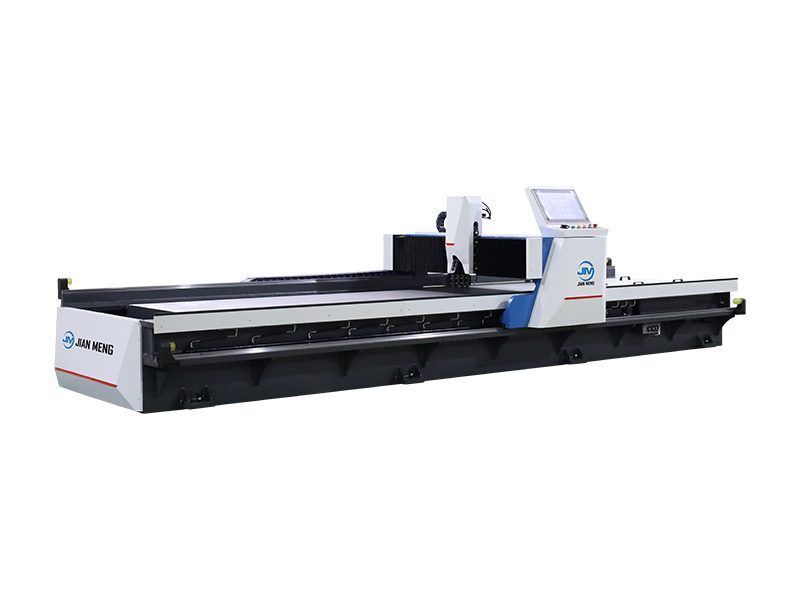
You will see "V-slotting" and "V-grooving" used for what is often the same machine, and it helps to know what is actually going on. Both describe cutting a V-shaped channel along a straight line on flat sheet metal so that the sheet bends into a sharp, accurate right angle instead of a rounded corner. A horizontal V-slotting machine does exactly that — it cuts the V-slot on a flat table, with the sheet lying horizontal.
If you are reading about horizontal V-slotting for stainless steel cabinets, aluminium curtain walls or elevator panels, you are reading about the same class of equipment that gets called a horizontal grooving machine elsewhere. The machine's job, and the benefit to your parts, are identical.
How the V-slot makes bending work
Sheet metal resists a sharp bend. Fold stainless or aluminium without any preparation and the outside of the corner rounds off; push harder and it may crack. Cutting a V-slot along the bend line removes material exactly where the fold happens, so the sheet flexes into a clean corner.
The depth and position of the slot are the whole game. Cut it too shallow and the corner stays rounded. Cut too deep and the sheet may split at the bottom of the slot. A proper horizontal V-slotting machine controls depth in fine increments across multiple passes, leaving a consistent remaining thickness that produces a uniform bend every time.
Inside the machine
- Flat worktable holding the sheet horizontal while the cutter crosses it.
- CNC controller running the slot pattern, depth increments and tool path.
- Servo-driven cutter carriage moving along X at high speed and positioning on Y.
- Precision table — flatness around ±0.03 mm — so the slot depth is uniform across the whole sheet.
What a good machine should deliver
Ask for these numbers and you can compare machines on a level field.
|
Parameter |
What to look for |
|
Slotting speed |
Up to 120 m/min |
|
Plate thickness |
0.4 to 5.0 mm typical |
|
Repeatability |
±0.02 mm |
|
Table flatness |
±0.03 mm |
|
Processing range |
1250×3200 to 1500×6000 mm and beyond |
Speed sets your throughput; repeatability and flatness set your quality. The two matter equally.
Where the machine earns its place
The
horizontal V-slotting machine earns its keep wherever appearance matters and parts repeat. High-end stainless steel cabinets, architectural aluminium panels, elevator doors and premium metal doors all depend on sharp, consistent corners. Slotting before bending also takes load off the press brake — less force, less springback — and produces parts that need less grinding and polishing after forming.
The term "slotting" versus "grooving" is mostly a regional or supplier preference. Do not let the wording throw you: if the task is cutting a V-channel in flat sheet for a clean bend, this is the machine you are after.
Jianmeng and the horizontal slotting line
Jianmeng has been building CNC V-grooving and slotting machines since introducing its first gantry-style machine in 2008, and pioneered automatic four-side V-grooving in 2015. Our horizontal machines process stainless steel and aluminium alloy at up to 120 m/min with ±0.02 mm repeatability, backed by 30+ years of development and more than 3,500 customers worldwide. Tell us your plate sizes and bend requirements, and we will match the table size and features to the job.
Frequently asked questions
Is V-slotting the same as V-grooving?
In practice, yes. Both cut a V-channel along the bend line so sheet metal bends into a sharp right angle. The difference is mostly terminology used by different suppliers or regions.
What materials can it slot?
Stainless steel, aluminium alloy and other sheet metals used in fabrication, typically from 0.4 to 5.0 mm thick.
Why not just bend the sheet without slotting?
Without a V-slot the outside corner rounds off and may crack on harder materials. Slotting produces the sharp, seamless corners that high-end products require, with less bending force.
How accurate does the slot depth need to be?
Very accurate — the remaining thickness at the bottom of the slot controls the bend. Machines hold repeatability around ±0.02 mm and table flatness around ±0.03 mm for this reason.




 English
  中文
中文  Arabic
  Russian
  Spanish
  Portuguese
  French
  German
  Hindi
Hindi  Thai
Thai  Vietnamese
  Khmer
Khmer  Italian
  Turkish
  Korean
  Belarusian